Claire Berlinski presents a provocative, if uncomfortable, thesis: that the current crisis in American governance stems not merely from political polarization, but from a fundamental cognitive mismatch between the complexity of modern society and the average citizen's ability to process it. This piece is notable for its willingness to diagnose the problem as a failure of human capacity rather than just a failure of institutions, arguing that the drive for absolute democratization is inadvertently dismantling the very safeguards that make democracy possible.
The Cognitive Gap
Berlinski anchors her argument in the work of political scientist Shawn Rosenberg, suggesting that the average voter lacks the necessary cognitive tools for democratic governance. She writes, "Citizens typically do not have the cognitive or emotional capacities required [for democratic governance]. Thus they are typically left to navigate in political reality that is ill-understood and frightening." This framing is striking because it flips the standard narrative of populism; instead of being a rebellion against an out-of-touch elite, it is portrayed as a retreat into simplicity by an overwhelmed public. The author argues that as institutions become more responsive to the public, they become more vulnerable to these cognitive limitations.
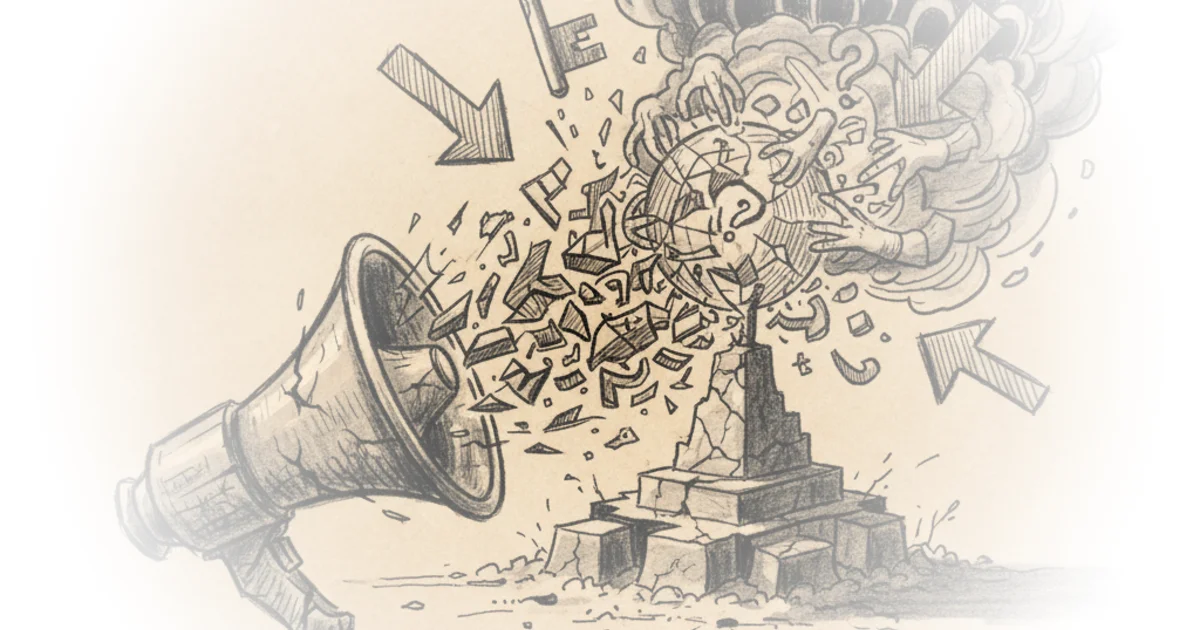
The piece posits that the "Reign of the Idiots" is not a metaphor but a structural reality where institutions are forced to cater to demands that contradict established knowledge. Berlinski notes, "Institutions that were once insulated from the whims of stupid citizens, he argues, must now cater to their demands." This is a harsh assessment, and critics might argue that it dismisses the valid grievances of citizens who feel excluded by technocratic language, regardless of their cognitive abilities. However, the author insists that the result is a paradoxical destruction of democracy itself. She observes, "Many have heralded these transformations as a salutary democratization of public life. But paradoxically, he argues, the Reign of the Idiots is destroying democracy itself."
The paradox of far-right populism is that this highly democratic approach to politics and civic engagement is a mortal threat to liberal democracy.
The Assault on Truth
The commentary shifts to the tangible consequences of this cognitive shift, detailing how the executive branch has recently reoriented policy away from expert consensus. Berlinski describes a situation where "anti-vax charlatans have been elevated to the top of our public health bureaucracy" and where "politically inconvenient data at the Bureau of Labor Statistics has been suppressed." She argues that this is not a standard political disagreement but a fundamental rejection of the epistemic hierarchy that underpins modern civilization. The author contends that the object of populist hostility has shifted from wealth or race to the expert class itself.
Berlinski acknowledges that the elite are not blameless, noting that "prestigious scientific and medical institutions... embraced politicized junk science so better to placate increasingly illiberal and illogical progressives." This concession adds nuance, suggesting that the loss of trust was a two-way street. Yet, she argues that elite failure does not fully explain the rise of "online grifters, quacks, frauds, and trolls who have amassed massive audiences by acting as merchants of doubt." The core question she poses is economic and psychological: "Why does it suddenly pay so well to be an arsonist?" The answer, she suggests, lies in an attention economy that rewards the obliteration of public confidence.
Audience Capture and Artificial Stupidity
The most distinctive part of the argument is the concept of "audience capture," where media figures and institutions adapt their messaging to fit the biases of their audience to survive financially. Berlinski explains that "those who succeed are, necessarily, those who are most willing to be untethered from fixed principles and beliefs." This creates a race to the bottom where truth is sacrificed for engagement. She draws a parallel to Kurt Vonnegut's description of the totalitarian mind, which she terms "artificial stupidity"—the willful decision to discard reason selectively.
She illustrates this with the example of political figures who accommodate insanity by "treating craziness as noise and the rest as signal." This behavior allows sophisticated actors to ignore the degradation of democratic norms. Berlinski writes, "The willful filling off of a gear of teeth, the willful doing without certain obvious pieces of information ... That was how Nazi Germany could sense no important differences between civilization and hydrophobia." This historical comparison is bold and potentially controversial, but it underscores the severity of the author's concern regarding the selective abandonment of truth.
The Illusion of Legibility
Ultimately, Berlinski argues that the appeal of this populist movement is that it offers "legibility—the illusion of an intelligible world." For voters who feel alienated by a complex modern world, the movement provides a narrative where they are not confused, but are instead sleuths uncovering hidden truths. The author states, "Trump encouraged his base to believe that it experiences these negative sentiments because shadowy forces are conspiring against them, not because they're intellectually limited and poorly educated." This reframing turns cognitive disempowerment into a form of empowerment, creating a culture that is resistant to facts because facts threaten the comforting illusion of control.
This bottom-up epistemology has jumped from the online fever swamps to legacy institutions.
Critics might note that attributing political movements solely to cognitive limitations risks ignoring the material and economic drivers of populism, such as wage stagnation and the erosion of social safety nets. While the cognitive argument is compelling, it may not tell the whole story of why people turn to conspiracy theories. Nevertheless, the author's focus on the psychological mechanism of "artificial stupidity" offers a fresh lens on why institutions are failing to correct course.
Bottom Line
The strongest part of Berlinski's argument is its unflinching diagnosis of the cognitive disconnect driving modern populism, moving beyond partisan bickering to question the very capacity of the electorate to govern itself in a complex world. Its biggest vulnerability lies in the potential for this analysis to be used to justify further elitism and the exclusion of average citizens from decision-making, rather than finding a way to bridge the gap. Readers should watch for how institutions attempt to regain their independence from the "audience capture" that is currently reshaping public discourse.