Freddie deBoer delivers a rare, data-backed confession that shatters the silence around the biological reality of new fatherhood: a measurable, often severe drop in testosterone that reshapes a man's mood, energy, and libido. While cultural conversations about postpartum life overwhelmingly center on maternal recovery, deBoer brings something almost entirely absent from the public square—hard numbers from his own medical records—to prove that the "fatherhood effect" is not just a vague feeling of exhaustion, but a quantifiable hormonal shift with real consequences for relationships.
The Data Behind the Dad Blues
The piece's most distinctive move is its refusal to rely on anecdote alone. deBoer writes, "For me, thanks to a quirk of my medical situation, postpartum testosterone decline wasn't just a vague set of symptoms but a set of numbers on MyQuest." This clinical precision transforms a subjective experience into an objective fact. He details a drop from 487 ng/dL to 299 ng/dL—a 39% decline—over three months, a statistic that validates the "profound lack of energy, dampened mood, and compromised libido" he describes.
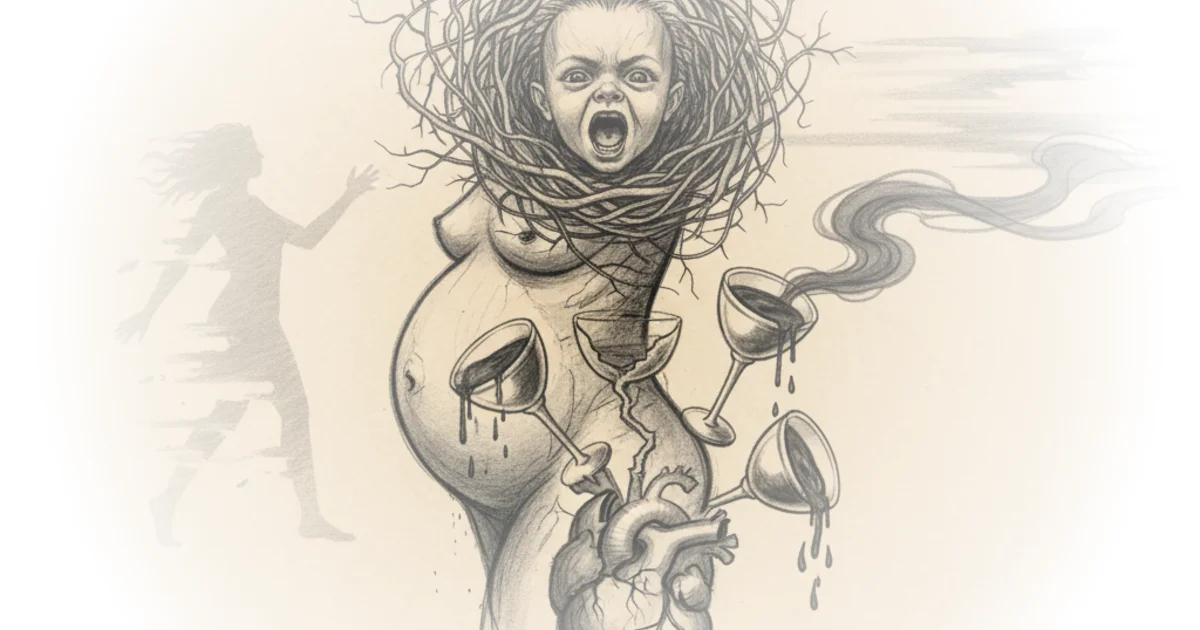
This framing is powerful because it bypasses the usual emotional platitudes. deBoer argues that this phenomenon is not a personal failure but an evolutionary adaptation: "with a new baby, a man's genetic advantage shifts from impregnating as many women as possible to making sure that this newborn survives to adulthood." He connects this modern biological finding to historical precedents, noting that "you can find talk of fatherhood depleting male virility in Pliny the Elder," suggesting that while the language has changed, the physiological reality has long been observed.
"It matters very much indeed."
Critics might argue that isolating testosterone levels ignores the massive confounding variable of sleep deprivation, which deBoer himself acknowledges as a "huge flashing confound." However, he counters this by noting that his sleep patterns remained poor even as his hormone levels began to rebound, suggesting the hormonal shift is a distinct, independent factor. This nuance strengthens his case that the issue is biochemical, not just behavioral.
The Silence of the Male Experience
The core of deBoer's argument extends beyond biology into the cultural vacuum surrounding male vulnerability. He observes that while women are inundated with support and discourse regarding postpartum changes, men are left with a vocabulary that is either "sentimental" or "jocular." He writes, "Conversations about postpartum changes in fathers tend toward the sentimental ('I cry when I change a diaper!') or the jocular ('My wife carried the baby, I paid for the stroller')."
This silence is dangerous because it leads to misinterpretation. When a father's drive diminishes, it is often read as a lack of love or attraction, rather than a biological brake being applied. deBoer explains that "new fathers are likely in this period to experience a genuine reduction in spontaneous sexual desire, not because of disinterest or diminished love, but because their bodies are quietly hitting the brakes in order to be better at child-rearing." This reframing is crucial for relationship health, yet it remains taboo. He notes the irony that men are often "too tired to have sex" but are "taught to make jokes about the inevitable tiredness, to blame the baby for the absence of sex, and to treat sexual desire as a moral weathervane rather than a biochemical reality."
The piece also touches on the intersection of mental health and hormonal monitoring. deBoer, who manages bipolar disorder, highlights how his psychiatric medication regimen required rigorous blood testing, inadvertently giving him a window into his own hormonal decline. He notes that "psychiatrists order those tests not because they're being nosy about hormone drama but because many psychiatric medications have endocrine and metabolic effects." This detail adds a layer of medical credibility to his personal narrative, grounding the story in the reality of chronic illness management.
"The only real solution is honesty and communication, naming what's happening without blame, without panic, and without turning a temporary biological shift into a referendum on attraction or commitment."
The Path Forward
deBoer concludes by acknowledging that while the hormonal drop is real, it is not permanent. He admits that "nine months after the birth of my bundle of (perfect, beautiful, irrational chaotic) joy, my numbers have largely but not entirely rebounded." His ultimate point is one of adaptation: "Hormones change, human beings adapt, and relationships, if we're honest and sensitive with each other, accommodate the ebb and flow."
He challenges the "vestige of good old-fashioned macho culture" that prevents men from admitting to this vulnerability. "The reticence to talk about postpartum testosterone reduction is also, of course, a vestige of good old-fashioned macho culture, a refusal to let other competing males know that we're in a less virile state than we once were," he writes. By breaking this silence, he hopes to foster a culture where fathers can navigate this transition without shame.
Bottom Line
Freddie deBoer's piece is a vital correction to the one-sided narrative of postpartum life, using hard data to validate a biological reality that has long been dismissed as mere "vibes." Its greatest strength is the refusal to let men off the hook for silence; its vulnerability lies in the difficulty of changing a culture that equates male worth with virility. Readers should watch for how this conversation evolves as more men gain access to the same kind of medical transparency deBoer experienced, potentially reshaping how couples navigate the early years of parenthood.