Packy McCormick and Ross Garlick present a startling thesis: the recent U.S. military intervention in Venezuela was not merely a geopolitical victory, but the opening move in a massive economic reconstruction project that could rival the European Union in strategic value. While much of the global conversation focuses on the immediate removal of a dictator, the authors argue that the true prize lies in unlocking a "Nova Gran Colombia"—a unified economic bloc that could serve as America's primary nearshoring partner and a bulwark against Chinese influence in the hemisphere.
The Human Cost of Intervention
The piece begins by grounding its optimism in a specific, high-stakes event: the capture of Nicolás Maduro by U.S. forces in early January 2026. McCormick writes, "I felt lucky to have a different perspective on the situation than the ones I was reading, not the One Final and Correct Perspective, but a differentiated one based on specific experience." This framing is crucial; it attempts to bypass the noise of political punditry by leaning on the on-the-ground insights of business operators in Colombia. However, the narrative glosses over the immediate human toll of such a military operation. While the authors mention the desire of Venezuelans to see Maduro gone, they do not detail the potential for civilian casualties or the chaos that often accompanies a sudden regime change. The argument assumes a clean transition, yet history suggests that the vacuum left by a toppled leader is often filled with violence before stability can be restored.
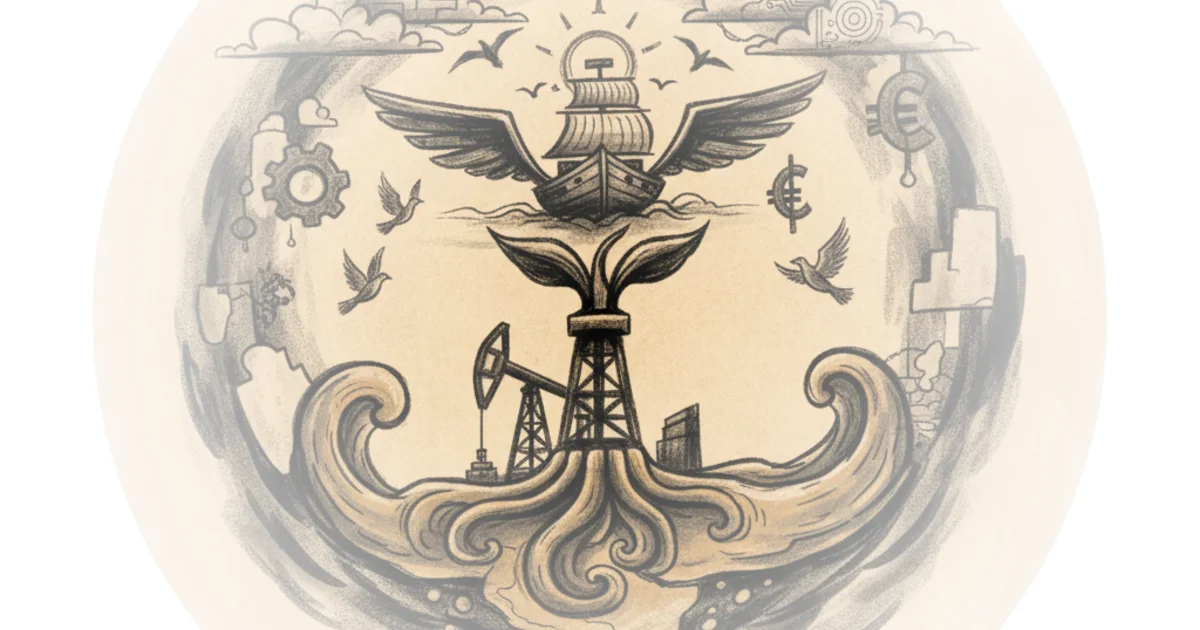
The authors pivot quickly from the military action to the economic implications, arguing that the U.S. must look beyond oil. "Oil is the obvious prize. But it's a complicated one," McCormick notes, acknowledging that while Venezuela holds the world's largest reserves, the real value lies in the country's human capital. They highlight the resilience of the Venezuelan diaspora, citing the story of Cesar, a former dishwasher who walked 72 hours with his newborn to start a business in Colombia. "Imagine if we unleashed this talent to rebuild Venezuela from the ground up," they urge. This is a compelling point: the region's greatest asset is not its crude, but its 8 million displaced citizens who have proven their ability to survive and thrive despite systemic collapse.
"Venezuela has even more potential than Colombia. A lot of people have become familiar with Venezuela over the past few weeks, since Operation Absolute Resolve, in which the United States captured Maduro and shipped him to Brooklyn."
The Geopolitical Chessboard
The commentary then broadens to a macro-strategic view, positioning a free Venezuela as a critical counterweight to China's expanding footprint in Latin America. McCormick and Garlick detail how Chinese firms like BYD, Huawei, and Xiaomi have already captured significant market share in the region, while Beijing funds massive infrastructure projects like the Chancay Megaport in Peru. "The country that finances Venezuela's rebuild will be the one that captures the spillovers from its rebound," they argue. This is a stark warning to the White House: if the U.S. does not lead the reconstruction, China will, and the strategic balance of the hemisphere will shift permanently.
The authors propose a "Gran Colombia" bloc, merging the economies of Venezuela, Colombia, Panama, and Ecuador into a single, powerful entity. "A Gran Colombia bloc with 105M+ people and $700B+ in GDP could eventually approach these scales [of the EU or Mexico]," McCormick writes. They envision a future where this bloc becomes a nearshoring destination for supply chains currently dependent on Asia, creating millions of American jobs and reducing vulnerability to global rivals. This vision is ambitious, relying on the assumption that modern infrastructure and digital connectivity can overcome the geographic barriers that doomed Simon Bolívar's original vision two centuries ago.
Critics might note that the authors underestimate the difficulty of institutional reform. The piece assumes that a "freely and fairly elected transition government" will emerge by 2027, but prediction markets and local realities suggest a much more turbulent path. As one journalist friend tells the authors, "There's a long way to go and a lot of things have to go right for your vision to come true." The argument risks treating complex political transitions as mere engineering problems that can be solved with capital and good intentions.
The Promise of a Nova Gran Colombia
The final section of the essay is a historical reflection on why the original Gran Colombia failed, contrasting it with the potential of a modern, economically integrated region. McCormick explains that Bolívar's vision was thwarted by geography and regional elites, but "In 2026, the question isn't whether the Andes are passable in the rainy season, but whether modern infrastructure, money movement, and rules can make the region economically contiguous." If successful, this new bloc could become a destination for digital nomads, retirees, and blue-collar workers alike, driven by cheap real estate and a booming energy sector.
The authors conclude with a vision of reverse migration, where the diaspora returns to rebuild their homeland. "Imagine the promise of a Nova Gran Colombia, with Venezuela a force instead of a blocker," they write. This is a powerful emotional hook, appealing to the desire for redemption and renewal. Yet, it also raises difficult questions about who gets to define the new Venezuela and whether the benefits of this reconstruction will be shared broadly or captured by a new elite.
"A free and democratic Venezuela could drive reverse migration for the 8 million strong diaspora and become a destination for migrants of all nationalities and socioeconomic levels."
Bottom Line
The strongest part of McCormick and Garlick's argument is its reframing of Venezuela not as a humanitarian crisis to be managed, but as an underpriced asset class with the potential to reshape global trade dynamics. Their focus on human capital and the strategic necessity of countering Chinese influence provides a fresh, compelling rationale for U.S. engagement. However, the piece's biggest vulnerability is its optimistic timeline and its relative silence on the immediate violence and instability that typically follow regime change. Readers should watch for whether the U.S. administration can move beyond the initial military victory to the difficult, long-term work of institution-building that the authors deem essential for this vision to succeed.