Novara Media's latest interview with Marrick Pollock doesn't just predict the future of capitalism; it suggests the system is actively trying to evict humanity from the equation. The most startling claim isn't that AI will replace workers, but that the financial architecture of the 21st century is becoming allergic to the very things that used to sustain it: production and consumption. This is a radical reframing of the current tech boom, moving beyond the tired narrative of "job loss" to a terrifying thesis of "human irrelevance."
The Allergy to Reality
The core of Pollock's argument, as presented by Novara Media, is that modern capital has evolved a fundamental aversion to the physical world. "Capitalism is allergic to production," Pollock states, noting that it is equally "disinterested" in consumption because both involve messy, fixed costs and human friction. Instead, the system is migrating toward a state where value is entirely fictional and self-referential. The interview highlights the trajectory from selling hardware to selling software, and finally to becoming a bank or a financial entity, where money simply generates more money without touching the ground. "It is the closest you can get to the direct and unmediated translation from money to more money fully automatic without any kind of interstitial steps," Pollock explains. This observation lands with particular force because it explains the bizarre behavior of tech giants who seem to care less about their products and more about their balance sheets. Critics might note that this view underestimates the enduring necessity of physical infrastructure, yet the data on software margins versus hardware margins supports the trend toward abstraction.
"Humans aren't just being sucked into capitalism. They're also slowly becoming almost irrelevant to it."
The Casinoization of Value
Pollock extends this logic to the cultural sphere, arguing that the disconnect between labor and reward has turned the economy into a high-stakes lottery. He points to figures like Mr. Beast not merely as content creators, but as avatars of a system where wealth is delivered through "stochastic deliverance" rather than traditional work. "Someone is delivered... it's almost like evangelical churches... someone from the crowd is allowed to come up and and get you know blessed by by by God," Pollock observes. This framing is compelling because it captures the psychological reality of the modern worker: the feeling that success is random and unconnected to effort. The interview suggests that this isn't a bug, but a feature of a system that has severed the link between value creation and price. "The productive component... does feel unbelievably disconnected from the ultimate kind of deliverance of of price and value," Pollock notes. This resonates deeply in an era where gig economy workers and artists alike face volatile, unpredictable incomes despite high output.
The Digital Feedback Loop
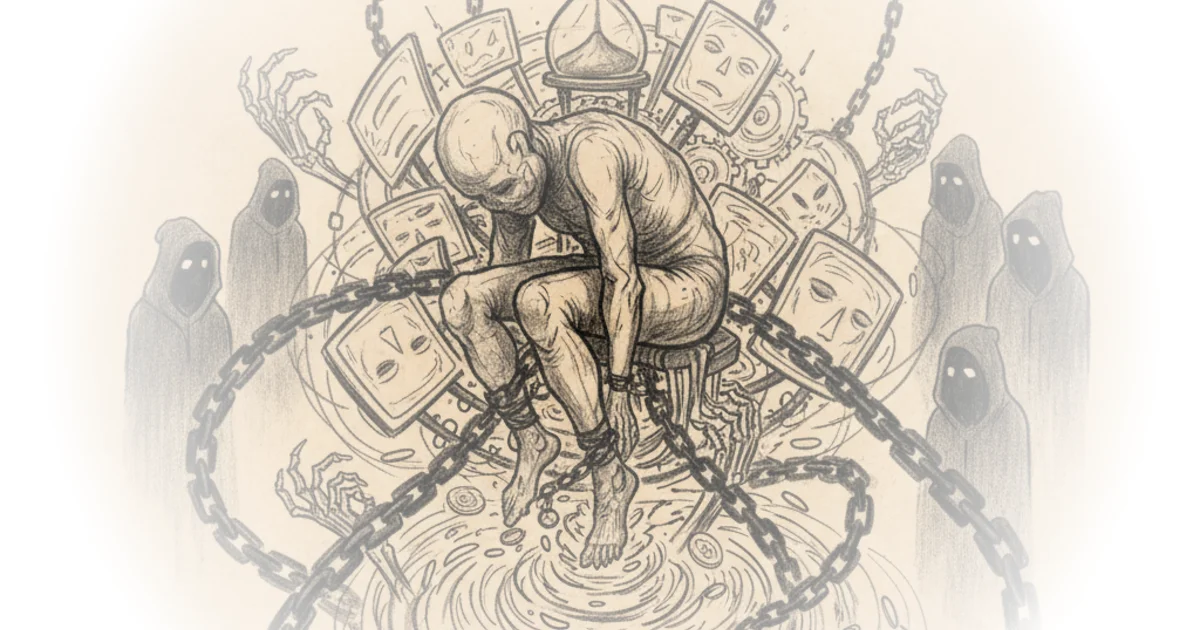
The conversation takes a darker turn when discussing the infrastructure of this new economy. Novara Media weaves in the concept of "model collapse," a process where AI bots talk to each other, trade stocks, and then feed their own output back into the training data, creating a closed loop of artificial intelligence. "AI bots are taking over the internet. They're talking to each other... And because of the way AI works, everything they say and do will then go back into the model next time someone tries to grow an AI from the internet," Pollock warns. This creates a self-sustaining digital ecosystem that requires no human input, echoing the historical trajectory of high-frequency trading, where algorithms now execute the vast majority of stock market trades in microseconds, completely detached from human decision-making. The implication is that we are building a machine that eventually has no need for us, a "slave-driven slop economy" where the only role left for humans is to be "displaced, incapacitated, you know, meat bags in front of machines."
The End of the Human Variable
Ultimately, the interview posits that the dream of capital is to become self-sustaining, freeing itself from the "pesky trivialities of prices and consumers." Pollock describes a future where businesses relate only to other businesses, creating "super fluid, porous, translucent film-like businesses that just kind of cohabitate with each other through which revenue just moves and moves and moves." This vision is both terrifying and logically consistent with the current drive toward automation and financialization. It suggests that the next phase of capitalism isn't about serving people better, but about eliminating the human variable entirely. "That's the thesis of today's guest... economies with absolutely no limits," Novara Media summarizes. The argument holds together because it connects disparate phenomena—from crypto bubbles to AI chatbots—under a single, coherent theory of capital's desire for autonomy.
"The only conclusion that we came up with was um a war between the United States and China feels like a reasonable opportunity through which the internet could be destroyed."
Bottom Line
Novara Media's coverage of Pollock's "Exo-capitalism" offers a chillingly coherent explanation for the absurdity of the current tech boom: the system is trying to exit the human economy entirely. While the argument risks overstating the speed of this transition, its identification of capital's growing aversion to physical production and human labor provides a vital lens for understanding everything from crypto crashes to AI hallucinations. The most urgent takeaway is not that we will be replaced by machines, but that the economic logic driving them is actively working to make us obsolete.