This week's coverage from London Centric delivers a sobering twist on digital panic: a violent riot that never happened, yet cost the city real resources and fear. Michael Macleod exposes how an AI-generated image promising an "East London War Link Up" triggered a multi-agency response in Stratford, forcing us to ask whether we are preparing for real threats or merely reacting to algorithmic noise.
The Architecture of Panic
Macleod begins by dismantling the narrative of the non-event at Westfield shopping centre. He describes how an image circulating on WhatsApp, featuring motorbikes and a call to "Bring machines. Bring ammunition. Bring swords," caused local offices to evacuate and security teams to mobilize dog units. The absurdity is underscored by the poster's promise that "drinks and food will be provided" for the rioters—a detail Macleod suggests may have been an artifact of an overenthusiastic AI design package.
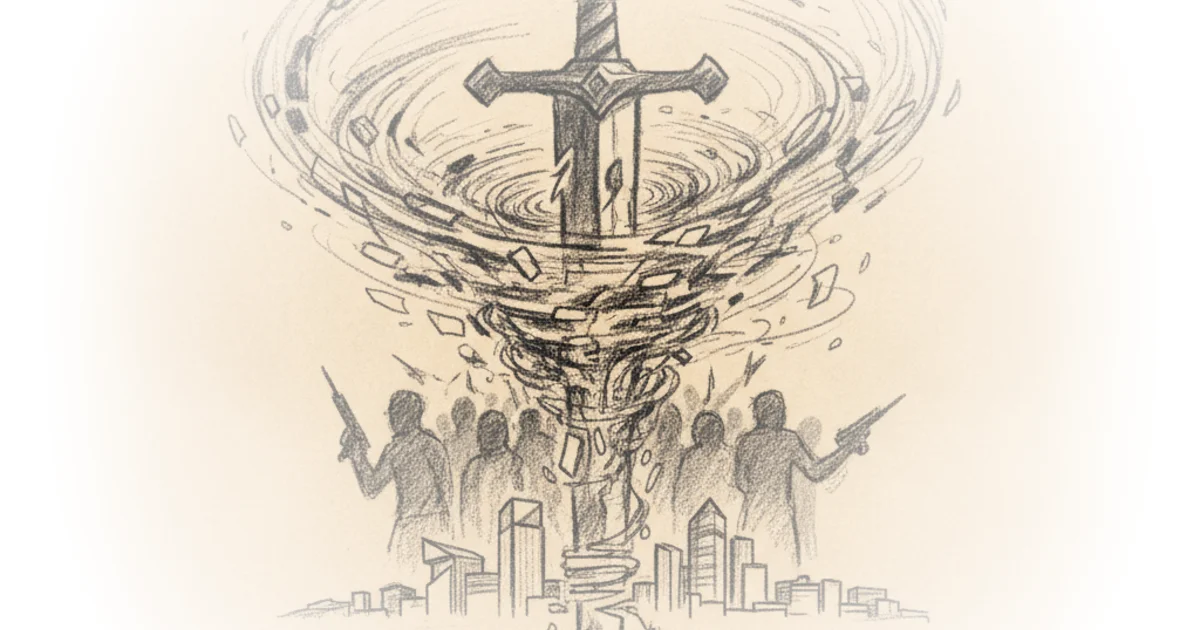
The author argues that this incident represents a shift in how threats are perceived and processed. It was not a whisper campaign among schoolchildren, but a viral cascade that reached hundreds of thousands. "It's impossible to say how many people saw the call-to-arms," Macleod writes, "but based on the sheer number of messages, it could plausibly have reached hundreds of thousands of Londoners, or even millions." The consequence was immediate: a palpable drop in public safety perception and a diversion of police resources.
Many of them will have felt less safe in their city as a result.
This framing is crucial because it highlights the asymmetry of modern disruption. A bored teenager with access to generative AI can induce a state of siege without ever leaving their bedroom. The coverage connects this to broader patterns, noting that earlier "red vs blue" school wars were not just juvenile pranks but self-fulfilling prophecies where media coverage itself fueled the violence. Critics might note that focusing on the "AI" aspect risks absolving human actors; after all, someone still had to click "share" and amplify the message. However, Macleod's point stands: the technology has lowered the barrier to entry for mass panic.
The Cost of Caution
The piece then pivots to the institutional response, revealing a system struggling to distinguish between a joke and a genuine safety risk. In Stratford, warnings issued by large employers like the Financial Conduct Authority inadvertently lent credibility to the threat. Macleod notes that an email from Dive London, warning members of a "violent disruption," was screenshot and circulated with the "forwarded many times" tag, creating a feedback loop of validation.
This dynamic mirrors issues found in other recent deep dives on London's infrastructure struggles. Just as the Sleep pod initiative failed because it treated the symptom (fatigue) rather than the cause (overwork), the security response to the Stratford riot treats the symptom (the viral post) while ignoring the underlying vulnerability of a society primed for panic. The author points out that the Metropolitan Police confirmed "no disorder and no arrests," yet the psychological toll remains.
The difficulty in accountability is stark. Macleod reports that while police arrested individuals connected to previous school wars, they were released due to insufficient evidence. "It's relatively easy to arrest someone for shouting 'fire' in a crowded theatre," he observes. "It's harder when the person shouting fire is an anonymous teenager with little risk of being caught."
The skill required to work out what's a real threat, what's a joke and what's AI slop is finely balanced.
This observation cuts to the heart of the governance challenge. If the state overreacts, it validates the hoax; if it underreacts, it risks genuine harm. The article suggests that we are entering an era where "low-key chaos and paranoia" are the new normal, benefiting only those selling security overtime.
Digital Reputation and Autonomous Futures
Beyond the immediate panic, Macleod weaves in a broader critique of London's digital reputation management. He details Mayor Sadiq Khan's £7m campaign to combat "false narratives," specifically targeting X (formerly Twitter) for its financial incentives that reward viral falsehoods. The mayor's office identified that verified accounts pose as news outlets to generate engagement, with narratives originating from the UK extreme right being amplified by international accounts in Japanese and Chinese languages.
Verified X accounts can be a particular challenge as they pose as news outlets and spread false posts that will create high levels of engagement to make money.
The irony noted by Macleod is that despite identifying this platform as a primary threat, the administration refuses to boycott it, citing the need to communicate with Londoners where they are. This mirrors the tension seen in the Putney Pusher coverage: the legal and ethical frameworks for privacy and media rights have evolved (preventing the naming of uncharged suspects), yet the mechanisms for controlling public discourse remain reactive and often ineffective against algorithmic manipulation.
The piece concludes by looking forward to self-driving technology, specifically Wayve's AI software. While the focus is on robotaxis, Macleod highlights the argument from Caroline Russell that this technology could be better utilized in public transport. "Why isn't the government or TfL investing in this to make buses safer?" she asks. This connects back to the fatigue crisis discussed earlier; if human error leads to danger (like the Pusher incident) and digital errors lead to panic (the Stratford riot), perhaps automation offers a path to stability, provided it serves the public purpose rather than private profit.
Bottom Line
Macleod's strongest contribution is his refusal to dismiss the Stratford non-incident as a mere prank; instead, he treats it as a symptom of a fragile information ecosystem where AI and human anxiety collide with real-world consequences. The piece's greatest vulnerability lies in its reliance on the assumption that "bored teenagers" are the primary architects of these events, potentially underestimating the role of coordinated disinformation campaigns from bad-faith actors seeking to destabilize the city. As Londoners navigate this new reality, the challenge will not just be detecting fake news, but rebuilding the trust required to ignore it.