In a live stream that feels less like a broadcast and more like a digital resistance operation, Chris Chappell unveils a project designed to outmaneuver the Chinese Communist Party's censorship apparatus. Rather than focusing on personality, the coverage zeroes in on the mechanics of repression and the symbolic power of a digital "Lenin Wall" that has already triggered a response from Beijing's Great Firewall. This is not just about posting messages; it is a strategic test of whether the world can keep a digital space open when the state demands it be closed.
The Architecture of a Digital Wall
Chris Chappell frames the new initiative as a direct response to the physical erasure of dissent in Hong Kong. He explains that while the original "Lenin Wall" in Prague and the sticky-note protests in Hong Kong were eventually torn down by authorities, the digital version offers a new kind of permanence. "We worked with the team of Security Experts so IPS aren track there's no cookies no matter how much milk you throw at your screen," Chappell notes, highlighting the technical safeguards designed to protect user anonymity. The goal is ambitious: to gather 10,000 unique messages of support by the end of June, creating a crowd-sourced archive that cannot be easily deleted.
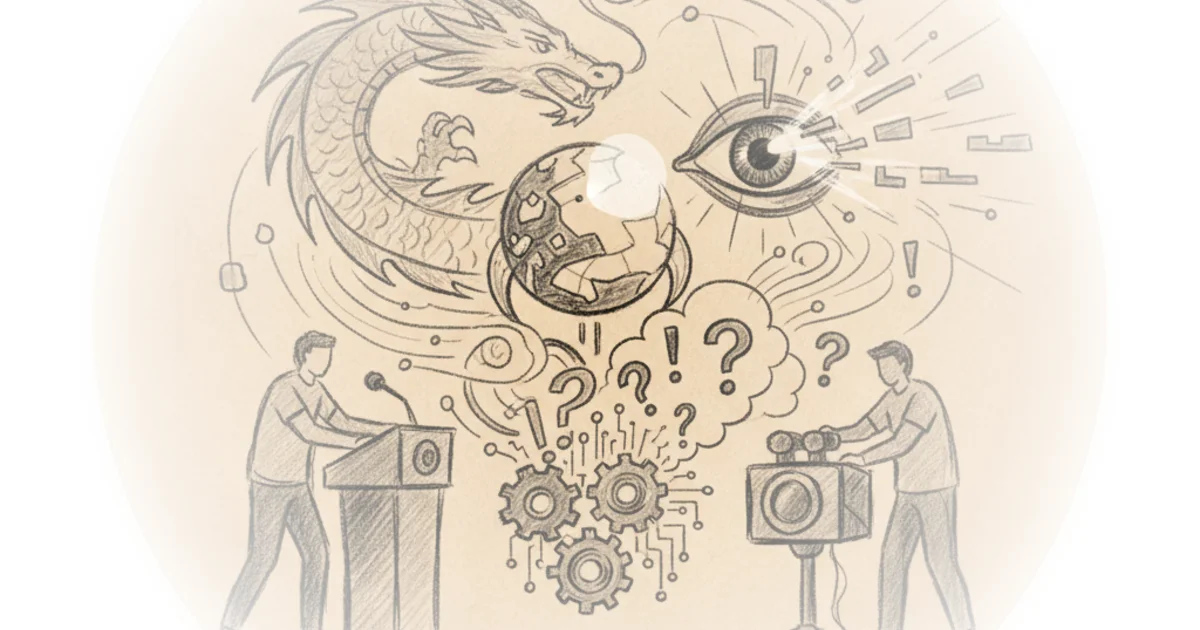
The argument here rests on the idea that the Chinese Communist Party is uniquely sensitive to symbols. Chappell points out that the regime bans candle emojis on social media anniversaries and arrests artists for signing dates in the air, proving their fear of what a simple image can represent. "The CCP understands the power of symbols they really try to use symbols themselves right and they also like things like the panda bear for soft power but they're also really afraid of things like..." he argues. This framing is effective because it shifts the narrative from a simple protest to a psychological battle where the regime's overreaction validates the importance of the dissent.
Critics might argue that a digital wall is a low-impact gesture compared to on-the-ground organizing, but Chappell counters this by emphasizing the psychological toll on those in exile and prison. "Most of the people we knew from Hong Kong are either in Exile or in jail... there's more than 1,800 political prisoners in Hong Kong right now huge really I actually was shocked," he shares, citing data from the Hong Kong Democracy Council. The sheer scale of the crackdown, including the sentencing of children as young as 12, underscores the urgency of maintaining a global connection to the movement.
The Chinese Communist Party is so terrified because they know they don't have the hearts and minds of the Hong Kong people.
The Cost of Silence and the Power of Noise
The coverage also delves into the real-world consequences of the digital campaign, noting that the site was blocked by China's Great Firewall almost immediately after launch. Chappell views this not as a failure, but as a victory of sorts, suggesting that the regime's panic is the best indicator of the project's success. "I would love is that if that we got enough people uh to post on the site that we got like a nasty article written about it from China Daily or Global times," he admits, revealing a strategy that thrives on provoking a hostile response from state media.
Chappell connects the "Lion Rock Spirit"—a historical metaphor for Hong Kong's resilience and hard work—to the current protests, noting that the spirit survives even as the physical landscape changes. He describes how the phrase reaches back to refugees fleeing mainland famines in the 1950s and 60s, creating a lineage of resistance that the current administration is trying to sever. "Despite all that the that line Rock spirit is still very much alive in Hong Kong and people..." he says, emphasizing that the movement is not a fleeting trend but a deep-seated cultural identity.
However, the piece also touches on the grim reality of the political landscape. Chappell acknowledges that the National Security Law and subsequent purges have effectively eliminated pro-democracy representation in Hong Kong's legislative bodies. "There's no Pro democracy anything in Hong Kong anymore yeah to the to the extent that then just recently they they passed themselves article 23 which is basically the same thing as National Security Law just passed by Hong Kong or so it's like but it's what the Hong Kong people want uh," he notes, using heavy irony to highlight the disconnect between the regime's claims of legitimacy and the reality of forced compliance.
The Economics of Resistance
Funding the project is another layer of the story, with Chappell openly discussing the financial costs of maintaining a secure, anonymous platform. "We are spending money we spending a lot of money and most of the money actually went to the the technical part of just like making sure that it was a secure site for keeping the people who posted stuff completely Anonymous," he explains. The project is framed not as a money-making venture but as an investment in the future of Hong Kong, sustained by the "China Uncensored 50 Cent Army"—a play on the term for state-paid commentators, repurposed here to describe independent supporters.
The commentary concludes with a broader question about the potential for internal revolt within China. When asked if Chinese citizens are revolting against the party, Chappell suggests the signs are already there, though the full extent remains obscured by the state's control of information. "I think already we see a lot of people revolting against the CCP," he states, leaving the audience with the implication that the digital wall is just one small front in a much larger, unfolding conflict.
Bottom Line
Chappell's coverage succeeds by reframing a digital campaign as a critical front in the battle for Hong Kong's identity, using the regime's own fear of symbols as the primary evidence of its strength. The strongest part of the argument is the connection between the technical security of the platform and the psychological safety of the users, but the piece relies heavily on the assumption that digital visibility translates to tangible political change. Readers should watch for how the Chinese government responds to this specific digital provocation, as the next move will likely reveal the limits of their tolerance for global solidarity.