Novara Media frames this debate as the most significant moment in the 2024 general election campaign — and their analysis cuts against the conventional wisdom about what a televised clash should accomplish. They argue that both Rishi Sunak and Keir Starmer have far more to lose than to gain: "both men actually stand a lot to lose." This is a striking claim, because political commentators typically treat these debates as opportunities for opposition leaders to gain ground or for incumbents to demonstrate authority. Novara Media sees something different — a contest where the real beneficiaries might be waiting in the wings: "there are people waiting on the wings the lip Dems and the greens."
The commentary identifies what each candidate is likely to attempt. For Starmer, they'll hear "a lot of what we've heard before from starma in terms of the incompetence and Chaos of uh the conservative governments." For Sunak, they expect him to try "to Corner K starma on consistency and honesty" and to tie him "to the 2019 result." This is where Novara Media's coverage gets interesting — they're not just predicting strategies, they're analyzing what each candidate is actually trying to avoid.
Both men have something to lose but no one stands to gain very much — and that makes this debate less about changing the race than managing expectations.
The most revealing moment comes when Ash Sako analyzes why Sunak called the election now. He argues the Prime Minister knows things are about to get worse: "he knows inflation is going to go back up he knows Energy prices are going to go back up in the Autumn." This is a devastating characterization — Sunak called an election not because his plan is working, but because he's about to be ambushed by economic headwinds. The timing isn't strength; it's preemptive defense.
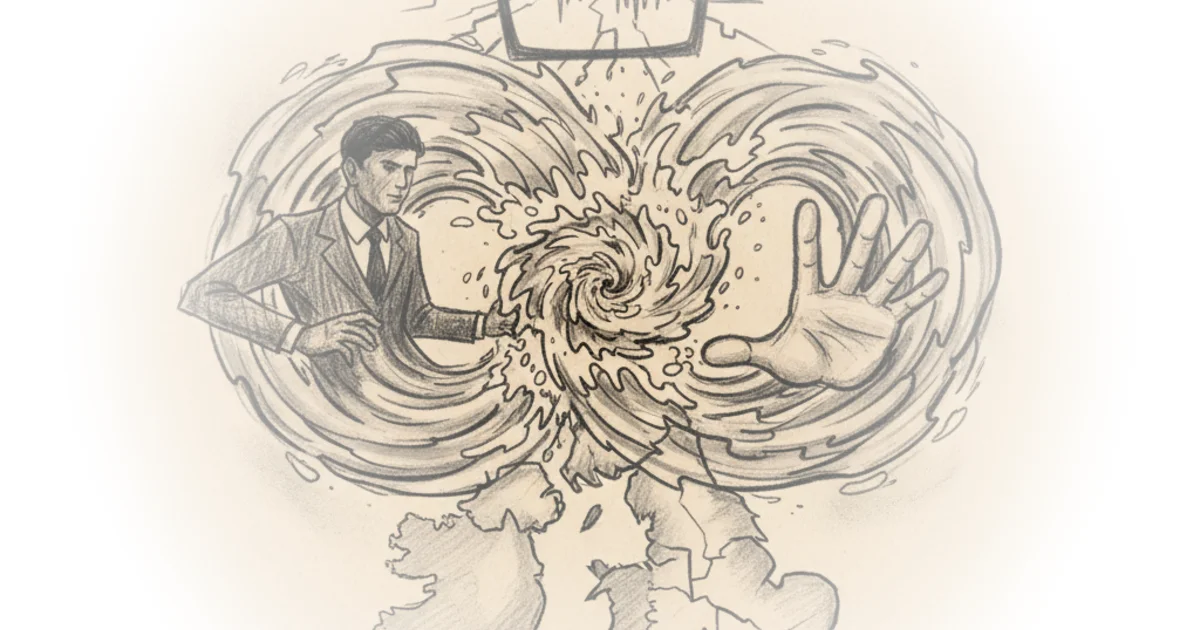
Novara Media also contextualizes this against historical elections, noting that "this I think is far beyond" even the worst previous starts, including 2010 when "there was a literal car crash as labor announced their Manifesto." The framing suggests the Conservatives are so badly positioned that conventional political metrics no longer apply.
The cost of living question from Paula of Huddersfield becomes the centerpiece of the debate. When Sunak responds that "the plan is working," Novara Media immediately challenges this premise: "it's all so many people who are struggling with their bills and the Prime Minister just keep saying he lives in a different world." The commentary draws out the implicit critique — the Prime Minister is telling someone who has "genuinely worried about my future" that the plan is working, when she has just described circumstances of real hardship.
This is where the piece excels: it identifies what viewers would recognize as the fundamental disconnect between governing elites and ordinary people. When Sunak says "the plan is working," he's speaking to someone who has just explained that her "savings are gone" and she's "genuinely worried about her future." The editorial voice cuts through this immediately: "that if people are struggling with their bills why do you want to make it harder for them by saddling them with 2,000 worth of higher taxes."
Critics might note that Novara Media's analysis leans heavily on the assumption that Sunak is hiding something about economic forecasts — a claim that depends on interpreting his motives rather than evaluating his actual performance. Some readers might argue that the debate itself revealed substantive policy differences that matter to voters, regardless of the timing.
Bottom Line
The strongest part of Novara Media's coverage is their refusal to treat this as a typical horserace narrative. They see the debate not as an opportunity for game-changing momentum but as a moment where both front-runners are managing damage — and where smaller parties remain in the margins. Their analysis of Sunak's election timing reveals something the public generally won't hear: that calling an election now might be strategic pessimism rather than confidence. This is the insight that makes the piece worth reading, because it reframes what the candidates are actually fighting for — not to win, but to survive.