More Perfect Union exposes a jarring contradiction at the heart of the modern sports betting boom: the industry's profitability depends entirely on the customer losing. While the public narrative is one of entertainment and skill, the underlying business model is a zero-sum game where the house must win for the operator to survive.
The Inverted Incentive
The piece begins by dismantling the nostalgic image of the Las Vegas sportsbook as a mere amenity for casino-goers. In the past, books were subsidized by the broader casino floor, operating as a "loss leader" to keep people inside. Today, digital platforms like DraftKings and FanDuel operate without that safety net. As More Perfect Union writes, "unlike a lot of businesses in America the interests of the business and the business's customers here are incredibly diametrically opposed." This is the critical pivot point of the argument. In a standard retail transaction, the seller wants the buyer to be happy so they return; in sports betting, the seller wins only when the buyer loses.
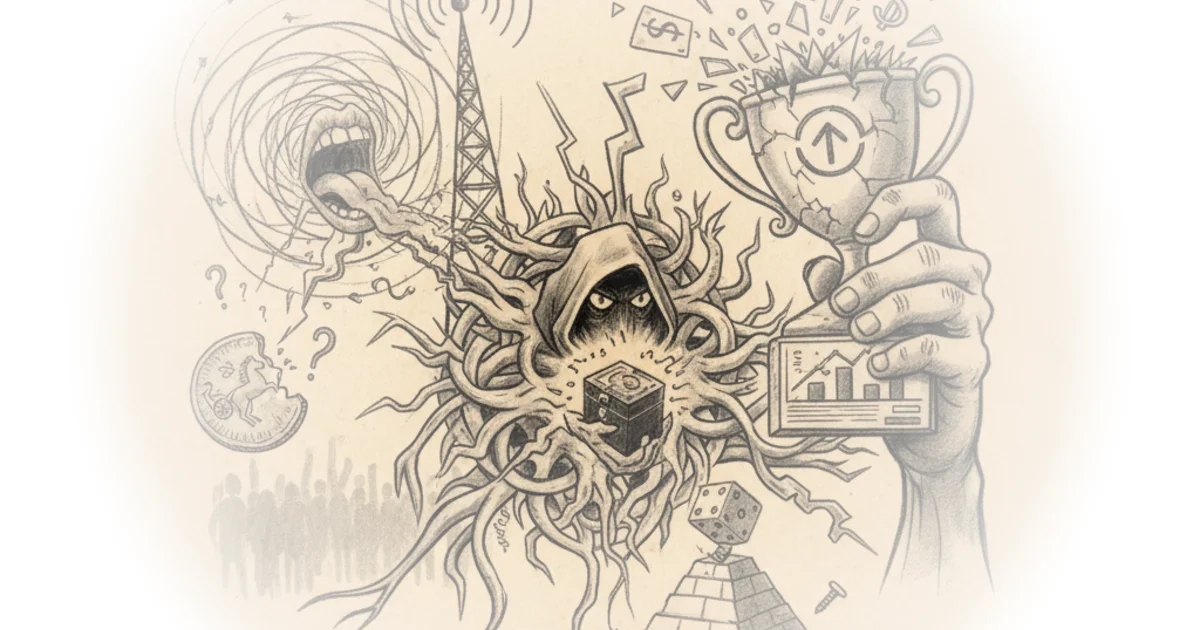
This dynamic creates a fundamental conflict that regulators and consumers often overlook. The author notes that when a CEO tells shareholders that "customer friendly stretch of NFL sport outcomes" hurt revenue, they are essentially admitting that the bettors won too much. The industry's financial health is directly tied to the failure of the individual gambler. This reframing is powerful because it strips away the veneer of "skill" and "entertainment" to reveal the raw economic reality. Critics might argue that professional gamblers do exist and can beat the house, but the article correctly points out that these winners are swiftly banned or "ghosted" by the platforms, proving that the system is not designed for fairness.
"In order for a sports book to make more money they have to win more money which is to say that you have to lose more money."
The Trap of the Same-Game Parlay
The commentary then shifts to the specific mechanisms used to exploit this dynamic, focusing on the "same-game parlay." These bets allow users to combine multiple outcomes within a single match—like a team winning, a player scoring, and a specific play occurring—into one ticket. While marketed as high-reward opportunities for savvy fans, the math is heavily stacked against the user. More Perfect Union explains that while a traditional bet might give the house a 5 to 6% edge, a single-game parlay can return "up to 30% to the sports book."
The author describes these products as the "credit default swap of sports betting," a financial instrument so complex that even the house struggles to price it accurately, allowing them to bake in massive margins. The piece argues that these bets are designed to keep users engaged for every second of a game, turning a leisure activity into a high-stakes monitoring session. "Now that bets got you watching every inning half ground period Seto," the text notes, highlighting how the product design forces constant engagement. The framing here is particularly effective because it connects the dots between product innovation and profit extraction, suggesting that the explosion of betting options is not about consumer choice but about maximizing the house edge.
The Complicit Leagues
Perhaps the most damning section of the coverage is the examination of how professional sports leagues, once staunch opponents of gambling, have become its primary beneficiaries. The narrative arc moves from the leagues' historical fear of corruption to their current embrace of betting partnerships. More Perfect Union writes, "the sports leagues immediately got involved and got into bed with the sports books right away. There was no hesitation at all once the Supreme Court ruled we have to adjust." This rapid pivot from moral guardianship to revenue generation is presented as a betrayal of the sport's integrity.
The article details how leagues now charge betting operators for the use of their official data, creating a new revenue stream that depends on the proliferation of bets. The author points out the irony that leagues, which once refused to even allow advertisements for Las Vegas-themed shows on their broadcasts, now feature betting ads in every stadium and arena. This shift has normalized gambling in a way that feels invasive to many fans. "People are so upset at sports betting now they're being forced the UNC nature of it," the text observes, capturing the frustration of a fanbase that feels the sanctity of the game has been compromised. A counterargument worth considering is that leagues argue these partnerships fund integrity measures, but the article suggests the primary motivation is simply the "piece of the pie" from the betting boom.
"Fundamentally people should want Sports books and betting on sports to be fair and I don't know that it is fair right now."
Bottom Line
More Perfect Union delivers a compelling critique that moves beyond moralizing to expose the structural flaws in the sports betting industry's economic model. The strongest part of the argument is the clear demonstration of how product design, specifically same-game parlays, is engineered to maximize losses for the average user. The piece's biggest vulnerability is its reliance on the assumption that regulation can ever truly align the incentives of for-profit betting operators with the well-being of consumers. Readers should watch for how state legislatures, eager for tax revenue, will respond to the growing evidence that these platforms are prioritizing profit over player protection.