Rohin Francis dares to ask the question most medical professionals whisper but rarely voice: does deriving genuine joy from a patient's near-death crisis make a doctor a sociopath? In a culture obsessed with burnout and administrative fatigue, Francis flips the script, arguing that the very chaos and adrenaline of emergency medicine are not bugs in the system, but the feature that keeps him human. He offers a raw, unfiltered look at the dichotomy between the soul-crushing bureaucracy of modern healthcare and the pure, unadulterated clarity of saving a life.
The Anti-Bureaucracy Rant
Francis begins by contrasting his current reality with the mundane horrors of hospital administration. He is not complaining about the long hours; he is complaining about the lack of them during the day. He writes, "There are no patient flow champions with clipboards telling me to discharge patients as if that's something I haven't thought of. No Microsoft Teams meetings about budgets." This framing is effective because it validates the frustration of every clinician who feels buried under paperwork, yet it immediately pivots to a deeper truth: the night shift strips away the noise, leaving only the essential act of medicine.
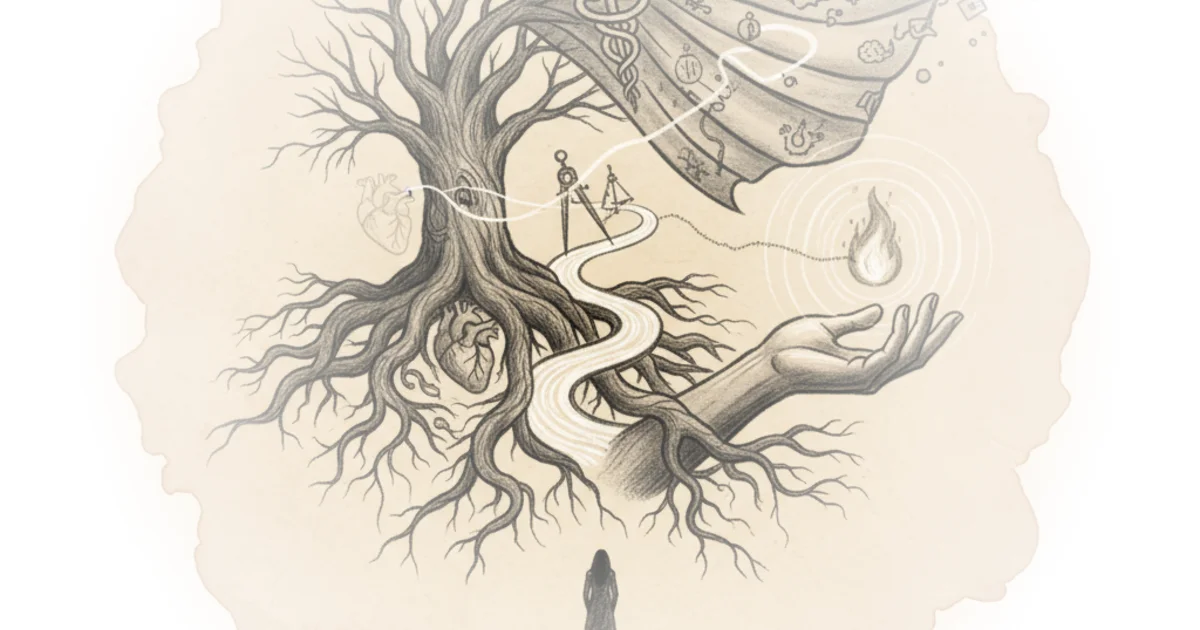
He admits that while he hates leaving his family, the moment he is on the floor, the distractions vanish. "No mandatory resilience training. No passive aggressive emails telling me to do more with less," he notes. This is a powerful critique of the modern NHS, where "resilience" is often a bandage for systemic under-resourcing. Critics might argue that glorifying the chaos ignores the toll such an environment takes on long-term mental health, but Francis is clear that he is describing a specific, high-stakes zone where he feels most competent.
"I went to medical school to be a doctor, not to be an administrator, not to be a manager... I love the action. I love the chaos. I love crash alarms going off."
The Adrenaline Paradox
The core of Francis's argument is a provocative self-examination. He confesses to being an "adrenaline junkie" who feels most alive when alarms are blaring and a nurse shouts that a pulse is gone. He asks the audience to judge him: "Does that make me something of a sociopath? Or should we actually want our doctors to get a kick out of what they do?" This is the piece's most daring move. By admitting he enjoys the "cataclysmic emergency," he risks alienating readers who expect stoic detachment from their healers.
However, Francis reframes this enjoyment not as a lack of empathy, but as a profound professional alignment. He argues that when a patient is crashing, the doctor's role is singular and clear. "When people ask me if I'd ever leave medicine and do YouTube full-time... I don't know if I'd ever feel as comfortable as I do as a cardiologist." This honesty is refreshing. It suggests that the best doctors aren't those who are detached, but those who are deeply, viscerally engaged with the stakes of their work. The danger here is the potential for burnout if the "high" becomes the only metric of success, but Francis seems to understand the balance.
Ben and the Soul Music DJ
To ground his philosophical musing, Francis recounts the story of Ben, a 28-year-old soul music DJ battling severe sarcoidosis and pneumonia. The narrative is a masterclass in tension. Ben was a young man with a complex condition, surrounded by a loving family, fighting a losing battle against a virus that caused his lungs to "pop holes." Francis describes the surreal atmosphere of the ICU, where the patient's favorite music played on a loop as his condition deteriorated.
The climax arrives on a chaotic weekend when Francis, a junior doctor, is the only one available to handle a tension pneumothorax—a life-threatening collapse of the lung caused by trapped air. With his senior registrar busy on another code, Francis is alone. "I plunged a big needle into Ben's chest. I heard that hiss of air escaping and almost immediately saw his parameters improve," he recalls. The scene is underscored by Al Green's "Let's Stay Together," a detail that elevates the moment from a medical procedure to a cinematic, almost spiritual experience.
"I felt a kind of euphoria as my heart rate started settling down again. To this day, Let's Stay Together makes me think of this strange moment."
This anecdote serves as the ultimate defense of his "sociopath" question. The euphoria he felt wasn't at Ben's suffering, but at his own ability to intervene and fix a broken system. It was the triumph of skill over chaos. Francis writes, "I'm an adrenaline junkie... I mean, my own indogenous adrenaline. Nothing brings me more professional enjoyment than a day when there is some cataclysmic emergency." The story proves that for some, the intensity of the emergency is not a barrier to compassion, but the very medium through which it is expressed.
Bottom Line
Francis's most compelling argument is that the "soul" of medicine lies in the crisis, not the consultation, and that doctors who thrive on that chaos are not monsters, but essential specialists in the art of survival. The piece's vulnerability is its romanticization of the emergency, which may inadvertently minimize the very real, non-glamorous work of chronic care and the systemic failures that create so many emergencies in the first place. Yet, as a testament to the raw, unfiltered humanity of the doctor-patient relationship in its most critical moments, it is unforgettable.