This piece from Reason delivers a startling historical indictment: that a recent Pentagon policy change effectively erases the faith of dozens of American presidents, Revolutionary War heroes, and decorated combat units by declaring their religions "not real." It is not merely a bureaucratic update; it is framed as a constitutional crisis where the executive branch has unilaterally decided which ancestors died for a legitimate cause. For the busy reader, this matters because it reveals how administrative rules can rewrite national memory in ways that contradict the very history they claim to protect.
The Establishment of a "Real" Faith
The core argument rests on the sheer scope of the exclusion. Reason reports that the administration recently announced it is removing about 180 religions from those recognized by the Pentagon, leaving only 31 officially sanctioned faiths. This creates an immediate tension with the First Amendment's prohibition on government establishment of religion.
"In essence, the Administration has 'established' 31 religions as acceptable to the U.S. government and denied religious freedom to members of many other faiths."
The piece argues that this is not a neutral administrative cleanup but an active theological intervention. By listing specific denominations like the Unitarian/Universalist Church or the African Methodist Episcopal (AME) Church while excluding others, the policy sends a message that some souls matter more than others in the eyes of the state. This lands with particular force when considering the historical trajectory of the military chaplaincy. As the article notes, the range of recognized faiths has historically expanded to reflect the nation's demographics: from exclusively Protestant ministers at the Revolution, to Catholic chaplains under James K. Polk during the Mexican-American War, and Jewish rabbis authorized by the Lincoln administration during the Civil War.
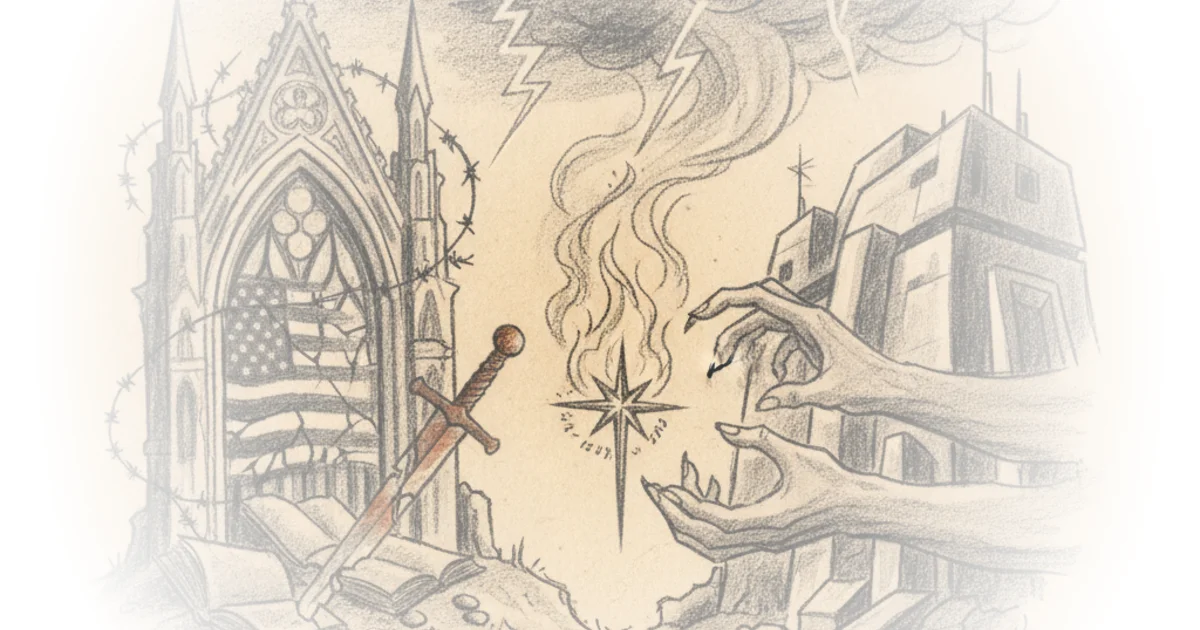
Critics might argue that the military must maintain a standardized list for logistical simplicity in providing chaplaincy services. However, the article counters this by suggesting that a "hands-off" approach—removing all religious symbols and support entirely—would be more constitutionally sound than picking favorites. > "Plausibly, the Pentagon could decide not to have military chaplains... Such a policy would run counter to the history of the American military starting with the Revolution."
The editorial voice here is sharp: it suggests that partial accommodation is worse than none at all because it legitimizes discrimination while pretending to offer support.
Erasing the Founders and the Fallen
Perhaps the most devastating section of the analysis connects current policy to the nation's founding generation. The piece highlights a profound irony: the administration is preparing to celebrate the 250th anniversary of the Declaration of Independence while simultaneously invalidating the faiths of its primary authors.
"At least a dozen of the signers of the Declaration of Independence, including its most important co-authors, practiced faiths that the Secretary of Defense and the President have just cancelled."
The text meticulously lists these historical figures to drive home the point. John Adams was a Unitarian; Thomas Jefferson and Benjamin Franklin were Deists; Roger Sherman and Oliver Wolcott were Congregationalists. Under the new rules, the dog tags of a modern soldier who shares their faith would be blank or incorrect. The article notes that even William Howard Taft, a conservative Republican President and former Secretary of War buried in Arlington National Cemetery, practiced Unitarianism—a faith no longer recognized.
This historical framing is effective because it moves the debate from abstract theology to concrete lineage. It forces the reader to ask: If the faith of the Founders is "cancelled," what does that say about the legitimacy of their legacy? The piece also points out the arbitrary nature of some designations, such as the exclusion of the Church of Jesus Christ of Latter-day Saints (LDS) from the list of Christian denominations, despite the church's own clear affirmations. This forces the government to take a side in internal theological debates it has no business entering.
"This is emphatically not a debate in which the Pentagon, the President, or the federal government should take sides."
The Human Cost of Bureaucratic Exclusion
The argument reaches its emotional peak when it connects these policy changes to specific groups of soldiers who gave their lives for the country. The piece invokes the Navajo Code Talkers, many of whom were members of the Native American Church or traditional tribal religions. It also highlights the Nisei Brigade, a unit of Japanese-American soldiers in World War II that became the most decorated unit in U.S. history, noting that some followed the Shinto faith.
"The current administration has cancelled the faith of Major General Philip Schuyler... because he was Dutch Reformed."
By citing figures like Brigadier General Theodore Roosevelt Jr., who died leading troops at Normandy while practicing the Dutch Reformed faith, the article illustrates that this is not just about dog tags; it is about honoring the dead. The policy announcement on the anniversary of D-Day is described as a "slap in the face" to these veterans and their families.
"Some of those who died were probably members of faiths that the Pentagon no longer recognizes as 'real' religions."
This section underscores the human cost of administrative overreach. When the government declares a soldier's faith illegitimate, it implicitly questions the purity of their sacrifice. The article suggests this undermines morale and fractures the bond between the state and those who serve.
Bottom Line
The strongest part of this argument is its relentless use of historical precedent to expose the absurdity of the current policy; by showing that the "cancelled" faiths include those of the Founders and WWII heroes, it makes the administration's stance look not just unconstitutional, but historically illiterate. However, the piece's biggest vulnerability lies in its assumption that the Pentagon has no mechanism to update lists without violating the First Amendment—a legal question that courts may view differently than historians do. The reader should watch for how this policy is challenged in federal court and whether the military can find a way to accommodate diverse faiths without creating an official state religion.