Bari Weiss peels back the romantic veneer of Slab City to reveal a harsh reality where freedom often looks indistinguishable from abandonment. This is not a story about a libertarian utopia, but a forensic look at what happens when the American safety net frays so badly that people are forced to build a society on concrete slabs left behind by the military. For the busy reader, the value here lies in the uncomfortable question Weiss poses: if this is the "last free place," what does that say about the rest of the country that pushed these people out?
The Myth of the Anarchic Frontier
Weiss immediately dismantles the popular narrative that Slab City is a haven for artists and rebels opting out of capitalism. She introduces us to "Wizard," a resident who bluntly states, "Everyone here is insane," before describing the settlement not as a frontier fantasy, but as a collection of camps where people arrive broken and often fail to heal. The author argues that the romantic framing of Slab City as a place for veterans finding peace or artists rejecting the grid is a distortion of a brutal reality defined by drug addiction, crime, and punishing heat. This reframing is effective because it forces the reader to confront the human cost of "freedom" when it is stripped of infrastructure and support.
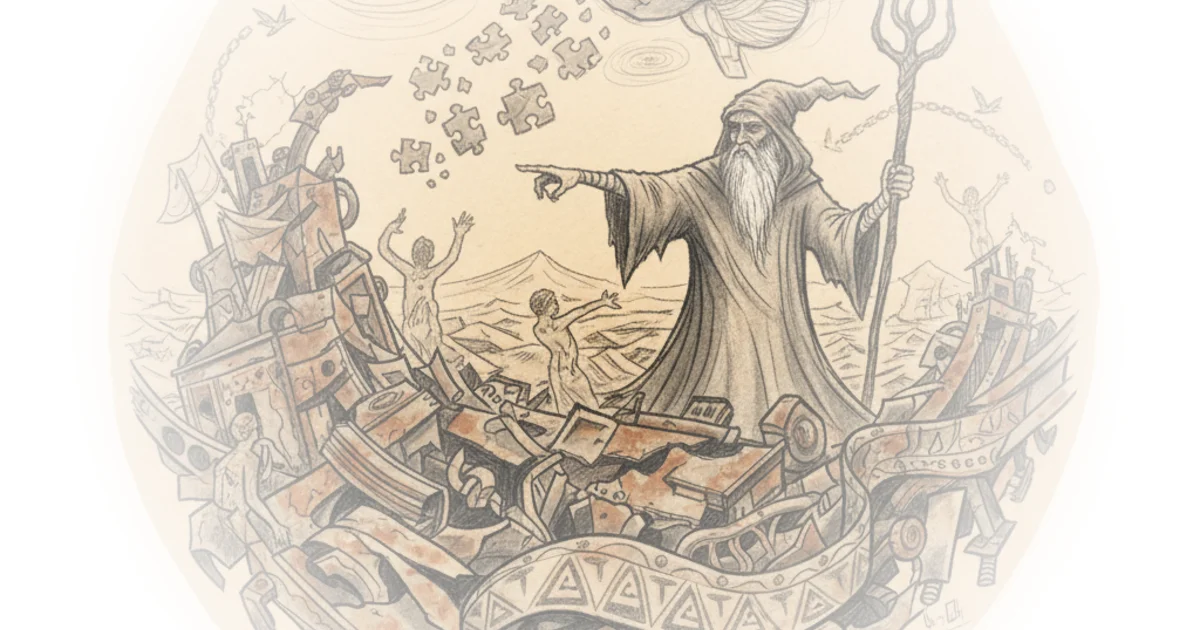
The piece traces the origin of this anomaly to a specific historical moment: the Second World War. Weiss explains that the land was once Camp Dunlap, a military training ground for North African campaigns, decommissioned in 1961 with no plan for restoration. The concrete slabs that remain are a physical reminder of how the government discards what it no longer needs. This historical context is crucial; it grounds the current chaos not in some abstract philosophical choice, but in a concrete policy failure. The land was returned to the state, but nobody bothered to clear the slabs, creating a vacuum that drifters eventually filled.
"If Slab City really is the last free place in America, what does that say about the rest of the country?"
Weiss notes that the settlement remained marginal until the late 1970s, when the RV community discovered it, transforming it into a seasonal migration point. She highlights the irony that while residents claim to be off-grid, the settlement is navigable on Google Maps, has 5G signal, and receives Amazon deliveries. This detail serves as a sharp critique of the "off-grid" myth, suggesting that modern capitalism has penetrated even the most desperate corners of the desert. Critics might argue that this focus on connectivity misses the point of the residents' desire for autonomy, yet Weiss's evidence suggests that for many, the "freedom" is an illusion maintained by the very systems they claim to reject.
The Human Cost of "Slab Justice"
The commentary shifts from the physical landscape to the social dynamics, where Weiss explores the concept of "Slab justice." She interviews residents like Steve, a snowbird who admits that while the place feels like home, it is a pressure cooker for those who are not "steady." The author describes a system where disputes are settled not by police, but by an unofficial sheriff and the threat of burning down a camp. This self-policing mechanism is presented as a grim necessity in a place where the state has effectively abdicated its responsibility.
Weiss captures the stark divide between the older residents, who see themselves as stewards, and the "wreckheads" who use the area for partying and drug use. She quotes a resident who explains the brutal logic of their justice system: "If someone behaves badly, first they get the soft touch. They're told to leave... If they don't go, their camp goes up in flames." The article does not shy away from the extreme measures taken against pedophiles, noting a community sentiment that "Dead pedophiles don't re-offend." This section is the most visceral, illustrating how the absence of formal law enforcement leads to a volatile, vigilante environment where survival depends on adhering to unwritten, often violent, codes.
"I didn't come here to be free. I came here because it was the only place that didn't ask me to be anything."
The author uses the story of Dot, a resident who runs a makeshift art installation, to illustrate the psychological toll of this existence. Dot's admission that the total freedom is "more stressful than liberating" underscores the central thesis: the lack of structure is not a gift, but a burden. The piece also touches on the economic exploitation that thrives here, with drug dealers targeting residents on fixed incomes like social security. Weiss describes how dealers ensure that once basic needs are met, every remaining dollar flows to them, trapping residents in a cycle of dependency. This economic analysis adds depth to the sociological observation, showing how the "freedom" of Slab City is often a trap for the vulnerable.
The Pressure Valve of Society
Despite the grim realities, Weiss finds a strange, twisted logic in the existence of Slab City. Through the eyes of Builder Bill, a long-time resident, the settlement is framed as a "pressure-release valve" for society. Bill argues that every society needs a place where people who "aren't good out there" can be welcomed. He points to the Flamingo Camp, a village for queer and transgender individuals who were rejected by their hometowns, as evidence of the community's unique capacity for acceptance.
This argument is compelling because it acknowledges the failure of the broader social fabric without romanticizing the alternative. The author notes that while the conditions are "pure hell in the summer," the community provides a safety net for those who have fallen through the cracks of the mainstream. However, the piece also highlights the fragility of this system, noting that the influx of tourists and the presence of cartels are destabilizing forces. The "gift shop" run by Jimi Austin James, where locals sell trinkets to visitors, serves as a metaphor for the commodification of this desperation. The irony is palpable: tourists come to see the "last free place," but their presence is often the only thing keeping the local economy afloat.
"It's like a pressure-release valve. Where would these people go otherwise?"
The commentary concludes by reflecting on the broader implications of Slab City's existence. Weiss suggests that the settlement is a symptom of a larger national failure, a place where the consequences of poverty, addiction, and social isolation are concentrated. The presence of Salvation Mountain, with its message of "GOD IS LOVE," stands in stark contrast to the harsh realities of the slabs, offering a glimmer of hope amidst the decay. Yet, as Weiss points out, even this beacon of hope is now besieged by day-trippers, turning a spiritual monument into a tourist attraction.
Bottom Line
Weiss's strongest move is stripping away the libertarian fantasy to reveal Slab City as a symptom of systemic abandonment rather than a voluntary experiment in freedom. The piece's greatest vulnerability is its reliance on the perspective of long-term residents who, despite their hardships, defend the community's existence, potentially softening the critique of the broader societal forces that created it. Readers should watch for how this "pressure valve" holds up as the climate crisis intensifies the desert's already punishing heat, potentially turning a social experiment into a humanitarian catastrophe.