In an era where algorithms dictate our cultural consumption, Ted Gioia offers a startling counter-narrative: a single, unrecorded thirty-minute jazz performance in a beachside club fundamentally rewired his destiny. This is not merely a nostalgic memoir; it is a rigorous argument for the irreplaceable power of live, unmediated human connection in a digital age that increasingly prioritizes convenience over depth. Gioia contends that true vocation often arrives not through a slow accumulation of skills, but through a sudden, earthshaking realization that only occurs when one is physically present in the room.
The Architecture of Discovery
Gioia frames his journey not as a linear progression of talent, but as a series of serendipitous collisions with the right resources at the right time. He recalls a childhood where music was a hobby rather than a career path, noting that his parents "didn't see this as a career path" because neither was a musician. Yet, the seed was planted early. He describes his mother's "baby book" entries about him playing piano and drinking coffee at age one, a detail that feels almost prophetic in hindsight. The author's choice to highlight these mundane origins serves to democratize the creative process; he was not a prodigy, but an ordinary child who found a way in.
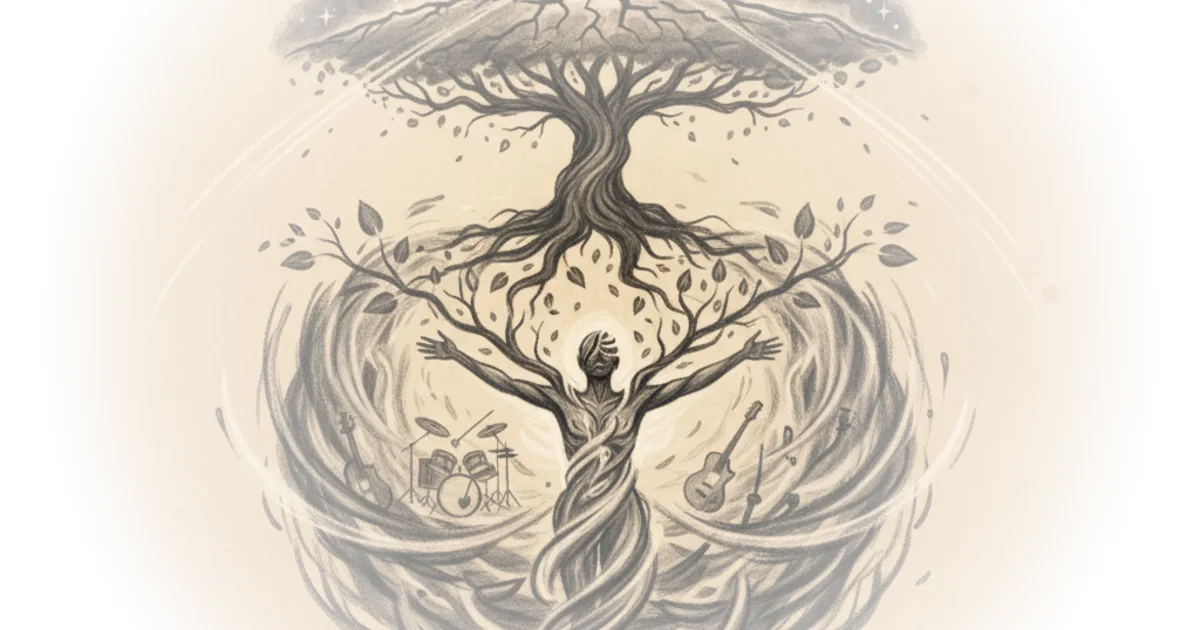
The narrative pivots on the author's rejection of formal instruction. After quitting piano lessons to save his family money, Gioia writes, "I continued to play the piano. In fact I started playing it more than ever—because now I was doing it for fun." This shift from obligation to curiosity is the first critical lesson. He describes a self-directed education fueled by the local library and the now-vanished music stores of Hawthorne and Torrance. He notes that these shops were likely the same haunts of Brian Wilson and the Beach Boys, grounding his personal story in the rich, specific geography of Southern California's musical history.
"I stumbled upon a stack of Downbeat magazines at the Hawthorne library, and read through them like they were some kind of holy script."
This metaphor of the magazine as scripture is potent. It suggests that for the aspiring artist, the written word can sometimes precede the sonic experience. Gioia admits the absurdity of becoming a jazz fan by reading about the music before ever hearing it live. A counterargument worth considering is that this reliance on text might have created a theoretical framework that was too rigid, potentially stifling the very improvisation he later championed. However, Gioia suggests the opposite: the intellectual hunger prepared him to recognize the genius when he finally encountered it.
The Moment of Contact
The core of Gioia's argument rests on the physical reality of the concert experience. He contrasts his previous exposure to massive stadium shows, where he "could barely pick out the musicians from my seats high in the nosebleed zone," with the intimacy of the Lighthouse Cafe. He describes the Lighthouse not as a glamorous venue, but as a "gateway drug" where the proximity to the artists was the defining feature. "I was just a few feet away from the action, and every gesture, gaze and interaction among the players was discernible," he writes. This observation underscores a vital truth about jazz: it is a visual and conversational art form as much as an auditory one. The subtle communication between musicians—the "single look" that changes a song's direction—is invisible in a recording or a stream.
The climax of the piece arrives with the performance of Yusef Lateef's quartet. Gioia describes the tempo as "breakneck," a shock to a listener raised on rock and pop. He recalls an anthropologist's story about kabuki theater, where an audience member shouts, "This is the moment I've been waiting for." Gioia identifies this as his own experience: "I honestly wanted to jump up, and tell everybody in the nightclub: This is the moment I've been waiting for." The emotional weight here is immense. It is a description of destiny snapping into place.
"I knew in that instant that everything in my life had been leading up to this. And I'd been wasting my time with rock and pop and classical music. My destiny was jazz."
This declaration is bold, perhaps even hyperbolic, but it serves the narrative's purpose of illustrating the transformative power of the arts. The author then details the specific, ephemeral nature of the performance: a thirty-minute piece called "Inside Atlantis" by pianist Kenny Barron, which was never recorded at the time. "It happens in the moment," Gioia argues. "And if you hear it one night, don't expect to find it on a record." This is a direct challenge to the modern listener's expectation of ownership and permanence. The fact that the song only appeared on an official album decades later, in 2024, reinforces the idea that the true value of the music was in the shared, fleeting experience of that night.
The Long Aftermath
The commentary concludes by tracing the tangible consequences of that single night. Gioia did not just enjoy the music; he committed to a grueling regimen of practice, spending "three hours per day, on average, at the piano." The transformation was rapid: within two years he was playing professionally; within five, he was holding his own with top-tier musicians. He acknowledges that his performing career ended early due to a physical ailment, but he expresses no regret. "You don't choose these things. They choose you," he writes. "That's how true vocations happen."
"You won't have this kind of experience staring into your phone. Nope. Never."
This final assertion is the piece's most provocative claim. In a world where high-fidelity audio is accessible instantly on any device, Gioia insists that the medium is not the message; the context is. The physical presence, the risk, the shared space—these are the ingredients of the "life-changing" event. While one might argue that technology has democratized access to great music for those who cannot travel to a club in Hermosa Beach, Gioia's point stands: the transformation requires a different kind of engagement. The story is a testament to the idea that art is not a product to be consumed, but an event to be survived.
Bottom Line
Ted Gioia's piece is a masterclass in the power of specific, sensory detail to illustrate a universal truth about human potential. Its strongest element is the vivid reconstruction of the Lighthouse Cafe performance, which effectively argues that the ephemeral nature of live jazz is its greatest strength, not a weakness. The argument's only vulnerability is its reliance on a singular, almost mystical moment of clarity that may feel inaccessible to those whose paths to art were more gradual. Yet, the verdict is clear: in an age of digital saturation, the call to physical presence remains the most urgent message for the creative soul.