Devin Stone delivers a scathing indictment of the Department of Justice's recent settlement with Live Nation, framing it not merely as a legal misstep but as a betrayal of the very consumers the antitrust laws were designed to protect. The piece stands out by juxtaposing the absurdity of modern ticketing fees with the stark reality of corporate collusion, using the specific, visceral example of a children's ice show to illustrate how predatory pricing has become normalized. Stone argues that the settlement effectively rewards a monopoly that has spent years weaponizing its control over venues and artists to crush competition, all while the government looks the other way.
The Anatomy of a Monopoly
Stone begins by dismantling the illusion of choice in the live music market, pointing out that service fees are no longer a reflection of operational costs but a pure extraction of consumer surplus. "The reality is these are fees tacked on because you will pay it. It's not like you can see Lady Gaga any other way," Stone writes, capturing the frustration of a generation that has accepted exorbitant costs as inevitable. This observation is crucial because it shifts the blame from the consumer's lack of bargaining power to the structural lack of alternatives. The author effectively highlights how the 2010 merger between Live Nation and Ticketmaster, once sold to the public as a move toward efficiency, created a "flywheel" that now spins exclusively for the corporation's profit.
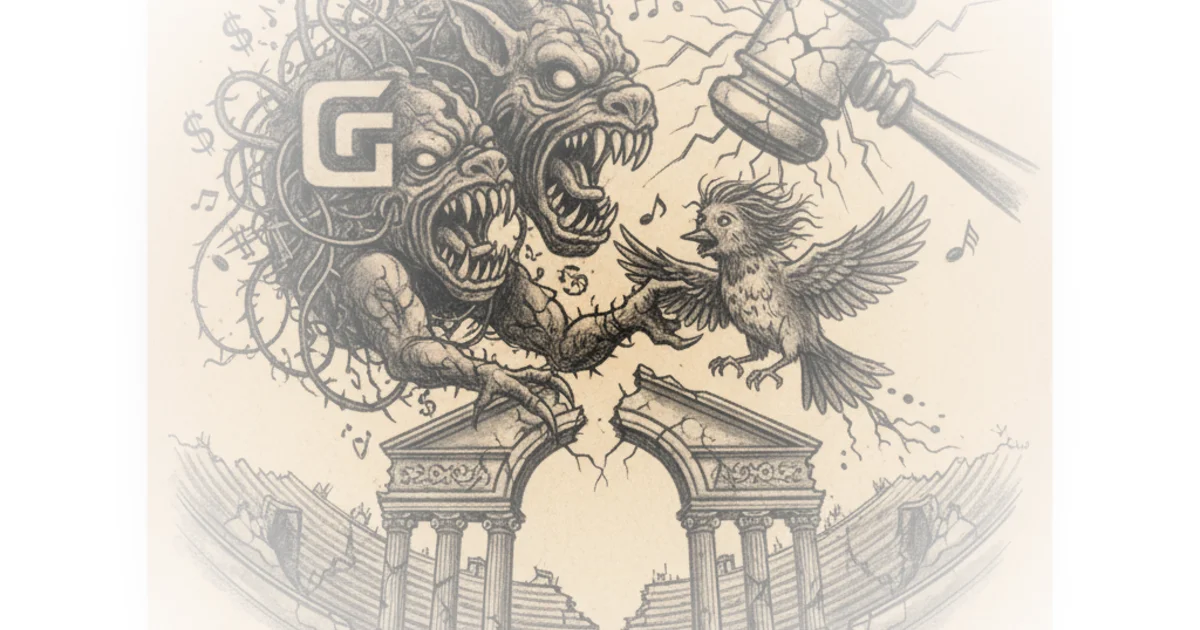
The commentary on the "flywheel" model is particularly damning. Stone explains that Live Nation controls the promotion, the venues, and the ticketing, creating a closed loop where artists and venues are forced to comply or be excluded. "Live Nation is the dominant concert promoter in the country... because artists know they're not going to get booked at the most lucrative venues if they don't sign on with Live Nation," Stone notes. This dynamic illustrates the concept of an essential facility, where a single entity controls access to a necessary resource—in this case, the ability to tour at scale. While critics might argue that market dominance alone isn't illegal, Stone correctly points out that the methods used to maintain it are the issue. The evidence of retaliation against venues that dared to switch ticketing providers, such as the Barclays Center case, provides concrete proof of anti-competitive behavior rather than mere market success.
"That's how we do it. We know a lot about Live Nation's business model from ongoing litigation. Internally, the company describes its interlocking lines of business as a flywheel."
Collusion and the Illusion of Competition
The most striking portion of Stone's coverage is the revelation of explicit collusion between Live Nation and its supposed competitor, Oakview Group. Stone details how the two giants agreed to split the market, with Oakview ceding the concert promotion space to Live Nation in exchange for control over arena consulting. "Oakview CEO jokingly described his company as a hammer and a pimp for Live Nation," Stone writes, a quote that perfectly encapsulates the farcical nature of this "competition." This is not a theoretical violation; it is a documented agreement to suppress market entry, a quintessential breach of the Sherman Antitrust Act.
Stone further contextualizes this behavior by referencing the 2025 indictment of Oakview's CEO for bid rigging, which was swiftly followed by a presidential pardon after the appointment of a high-profile lobbyist. This detail underscores the author's broader point about the erosion of accountability when corporate interests align with political power. The narrative suggests that the DOJ's settlement is less about justice and more about political expediency, especially given Live Nation's significant financial contributions to the administration. Stone argues that the settlement ignores the fundamental purpose of antitrust law: "It is illegal to acquire or maintain a monopoly through anti-competitive conduct rather than through superior product or legitimate business acumen."
The author also touches on the human cost of this consolidation, noting that while top-tier artists make bank, smaller acts are being squeezed out of the market entirely. "You are paying more to see fewer artists," Stone summarizes, a succinct indictment of the current ecosystem. This aligns with the historical context of the Essential Facilities doctrine, which posits that a monopoly controlling a bottleneck resource must provide access to competitors on reasonable terms—a principle seemingly abandoned in this settlement.
Bottom Line
Stone's strongest asset is his ability to translate complex antitrust concepts into a narrative of consumer exploitation, using specific, verifiable examples of retaliation and collusion to prove that the monopoly is actively maintained rather than naturally occurring. However, the piece's primary vulnerability lies in its reliance on the assumption that the legal system is the only avenue for change, given the apparent political capture of the DOJ. Ultimately, the article serves as a vital warning: without a rigorous enforcement of antitrust laws, the live music industry will continue to function as a closed loop where the only beneficiary is the monopoly itself.