Stephen West of Philosophize This! challenges the modern assumption that religion is merely a crutch for the weak or a transactional ticket to heaven, arguing instead that its true power lies in a radical, ego-dissolving confrontation with nothingness. While most discourse treats faith as a tool for comfort or social cohesion, this piece posits that authentic religious experience requires the terrifying dismantling of the self—a concept that feels increasingly urgent in an era defined by algorithmic isolation and utilitarian thinking.
Beyond the Security Blanket
The commentary begins by dismantling the two most common, yet shallow, perceptions of faith. West notes that skeptics often view religion as "a type of mythology that simplifies reality down for scared, weak people that either are too busy or unwilling to affirm reality in all of its complexity." This framing is effective because it acknowledges the validity of the critique before pivoting to a deeper layer. The author argues that even the devout often miss the mark, viewing their faith as "the one and only ticket they have to salvation" rather than a transformative practice.
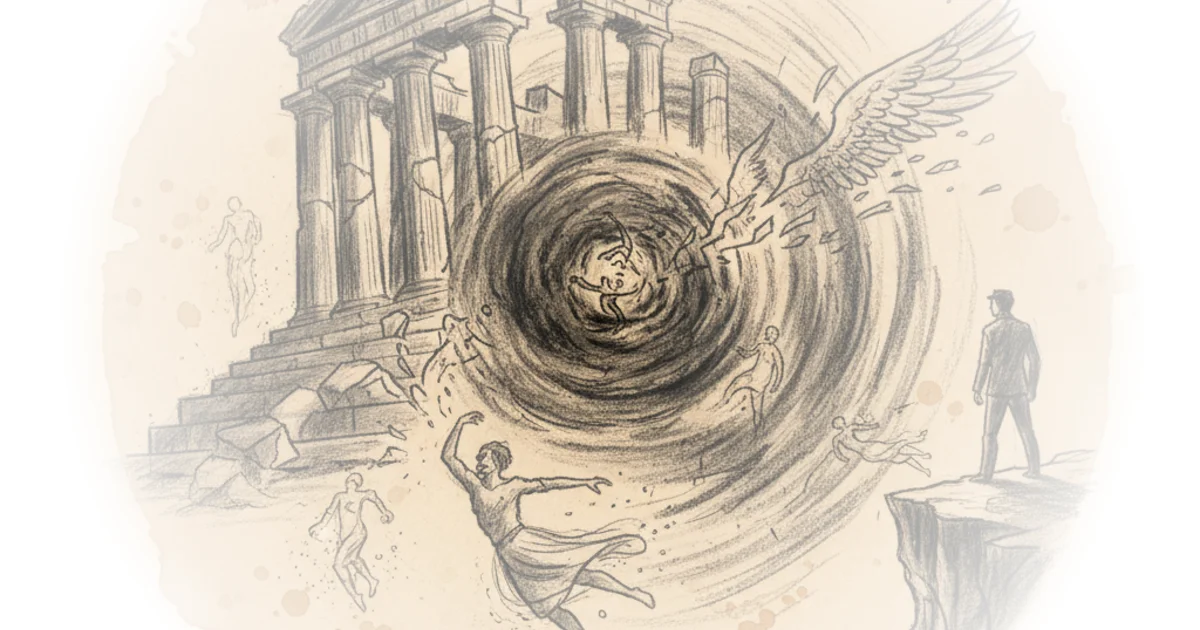
West draws on the work of Keiji Nishitani to suggest that both the atheist dismissal and the believer's transactional approach suffer from the same flaw: they view religion through a lens of utility. "These are all attempts to describe what religion is by framing it in terms of its utilitarian function, or in terms of what use it serves a particular person or to a society," West writes. This is a crucial distinction. By applying Martin Heidegger's concept of "technological enframing," the piece argues that modern society has reduced even the sacred to a resource for self-improvement or social stability. The commentary lands hard here, forcing the reader to ask if their own spiritual life is merely a sophisticated form of ego maintenance.
Critics might note that dismissing the "security blanket" function of religion ignores the genuine psychological comfort and community cohesion it provides for millions, potentially alienating those who find solace in tradition without undergoing a mystical crisis. However, West's point is not that comfort is bad, but that it is incomplete.
The Emptying of the Self
The core of the argument shifts from what religion is not to what it could be: a "reformulation of the self and its whole relationship to its reality." West describes a profound internal movement where an individual transitions from a dualistic worldview to one where the self is "emptied" to reveal an "interdependent network of being." This is not a gentle adjustment of habits; it is a fundamental restructuring of consciousness.
A religious quest truly begins then for Nishitani when you stop framing religion and the world around you in terms of 'What use does this serve to me?' and start framing it in terms of 'For what purpose do I exist?'
This distinction is the piece's most potent insight. It reframes the religious quest from a quest for answers to a quest for a new mode of being. West illustrates this with a sharp, perhaps provocative, observation of modern churchgoers: "Far from this being a weekly exercise in rethinking the self and its relationship with the world, for a lot of people this becomes an emboldening of the self and the ego." The author suggests that many religious practices have become a way to "wield" authority and shut down complexity, rather than embrace the mystery of existence. This critique is biting but necessary, challenging the reader to distinguish between performative piety and genuine transformation.
The University Analogy
To address the baggage of the word "religion," West employs a striking analogy comparing modern religious practice to the modern university system. He notes that for most, college is "essentially personal salvation for the career world—I'm just doing it for the certificate on the wall so I can make more money." Yet, we do not discard the concept of the university because of this; we recognize that a small percentage of students engage in a "transformative experience" that connects them to an intellectual tradition.
Similarly, West argues, religion remains the unique gateway to this specific relationship with being, even if the majority of practitioners are only skimming the surface. "It would be silly for us to not use the word religion, call people contemplatives or some [other term]," the argument implies, because the structure of the tradition itself is designed for the deep dive, even if few take the plunge. This defense of the terminology is strategic, preserving the historical weight of the concept while acknowledging its current dilution.
Bottom Line
The strongest element of this commentary is its refusal to let the reader off the hook with a comfortable definition of faith; it demands a confrontation with the "nothingness" that underpins true spiritual maturity. Its biggest vulnerability lies in its potentially elitist tone, which risks alienating the very communities it seeks to elevate by labeling their experiences as "shallow." Readers should watch for how this framework of "emptying the self" applies to non-theistic spiritual practices, as the piece hints at a universal human need that transcends specific dogmas.