In a media landscape increasingly dominated by billionaire-funded platforms, Emily Atkin delivers a stinging indictment of how "free thinking" is being weaponized to launder fossil fuel propaganda. With Bari Weiss now at the helm of CBS News, Atkin's forensic audit of Weiss's previous outlet, The Free Press, offers a terrifying preview of what happens when the pursuit of "ideological independence" aligns perfectly with the interests of Big Oil. This is not just a critique of one publication; it is a warning about the erosion of climate literacy in mainstream journalism.
The Architecture of Doubt
Atkin's central thesis is that The Free Press has abandoned its stated mission of challenging narratives to instead amplify the very "polluter-friendly framing" it claims to reject. She meticulously catalogs a pattern where the outlet rebrands tired industry talking points as rebellious contrarianism. "Over and over, it allows its readers to get spun like a basketball on Big Oil's finger," Atkin writes, setting a tone of urgent skepticism that permeates the piece.
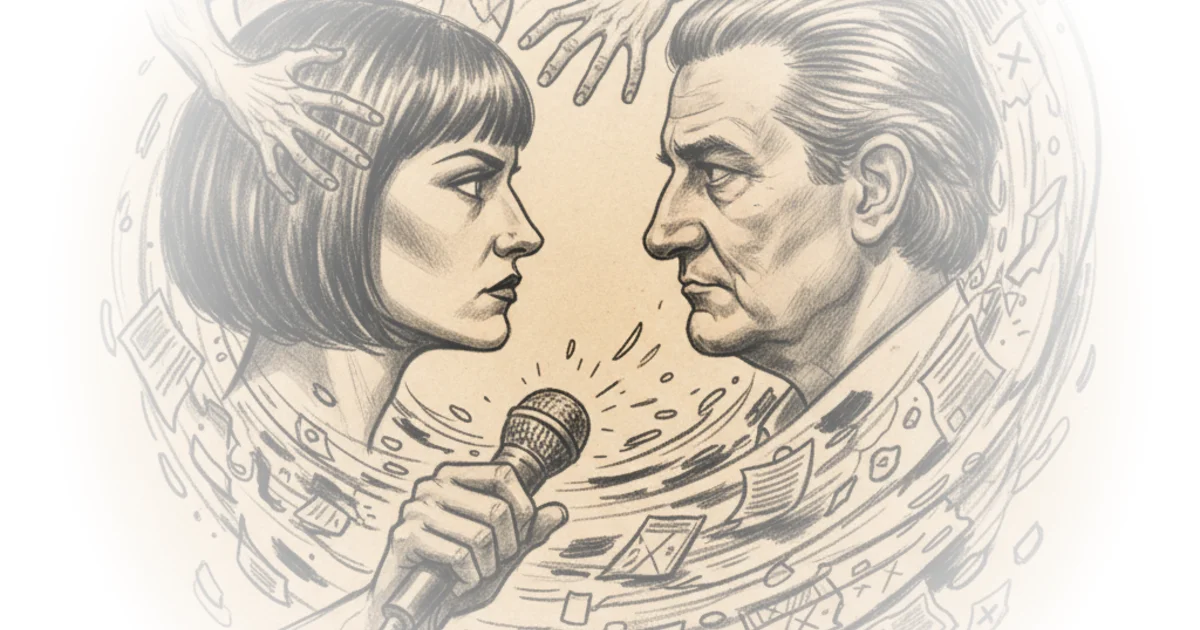
The evidence she presents is damning. She points to a series of articles that systematically dismantle the urgency of the climate crisis, often relying on the same small circle of industry-aligned voices. For instance, she highlights an interview with Steven E. Koonin, a former BP scientist who served in the executive branch, noting how the outlet used his platform to argue that "Climate Change Did Not Cause The L.A. Fires." Atkin correctly identifies the flaw here: while no serious scientist claims climate change is the sole cause of a specific fire, the framing implies a total disconnect between the crisis and the disaster. As Atkin puts it, "no prominent politician, activist, journalist or scientist who cares about climate change actually says climate change caused the wildfires. They say climate change increased the risk of damage and made them worse."
This rhetorical sleight of hand is not accidental. It mirrors the historical playbook of the American Enterprise Institute, a conservative think tank funded by fossil fuel billionaires, which has long argued that Americans "love fossil fuels" and that climate policy should be abandoned. By platforming such views under the guise of "free thought," the outlet creates a false equivalence between scientific consensus and industry denialism.
Instead of challenging power, CBS will be helping launder the fossil fuel industry's preferred narratives through the language of free thinking.
Critics might argue that challenging the "doom and gloom" narrative is necessary to avoid climate fatalism, a point Atkin addresses by distinguishing between realistic urgency and manufactured panic. However, the piece suggests that the outlet's version of "balance" is actually a distortion. When the outlet published an op-ed titled "The Triumph of the Plastic Straw," which accused activists of lying about climate severity to create panic, it wasn't engaging in healthy debate; it was reinforcing the idea that the crisis itself is a fabrication.
The Bill Gates Distortion
The analysis deepens when Atkin turns her attention to how The Free Press handles high-profile figures like Bill Gates. She exposes a specific video that implied Gates had backtracked on his decades of climate work, suggesting he now believes fossil fuels are superior to clean energy. Atkin dismantles this narrative with precision, noting that Gates actually stated that solar, wind, and electric cars are "just as cheap as, or even cheaper than, their fossil fuel counterparts."
This section highlights a dangerous trend in modern media: the tendency to turn complex scientific and economic debates into simplified "takedowns" that serve a political agenda. Atkin writes, "The Free Press also has a habit of staging 'takedowns' of climate claims that aren't actually being made, a disingenuous tactic meant to portray mainstream climate scientists and advocates as unhinged." This approach not only misinforms the public but actively hinders the political will needed to address the crisis.
The piece also touches on the broader implications of billionaire influence on media, referencing Laura Malden's argument that news outlets risk legitimizing "billionaires' hyper-privileged viewpoints" by treating them as thought leaders rather than scrutinizing their wealth consolidation. While Gates' memo contained controversial elements regarding "doomsday" rhetoric, Atkin argues that the outlet's framing went beyond critique into outright fabrication.
The Human Cost of Disinformation
Beyond the intellectual dishonesty, Atkin underscores the material consequences of this reporting strategy. She warns that if CBS News adopts this model, it will leave the public "materially less prepared for the realities of a warming world." This is the crux of the argument: climate denialism isn't just a matter of opinion; it is a threat to public safety and policy readiness.
She acknowledges that some of the topics The Free Press covers, such as the pressure on scientists to focus solely on climate drivers or the narcissism of certain movement leaders, have journalistic value. "These are serious issues that call for real, rigorous reporting," Atkin admits, "not first-person grenades lobbed to generate outrage and reinforce the right-wing fantasy that climate change is not a big deal." The distinction is crucial. Valid criticism of the climate movement is necessary, but it cannot be used as a Trojan horse to deny the existence of the problem itself.
The piece also references the coordinated efforts of Exxon-funded think tanks to spread denialism in Latin America, drawing a parallel between those historical campaigns and the current tactics of The Free Press. Just as those campaigns sought to make the global south "less inclined" to support climate treaties, the current media strategy aims to erode domestic support for climate action by framing it as economically suicidal.
Bottom Line
Emily Atkin's most compelling contribution is her ability to connect the dots between specific editorial choices and the broader machinery of fossil fuel disinformation. Her argument that The Free Press is not an outlier but a sophisticated vehicle for industry propaganda is robust and well-supported. The piece's greatest vulnerability lies in its potential to alienate readers who genuinely feel overwhelmed by climate doom, yet it correctly identifies that the solution is not denial, but clarity. As CBS News integrates this new editorial direction, the public must remain vigilant against the subtle repackaging of old lies as new truths.