Tom van der Linden tackles a cinematic technique that often divides audiences: the long take. In his analysis of the Netflix series Adolescence, which is shot entirely in hour-long continuous takes, he doesn't just praise the technical feat or dismiss it as vanity. Instead, he dissects the psychological tug-of-war between the viewer's immersion and their awareness of the craft. What makes this piece notable is its refusal to settle on a single verdict, instead exploring why this technique feels so magnetic even when it feels so obstructive.
The Cynic's Dilemma
Van der Linden begins by acknowledging the immediate frustration many feel when confronted with such an extreme stylistic choice. He admits that the initial reaction can be dismissive, noting, "The wonders are so stupid. It's just the director jacking off while making everyone else's lives miserable." This blunt assessment sets the stage for a deeper inquiry. He argues that the technique has increasingly become a "marketing tool that always wants to one up itself to generate more engagement," suggesting that the drive for viral moments often overshadows narrative necessity. As he puts it, "It's like the long take is no longer truly about storytelling, but also increasingly an exercise in vanity."
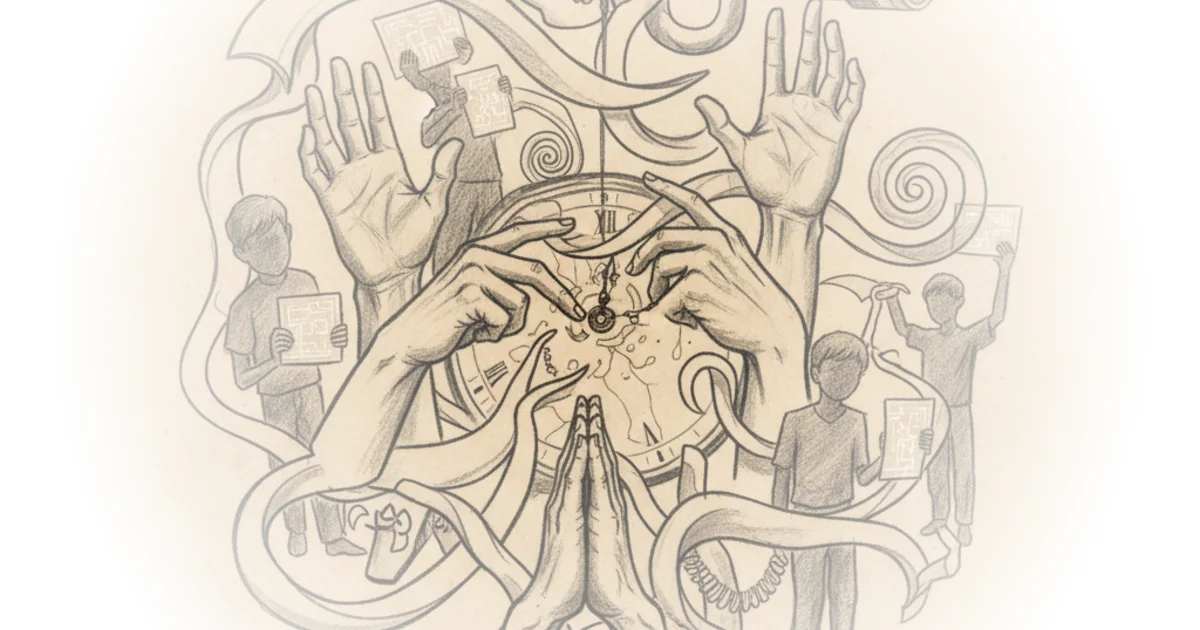
This framing is effective because it validates the audience's fatigue with gimmickry. However, it risks oversimplifying the intent behind films like Birdman or Children of Men, where the technique serves a clear emotional purpose rather than just a promotional one. Critics might note that not every long take is a bid for social media clout; sometimes, it is a genuine attempt to alter the viewer's relationship with time.
"It's like the long take is no longer truly about storytelling, but also increasingly an exercise in vanity."
The Mechanics of Immersion
Despite his skepticism, van der Linden pivots to the undeniable power of the technique to ground the viewer. He explains that by locking onto a character, the camera forces the audience to experience events in real-time, creating a "phantom character" that the viewer projects themselves onto. He cites Children of Men and Saving Private Ryan as prime examples where the physical presence of the camera makes the audience feel like an avatar in the story. "It really makes you part of the action and the drama," he writes, "which in turn immerses us into the subjective experience of the characters."
This argument holds up well when examining films that use the long take to simulate claustrophobia or disorientation. In Son of Saul, for instance, the restricted field of view reflects the emotional reality of a prisoner in a concentration camp. Van der Linden observes that this approach "doesn't directly mimic the experience of the characters, but rather reflects more symbolically their emotional reality." The strength here is the distinction between literal first-person perspective and symbolic immersion, a nuance often lost in casual film criticism.
Dictating Pace and Atmosphere
The commentary then shifts to how the long take dictates the flow of a narrative. Van der Linden points out that because the editing happens during filming rather than in post-production, the pace is fixed. "There's just no way to go back afterwards to speed things up or slow them down," he notes, highlighting the immense pressure this places on the director. This constraint can be used to build tension, as seen in 1917, where the ticking clock is felt viscerally. Alternatively, it can slow things down to invoke calm, as in the works of Bela Tarr, where "the long takes are used to dictate flow."
He also explores the atmospheric potential of the technique, from the "energetic moods of wealth" in Scorsese's films to the "psychological dread" in Kubrick's The Shining. The versatility of the long take is its greatest asset, yet van der Linden questions whether Adolescence leverages this versatility effectively. He wonders, "If the story doesn't have a fixed point of view, then why did the cinematography did have to have one?" This is a crucial critique. If the technique doesn't align with the narrative structure, it risks becoming a distraction rather than a tool.
"When you're trying to explain, trying to justify something as ineffable as poetic value, you're inevitably going to clash with that initial question of vanity."
The Verdict on Adolescence
Returning to the specific case of Adolescence, van der Linden acknowledges that the first episode succeeds in locking the viewer into the "confusion and chaos" of the characters' experience. However, he remains unconvinced by the necessity of the hour-long format for the entire series. He questions the "awkward staging" required to maintain the illusion of a single take when the perspective shifts between multiple characters. "Is there some deeper experiential value here that I'm missing?" he asks, or was it simply to secure the accolade of a one-shot episode?
This hesitation is the piece's most compelling moment. It refuses to give a definitive answer, instead leaving the reader to grapple with the tension between technical achievement and storytelling utility. Van der Linden concludes that while the technique can create "cinematic ecstasy," it can also feel like a "frustration that was turned up to 11" when it distracts from the story.
Bottom Line
Tom van der Linden's analysis succeeds in humanizing the debate around the long take, moving beyond technical jargon to explore the psychological impact on the viewer. His strongest argument is that the technique's value is entirely dependent on its alignment with the narrative's emotional core. The piece's biggest vulnerability is its occasional reliance on cynicism, which may overlook the genuine artistic risks directors take when they commit to such a demanding format. For busy readers, the takeaway is clear: a long take is only as good as the story it serves, not the applause it generates.