This episode strips away the noise of high-profile headlines to reveal a stark reality: Africa is not a side theater but the literal center of gravity for global instability, yet it operates on a military budget that is virtually invisible. Jordan Schneider's conversation with Lieutenant General John W. Brennan Jr. exposes how the U.S. attempts to counter Russian and Chinese expansion using a "by, with, and through" model that relies on personal relationships rather than overwhelming force. For listeners tracking the shifting tides of great power competition, this is a critical look at what happens when the world's largest landmass becomes the primary battleground for influence.
The Center of Gravity
Schneider frames the discussion around a geographical truth often ignored in Washington: "Africa is the literal center of the world's map and increasingly the center of gravity for ISIS, the manpower source for Russia's war in Ukraine, and the contested geopolitical ground where China builds bases." This reframing is essential. It moves the continent from a charitable afterthought to a strategic imperative where control of chokepoints like the Bab-el-Mandeb determines global trade security.
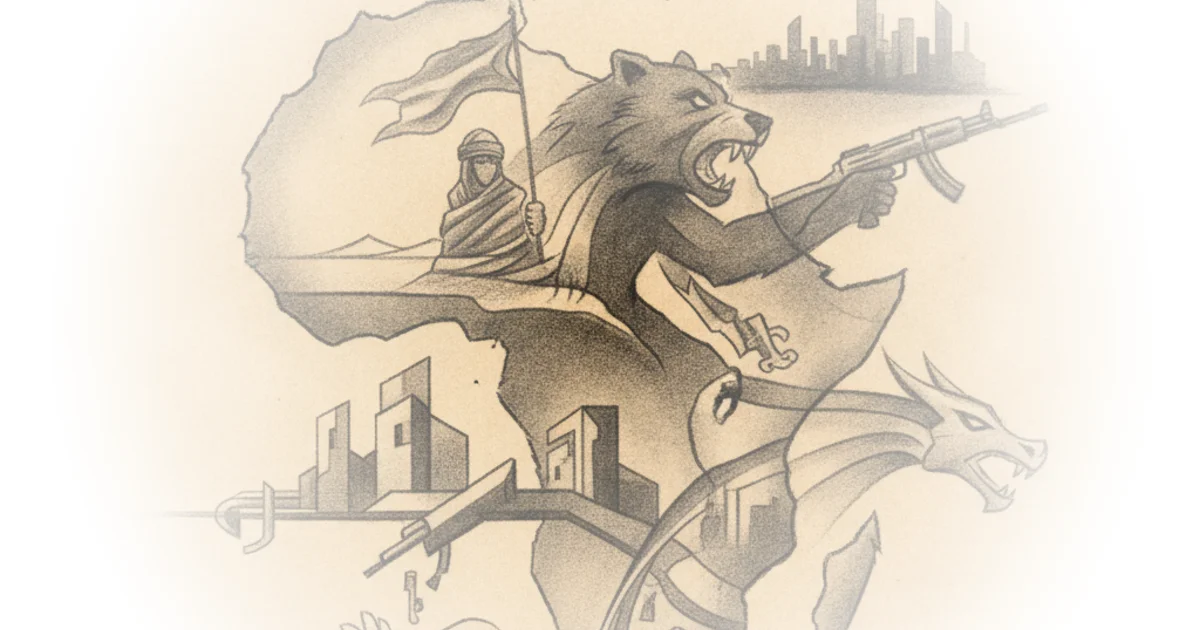
Brennan, a thirty-year Special Forces veteran, argues that the U.S. advantage lies not in raw firepower but in deep, decades-long relationships with indigenous leaders. He notes that while adversaries use "scripted" exercises to treat African nations as props, the American approach is to "put the Africans in charge and then we support them, we mentor them." This distinction matters because it addresses the root causes of instability—such as unpaid soldiers turning to coups—rather than just reacting to the symptoms. However, this reliance on personal diplomacy faces a significant vulnerability: institutional memory is fragile. When key officers rotate out, those crucial phone lines go cold, potentially undoing years of trust-building in favor of bureaucratic process.
"We rely on interagency partners, international partners, and allies to convene where it can have the most effect... so we can create those outsized effects with little assets."
The Cost of Asymmetry
The most striking statistic from the discussion is that U.S. Africa Command operates on just 0.1% of the defense budget. Schneider highlights how this constraint forces a unique operational style, where the command must "declare jihad against proprietary data streams" to leverage AI and low-cost technology effectively. The argument here is that high-tech solutions are less about expensive platforms and more about connectivity—using Namibian satellite radios or Moroccan drone centers to build an "alternate DIB in exile."
This approach contrasts sharply with the tactics of Russia's Wagner Group, which Schneider contextualizes by noting their role as a "manpower source for Russia's war in Ukraine" through trafficking schemes. While the U.S. focuses on capacity building, adversaries often deploy "free weapons" that break quickly but secure immediate loyalty. As Brennan points out, "It might break in six weeks, but it's free stuff." This creates a difficult dynamic where American transparency and legal export controls clash with the speed of authoritarian patronage. Critics might argue that relying on partners to fight proxy wars simply exports violence to regions already suffering from extreme poverty, raising ethical questions about whether this strategy truly stabilizes the region or merely contains chaos for Western interests.
The Human Toll of Distance
The conversation does not shy away from the human cost of operating in a theater defined by "the tyranny of distance." Brennan acknowledges that the U.S. cannot rely on the "golden hour" for medical evacuation, a reality that shapes how forces are staged and engaged. The focus shifts to remote advising and enabling, where the goal is to avoid putting American boots on the ground while still projecting power.
Schneider draws a parallel to historical precedents, noting that Special Forces were originally created by John F. Kennedy to "overthrow an occupying power" through unconventional means, a mission that feels eerily relevant in today's context of ISIS and Russian mercenaries. Yet, this model is not without its perils. The reliance on local surrogates means that when those partners fail or turn violent, the U.S. is often left with limited options to intervene directly without escalating a conflict. The "by, with, and through" doctrine works well until the partner becomes the problem, leaving the U.S. in a reactive position.
"The only people that can do that are special forces... It's all about creative thinking, thinking outside the box, using old things in new ways and new things in new ways."
Bottom Line
Schneider and Brennan successfully articulate why Africa is the decisive theater for 21st-century geopolitics, arguing that the U.S. must leverage relationships over resources to counter a well-funded authoritarian coalition. The strongest element of their argument is the emphasis on human capital and long-term trust as strategic assets, but the biggest vulnerability remains the fragility of these partnerships in the face of rapid geopolitical shifts. Listeners should watch closely how the "alternate DIB" strategy evolves as China and Russia continue to flood the continent with unregulated military aid.