Freddie deBoer challenges a cultural orthodoxy that has long gone unexamined: the idea that expressing doubt is a virtue and that confidence is inherently suspicious. In a landscape saturated with trend pieces diagnosing "toxic confidence," deBoer offers a rare, uncomfortable diagnosis of the critics themselves, arguing that the performative embrace of insecurity has become a new, more insidious form of narcissism. This is not just a critique of a specific article; it is a reckoning with how a generation rebranded anxiety as a membership card for the cultural elite.
The Performance of Insecurity
The piece begins by dissecting the social dynamics of academia, where deBoer observed peers engaging in a "competitive" ritual of declaring their own inadequacy. He writes, "They were, in fact, competitive about it, always wanting to insist they were the ones who felt the very least deserving of their place." This observation is sharp because it identifies a social currency at play rather than a genuine psychological state. The author suggests that this behavior was less about feeling like an imposter and more about signaling that one had absorbed the specific norms of self-effacement required in that environment.
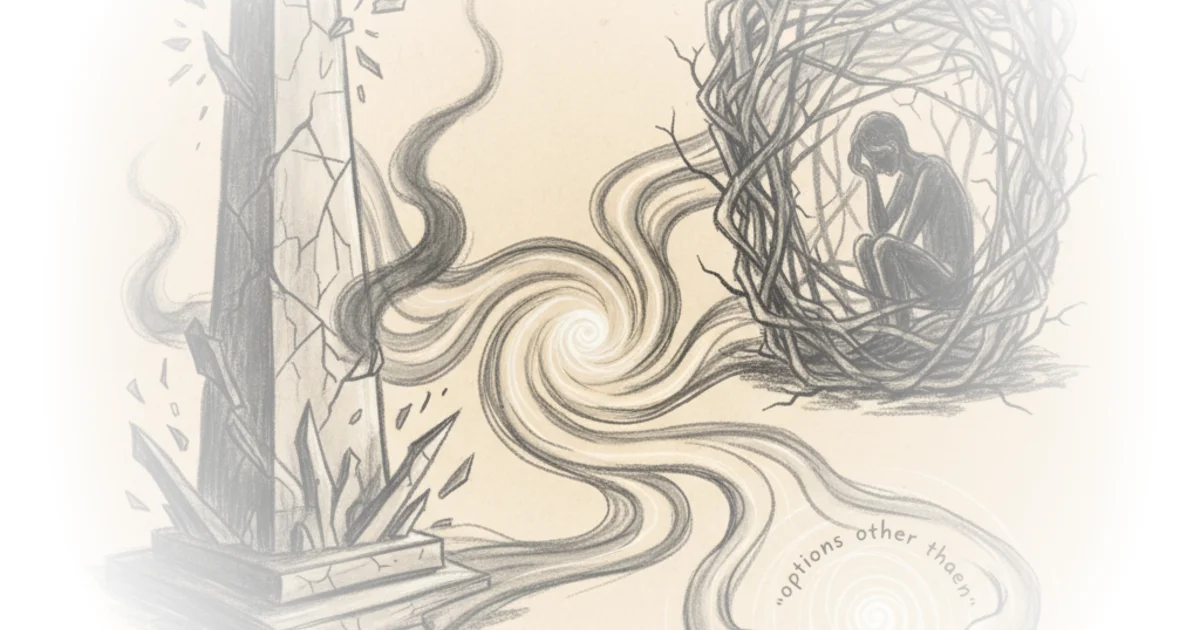
DeBoer connects this to a broader Millennial cultural experiment where "anxiety, self-doubt, and chronic insecurity" were rebranded as virtues. He notes that "the weird affordances of social media gave certain culturally and socially influential people the ability to imprint their own neuroses onto the wider culture, recasting that neuroses as a sort of down-to-earth norm." This reframing is crucial. It suggests that what we often interpret as a collective mental health crisis is actually a social signaling mechanism where vulnerability, when performed on cue, becomes a form of capital. The argument holds weight because it explains why confidence is often met with hostility; in this ecosystem, to be unbothered is to be dangerous.
The implicit agreement was powerful and, when you examine it, fairly cruel: if you seemed too assured, too unbothered by your own inadequacy, you were either deluded or dangerous.
Critics might argue that this view dismisses the very real struggles of individuals who genuinely suffer from impostor syndrome, conflating a clinical condition with a cultural trend. However, deBoer distinguishes between the two, noting that the theatrical embrace of the term often serves as a "membership card" rather than a sincere belief that one does not belong.
The Pathologizing of Ambition
The commentary then shifts to a critique of a recent New York Times trend piece that coined the term "toxic confidence." DeBoer argues that the article conflates actual fraud with the simple refusal to be coy about one's abilities. He points out that "Sobrevilla's essay conflates real con artistry, those with no qualifications claiming expertise in high-stakes domains, with the altogether different phenomenon of people simply refusing to be coy about their ambitions and abilities." This distinction is vital for busy readers navigating professional environments where self-promotion is often necessary for advancement.
DeBoer highlights how figures like Olympic skier Eileen Gu and actor Timothée Chalamet are unfairly scrutinized for expressing healthy ambition. He writes, "When he says that he aspires to be considered among the great actors of his time, when all is said and done, that's not a statement of Trumpian bellicosity but instead a reflection of honest, healthy ambition." By invoking the specific language of the source text while stripping away the hyperbole, deBoer exposes the double standard: a younger generation is being told that believing in one's own potential is a symptom of a cultural sickness. This aligns with historical shifts in the concept of humility; just as the Stoic tradition taught that one should act according to reason and duty rather than seeking external validation, the modern demand for performative humility often masks a fear of genuine excellence.
The author suggests that the discomfort with confidence is actually a discomfort with the renegotiation of social rules. "What Sobrevilla calls 'toxic confidence' is largely just the renegotiation of those rules, an attempt to cast an incipient reclamation of basic, uncomplicated self-assurance as some sort of aggressive masculinist cult." This is a powerful claim. It implies that the backlash against confidence is not about protecting the vulnerable, but about maintaining a status quo where the only acceptable way to be is to be perpetually unsure.
The Narcissism of Vulnerability
Perhaps the most provocative section of the commentary is the assertion that performative insecurity is a more corrosive form of narcissism than open arrogance. DeBoer writes, "The performance of insecurity colonizes the moral high ground while doing the same work as ego - dominating the social space, crowding out other people, demanding accommodation, making the conversation endlessly about the self." This insight cuts through the polite veneer of modern discourse. It suggests that the person who constantly prefaces their opinions with disclaimers is not being humble, but is instead demanding that the room reorganize itself around their emotional state.
He contrasts this with the overconfident person, noting that "The overconfident person at least extends you the basic courtesy of showing their hand." This is a pragmatic observation for anyone dealing with difficult colleagues or public figures. The theatrical anxious person, by contrast, "begs you to feel sorry for the people who are busily rewriting culture." This dynamic creates a moral trap where questioning the narrative is seen as cruelty. The author's point is reinforced by the historical context of "illness as identity," a phenomenon where personal struggles are elevated to the primary lens through which one views the world, often at the expense of objective reality or the needs of others.
Arrogance announces itself, so you can resent it. Performed insecurity demands that you feel sorry for it, which is, when you think about it, a far more shameless ask.
DeBoer acknowledges that this is a difficult pill to swallow for a generation that has built its identity around these neuroses. He suggests that "our time is quickly passing, Millennials, and maybe it's OK to hand culture off to a new generation and their own curdling neuroses." While this might sound dismissive, it serves as a necessary push toward a culture where confidence is not viewed with suspicion. The argument is strengthened by the fact that it does not deny the existence of insecurity but rather challenges the performance of it as a social mandate.
Bottom Line
DeBoer's strongest move is reframing the debate from "confidence vs. insecurity" to "authenticity vs. performance," exposing how the latter can be a tool for social domination. The piece's vulnerability lies in its potential to alienate readers who genuinely struggle with anxiety, risking the dismissal of real psychological pain as mere cultural posturing. However, the call to distinguish between healthy self-assurance and pathological self-doubt is a necessary corrective for a culture that has lost its way. Readers should watch for how this tension plays out in professional settings, where the pressure to perform humility may soon clash with the demands of a competitive global economy.