This piece cuts through the noise of routine digital privacy debates to expose a terrifying legal mechanism that turns every smartphone into a potential suspect's evidence. Reason reports on a Supreme Court case where the government argues it can sweep up location data from thousands of innocent people just because they were near a crime scene, effectively bypassing the Fourth Amendment's core requirement for specific suspicion. The stakes are not merely about bank robberies; as the editors note, this decision will determine if you own your digital life or if it belongs to whoever holds the server keys.
The Geofence Trap
The article zeroes in on Chatrie v. United States, a case born from a bank robbery where police didn't have a suspect—they had a location. Reason reports that law enforcement served Google with a warrant demanding "information on every phone that was in the vicinity of a crime scene." This is not a targeted search; it is a digital dragnet. The piece highlights how this process works: first, the government gets data on everyone nearby; then, they filter for "suspicious" movements; finally, without a new warrant, they demand names associated with those devices.
"Geofence warrants let law enforcement go on fishing expeditions, obtaining data on numerous people without presenting probable cause against any one of them specifically."
This framing is crucial because it strips away the illusion that we are only being watched if we do something wrong. The argument here is that the current legal framework allows authorities to invert the burden of proof: instead of proving you committed a crime before searching, they search everyone until someone looks guilty. This echoes the historical fears surrounding the "Writs of Assistance" in colonial America, which allowed British officials to search any property without specific cause—a practice that directly inspired the Fourth Amendment's prohibition on general warrants.
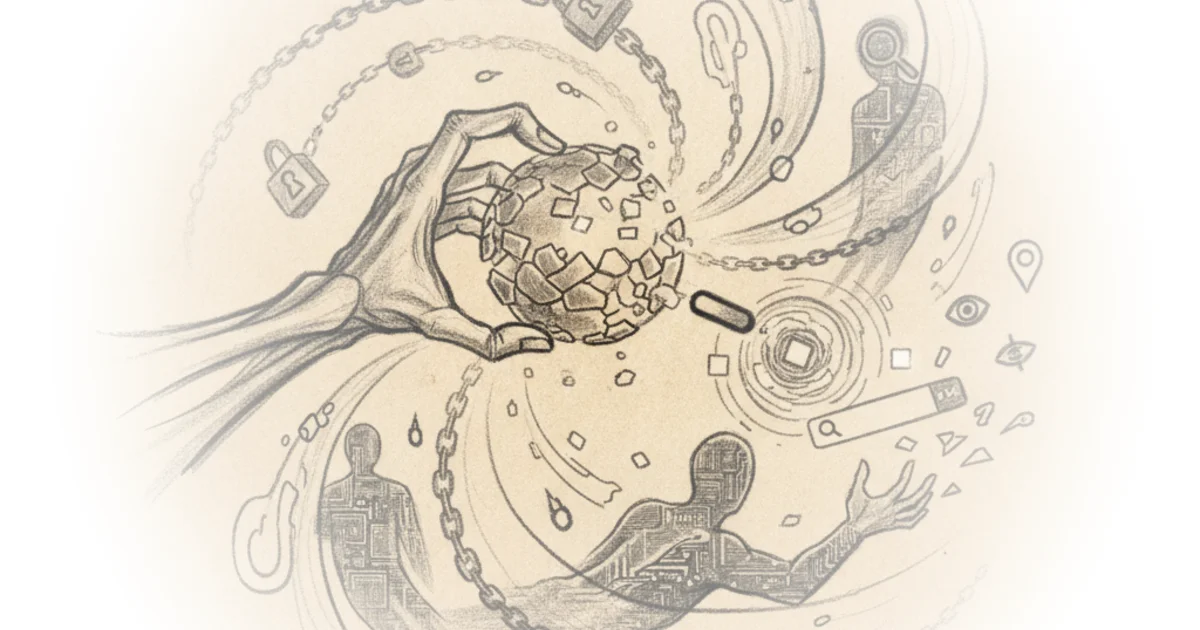
Critics might argue that law enforcement needs these tools to solve crimes in an increasingly digital world where physical evidence is scarce. However, the piece effectively counters this by showing that the tool itself creates a presumption of guilt for the innocent bystanders caught in the net.
The Third-Party Doctrine Fallacy
The core legal battleground is the "third-party doctrine," an old rule suggesting you lose privacy rights when you share information with companies like banks or phone carriers. Reason explains that lower courts have used this to justify geofence warrants, arguing that because Chatrie shared his location with Google, he had no reasonable expectation of privacy in that data. The article dismantles this by pointing out the absurdity of applying 20th-century logic to 21st-century life.
"The Fourth Amendment was forged in opposition to general warrants—warrants that lacked probable cause, failed to particularly describe their targets, or left the scope of the search to the officer's discretion."
This is a powerful rhetorical move. By linking modern geofence warrants to the very abuses the Constitution was written to prevent, the editors reframe the issue from a technical legal dispute to a fundamental rights crisis. The piece notes that Google itself has argued it is merely a "custodian" of data, not the owner, and that users retain property rights over their digital diaries.
"Property rights lie at the heart of the Fourth Amendment, and they do not dissolve merely because one's records are stored by a third party."
This argument gains traction when considering the "Reverse Search Warrant" concept discussed in related legal scholarship: if you can't search your neighbor's house without a warrant just because he was near a crime scene, why should the government be able to scan his phone? The piece suggests that treating digital data as property would restore the necessary barrier between the state and the individual.
"Terms of service that promise to protect the privacy of information shared by users with their service providers should be treated as the functional equivalent of 'no trespassing' signs on a possession perhaps more valuable than real property—our personal information."
Beyond the Bank Robbery
While the immediate case involves a bank robbery, the commentary rightly warns that the implications stretch far beyond financial crimes. The editors highlight concerns raised by Chief Justice John Roberts and Justice Neil Gorsuch about how this power could be abused against political groups, religious organizations, or anyone gathering at a sensitive location.
"What's to prevent the government from using [geofence warrants] to find out the identities of everybody at a particular church, a particular political organization?"
This question transforms the article from a legal analysis into a warning about democratic erosion. If the administration can map the attendance of an abortion clinic or a political rally simply by issuing a broad warrant, the chilling effect on free speech and assembly would be immediate and severe. The piece also briefly touches on other digital privacy threats, such as the "KIDS Act," which critics argue forces platforms to identify users to avoid liability, further eroding anonymity online.
"It appears Google's [terms of service] agreements vest those rights in users like Chatrie. If so, the government cannot seize, copy, or otherwise access such records without first obtaining a warrant."
The convergence of these arguments suggests that the Supreme Court is at a crossroads: either reaffirm that digital data belongs to the individual, or open the door to a surveillance state where location history is public domain.
"If you own your own data, then authorities can't just search it without a specific warrant naming you, no more than they could come into your home and search your desk at random."
Bottom Line
The strongest part of this argument is its ability to reframe digital surveillance not as a technical necessity for police work, but as a direct violation of the Fourth Amendment's historical intent against general warrants. Its biggest vulnerability lies in the uncertainty of how the Supreme Court will interpret property rights in data, given the court's recent tendency to defer to executive power in national security contexts. Readers should watch closely whether the justices prioritize the "third-party doctrine" or embrace the emerging view that digital footprints are protected private property.