Dylan Patel cuts through the geopolitical fanfare to ask the question no one in Washington wants to answer: Is the massive push to build semiconductor factories outside of Taiwan actually a success, or a costly illusion? While political leaders celebrate the ribbon-cutting ceremonies, Patel brings hard data from the factory floor, revealing that the "cluster" efficiency that made TSMC a global titan is being dangerously diluted in the U.S., Japan, and Germany. This isn't just about economics; it's about whether the world's most critical supply chain can survive being untethered from its roots.
The Cost of Geography
Patel's central thesis is that TSMC's dominance isn't magic—it's geography. He argues that the company's success relies on a "one-hour semiconductor ecosystem" where suppliers, engineers, and raw materials are all within a short drive. When TSMC moves abroad, that clock starts ticking, and the costs skyrocket. Patel writes, "The winning model of TSMC is driven by its complete 'one-hour semiconductor ecosystem' across Taiwan's science parks... While Taiwan has an amazing high speed rail system. Americans take 1 hour just to cross a single metro in a car and supply chains are geographically dispersed across thousands of miles."
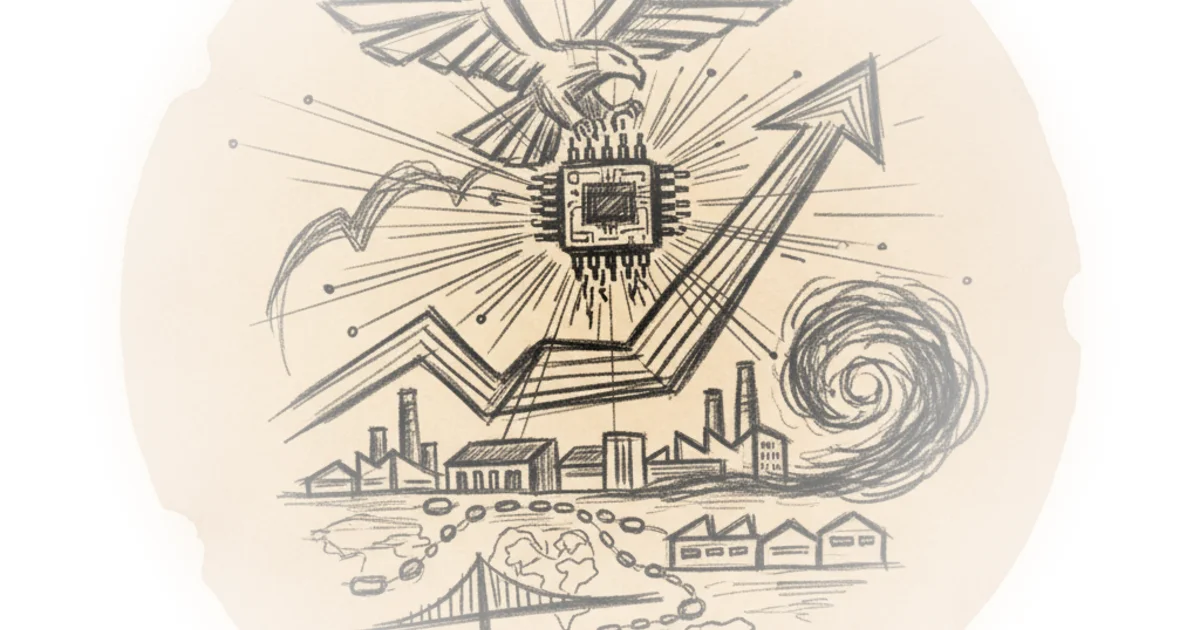
This framing is crucial because it shifts the debate from "national security subsidies" to "operational reality." The article details how the legendary founder, Dr. Morris Chang, has long warned that these overseas ventures are economically flawed. Chang's skepticism is not born of anti-American sentiment but of hard-won experience from a previous failed venture, WaferTech. Patel notes that Chang called the early days of that project "chaos" and "a series of ugly surprises," admitting that the assumption that costs would be comparable to Taiwan was "extremely naive." The lesson from WaferTech was clear: margins on identical products remained 20–25% lower than in Taiwan, a gap that has only widened with inflation and labor shortages.
"We think that the recent effort of the U.S. to increase onshore manufacturing of semiconductors... is not going to be enough. I think it will be a very expensive exercise in futility."
Critics might argue that national security justifies the premium cost, regardless of market competitiveness. However, Patel's analysis suggests that without a viable supply chain, the U.S. isn't just paying more; it's building a fragile asset that could crumble under its own weight. The recent gas facility outage at the Arizona fab, which led to millions in scrap, illustrates how even minor supply chain gaps can cause catastrophic failures in a high-precision environment.
The Human and Structural Gap
Beyond the logistics, Patel highlights a profound cultural and structural disconnect. TSMC is not a typical multinational; it is deeply Taiwanese, with 90% of its global workforce and 88% of its management based on the island. The company's governance structure, designed by Chang to ensure independence and expertise, stands in stark contrast to the boardroom failures of competitors like Intel. Patel points out that while TSMC's board includes seven independent directors with industry expertise, Intel's board once included a chairman with no semiconductor experience whatsoever.
This distinction matters because the "cluster" isn't just about buildings; it's about people. In Hsinchu Science Park, 189 semiconductor-related companies operate in close proximity, fostering a rapid feedback loop that is impossible to replicate in Arizona. Patel explains that the U.S. government's push to bring TSMC to America was driven by the fear of a "100-foot tsunami" if advanced logic supply were cut off, a scenario the administration views as an existential threat. Yet, the reality on the ground is that most of TSMC's tier-1 suppliers have not yet established facilities in Arizona, forcing the company to rely on air freight and distant engineering teams.
The article also touches on the political pressure that forced TSMC's hand. Chang admitted, "We [built the Arizona fab] at the urging of the U.S. government, and we felt that we should do it." This admission reframes the narrative: these fabs are not purely commercial decisions but geopolitical concessions. The administration is essentially paying a premium to de-risk its economy, but Patel warns that the cost of this de-risking may be higher than anticipated. The CHIPS Act, while well-intentioned, may not have enough funding to incentivize a truly vertical supply chain, leaving the U.S. fabs perpetually dependent on Asian logistics.
The Future of the Cluster
As TSMC expands its plans to potentially twelve phases in Arizona, Patel questions whether the ecosystem can ever catch up. The company is investing $165 billion, a staggering sum, but the lack of local suppliers remains a bottleneck. The article notes that while Japan and Germany are also building fabs, they are focusing on older, less critical nodes, whereas the U.S. is betting on the most advanced technology. This creates a paradox: the most expensive and difficult manufacturing is being placed in the location least equipped to support it.
Patel's analysis of the "silicon shield" concept adds another layer of complexity. Taiwan has tried to downplay the term to avoid escalating tensions with China, yet the global economy remains utterly dependent on a single square mile of land in southern Taiwan. The stakes are incredibly high, with 3% of U.S. GDP dependent on TSMC's output. However, the attempt to replicate this success abroad risks creating a "nightmare fulfilled" scenario where the cost of production renders the chips noncompetitive in the global market.
"The dream fulfilled became a nightmare fulfilled."
This quote from Chang, delivered with nervous laughter at a ceremony, serves as a haunting warning. It suggests that the administration's victory lap may be premature. The economic logic of the semiconductor industry is unforgiving, and the "cluster effect" is not something that can be legislated into existence overnight. While the political will to onshore production is strong, the operational reality is that the U.S. is still playing catch-up in a game where every second counts.
Bottom Line
Patel delivers a sobering reality check: the drive to onshore semiconductor manufacturing is a geopolitical necessity but an economic quagmire. The strongest part of the argument is the detailed breakdown of why the "cluster" is irreplaceable, proving that subsidies alone cannot buy the efficiency of a mature ecosystem. The biggest vulnerability lies in the assumption that the U.S. can simply replicate Taiwan's model without the decades of organic growth and supplier density. The world must watch whether the administration can build a viable supply chain before the costs become unsustainable, or if these fabs will remain expensive symbols of policy rather than engines of production.