This piece from Natural Selections offers a rare, unvarnished look at the friction between high-minded conservation goals and the gritty reality of fieldwork in Madagascar. Rather than presenting a sanitized narrative of scientific triumph, the editors chronicle a descent into logistical chaos where a broken pipe and a rotting toilet become the primary antagonists. It is a story about how the infrastructure of civilization crumbles in the rainforest, forcing researchers to improvise with mangoes and epoxy while trying to study the delicate behaviors of tiny frogs.
The Collapse of Basic Sanitation
The narrative begins not with a discovery, but with a disaster. Natural Selections reports that upon returning to their research station on Nosy Mangabe, the team found the island had "gone to seed, a sour, wildly sprouting seed which left its foul odor on all it came in contact with, and a lingering smell of helplessness." The physical decay was immediate and total. The plumbing had failed catastrophically, with a PVC pipe knocked loose, turning the camp into a flooded zone where "a waterfall's force of water was flooding camp, constantly."
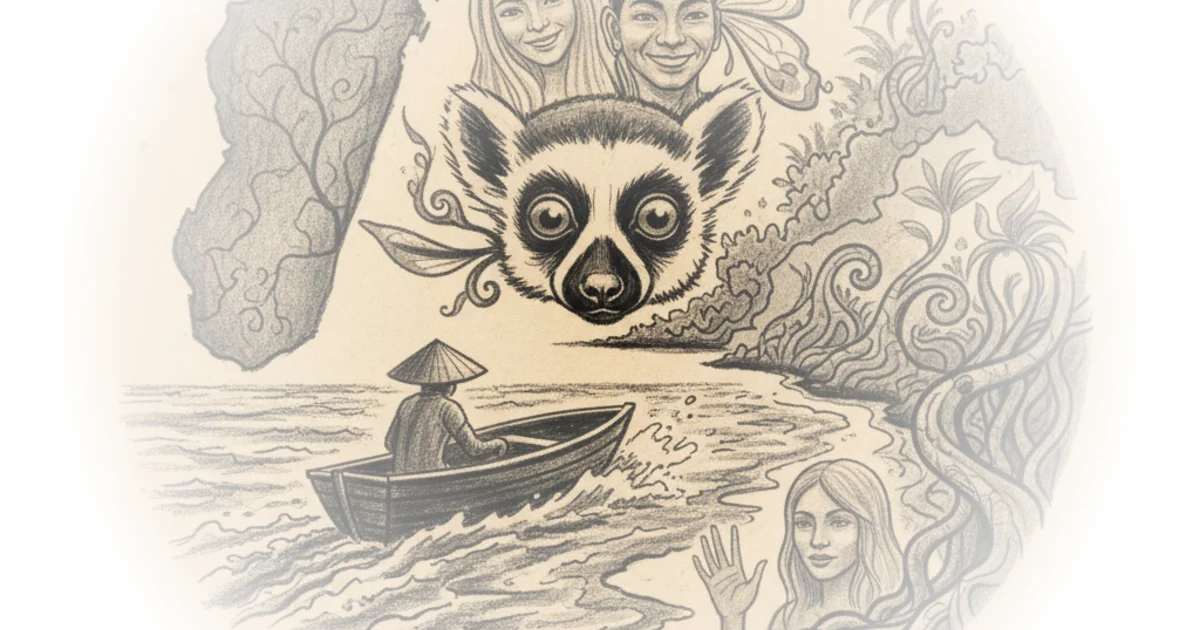
The situation regarding water quality was even more dire. The team's primary water source, a pool used for drinking and brushing teeth, had been contaminated by fish cleaning and bathing. The piece describes this with brutal honesty: "This once pristine water source quickly became known to us as butt-water pond." The editors note that the local Malagasy tradition of rinsing with water, combined with the lack of showers, turned a life-sustaining resource into a health hazard. This framing is effective because it strips away the romanticism often associated with field biology, replacing it with a visceral sense of vulnerability.
"We couldn't do anything about the bacteria now living in butt-water pond, and this left us without an easily accessible source of clean water."
The response to this crisis highlights the disparity in preparation and the necessity of improvisation. While one team member, Glenn, arrived with a "trident" and other ill-advised items, another, Bret, utilized a "unique combination of mechanical and logical skills" to save the day. The article details how Bret initially tried to plug the broken pipe with a mango, a solution that "massive suction stripped the flesh off," only to be eventually cleared by plunging the pipe manually. This sequence underscores a central theme: survival in the field is less about advanced technology and more about adaptive problem-solving under pressure.
The Quest for Dignity
Once the immediate flooding was contained, the narrative shifts to a quest that seems absurd on paper but is deeply human: finding a toilet seat. The piece argues that while Bret could fix the plumbing, the lack of a seat represented a gap in basic dignity. "Bret would have none of it," the text states, sending his team on a mission through the local town of Maroantsetra. The search involved a linguistic struggle, with the narrator admitting, "In my daze, I inadvertently wasted his entire morning while he walked around town asking for an 'assiette de toilette.' A toilet plate."
The eventual solution was not a manufactured product but a commissioned work of art. A local craftsman carved a seat from deep red hardwood, creating an object the team deemed "the most beautiful toilet seat the planet has ever seen." This moment serves as a powerful metaphor for the intersection of Western expectations and local ingenuity. The editors suggest that the seat was more than a functional item; it was a symbol of cultural exchange and the lengths to which humans will go to maintain a semblance of normalcy. However, one might argue that this focus on a toilet seat risks trivializing the broader challenges of conservation, where the lack of infrastructure often stems from systemic neglect rather than a simple supply chain issue.
"Carved out of a deep red hardwood, two thick planks had been melded together in a perfect seam... It was a work of art."
The Science of Small Brains
With the camp stabilized, the focus finally turns to the scientific work: studying Mantella frogs. The piece describes the grueling physical labor of setting up transect lines in the "tangled, viney, steep and slippery understory," where researchers frequently ended up "face down in decomposing leaf litter." The narrative then pivots to the unique methodology required to track these amphibians. The team needed a way to mark frogs permanently in a wet environment, leading to a bizarre phone call with a New York tattoo parlor.
The interaction with the tattoo artist is a highlight of the piece, revealing the unexpected networks that support scientific research. When the narrator asked for a battery-powered machine for wet amphibian skin, the artist replied, "I know that, I'm not an idiot. Just last week, we were down at Sea World tattooing penguin toes." This anecdote humanizes the scientific process, showing that the tools of the trade are often cobbled together from unlikely sources. The team successfully tattooed the frogs, allowing them to observe complex behaviors like "sneaky strategies" employed by males to court females without holding territory.
The piece raises a profound question through these observations: "I tried to stop myself from over-estimating what they were capable of, but sometimes it did seem that they were building scenarios, plotting alternative outcomes. But these are frogs, with small brains. What really differentiates us and them?" This inquiry moves the narrative from a travelogue to a philosophical reflection on intelligence and agency. Critics might note that attributing "plotting" to frogs risks anthropomorphizing animal behavior, yet the editors use this uncertainty to highlight the limits of human understanding rather than to make definitive claims about frog cognition.
Bottom Line
Natural Selections delivers a compelling account that balances the absurdity of field logistics with the profound curiosity of scientific inquiry. The strongest element is its refusal to sanitize the hardship of conservation work, presenting a world where a toilet seat is a masterpiece and a mango is a critical engineering tool. The piece's vulnerability lies in its narrow focus on the researchers' internal struggles, which occasionally overshadows the broader ecological and political context of conservation in Madagascar. Ultimately, it reminds us that science is a human endeavor, fraught with messiness, ingenuity, and the relentless pursuit of order in a chaotic world.