Fred Mills doesn't just tell the story of a hated building; he exposes a fundamental clash between modern economic necessity and the rigid, romanticized identity of a city. While most accounts of the Tour Montparnasse focus on its visual ugliness, Mills digs into the engineering miracles required to build it and the specific political desperation that made it necessary, arguing that Paris's rejection of the tower was less about aesthetics and more about a refusal to admit the city had fallen behind its global peers.
The Architecture of Desperation
Mills frames the tower not as an architectural error, but as a desperate attempt to modernize a stagnating post-war economy. He writes, "Paris's elegant apartments and endless monuments were far from an asset. They were a sign of a city that was kind of stuck in the past." This reframing is crucial; it shifts the narrative from a story of bad taste to one of economic anxiety. The author details how the French government, lacking experience with high-rises, turned to American developer William Tuttle to solve a funding crisis, leading to a tower that grew from 150 meters to a staggering 210 meters simply to generate enough office space to pay for itself.
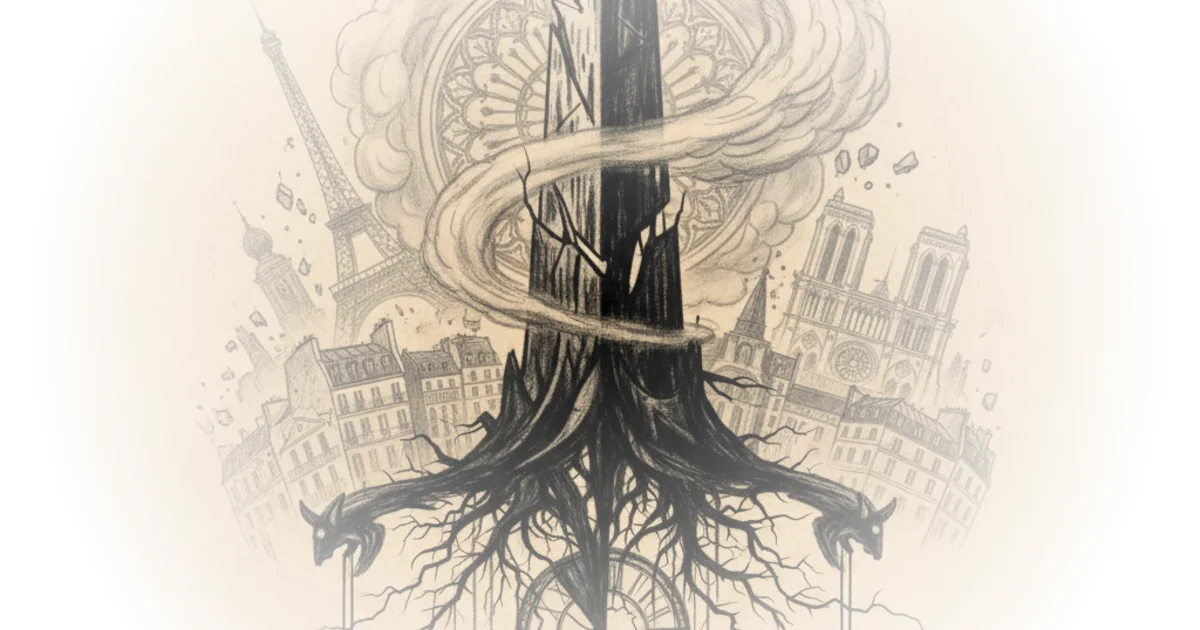
The engineering challenges described by Mills are as compelling as the political ones. He notes that the tower had to be built directly over active metro lines, requiring "concrete walls... strong enough to protect the tunnel and bear some of the building load." This technical feat highlights the sheer audacity of the project. However, the author's focus on the technical triumphs slightly glosses over the social cost of the "clean up" efforts that displaced the area's artistic and bohemian history. Critics might note that the push to "infuse it with something modern" was also a push to gentrify a neighborhood that was already culturally significant to Paris.
"The Tour Montparnasse was supposed to represent a new vital Paris rising up out of the smoky old-fashioned city. But there was a problem. Everyone quite liked the smoky old-fashioned city."
The Clash of Scales
The core of Mills' argument rests on the concept of "homogeneity." He explains that Paris owes its aesthetic to Baron Haussmann's 19th-century remodeling, which created a "uniformity of facades" and a strict height limit that the tower violently violated. Mills writes, "You have a scale that goes from... 30, 31 and then they go up to 37 meters. And here we've got a building that goes up to 210 meters tall. I mean it's just it sticks out." This comparison effectively illustrates why the building feels so jarring; it is not just tall, it is an anomaly in a city designed to be read as a single, cohesive text.
Mills acknowledges that Paris has a history of hating new icons, citing the Eiffel Tower and the Louvre Pyramid as examples of structures that were initially reviled before becoming beloved. Yet, he suggests the Montparnasse case is different because it lacks the "grace" of those later additions. The author points out that while other cities embraced verticality, Paris "has a rather complicated history with tall buildings," leading to a 33-year ban on skyscrapers in the city center. This historical context adds weight to the local outrage, showing it wasn't just a fleeting whim but a deep-seated cultural defense mechanism.
The Invisible Future
In the final section, Mills pivots to the tower's proposed renovation, which aims to make the building "invisible" by wrapping it in transparent glazing and adding sky gardens. He describes the plan as an effort to "break up the monolithic presence of the old building." This solution, however, raises a fascinating paradox: the only way to save the tower is to erase its most defining characteristic—its solid, dark mass. Mills captures this tension perfectly when he asks, "Is the old tower the ugly duckling growing into a graceful swan? Or is the only way to get Parisians to love this building to make it disappear?"
The author's coverage of the renovation is optimistic but tinged with skepticism. He notes that the new design uses wind to naturally ventilate the building, turning a previous weakness into a feature. Yet, the plan to strip the building back to its core and steel frame suggests a total surrender to the city's aesthetic demands. A counterargument worth considering is that by making the tower transparent, Paris might be losing a unique piece of its modern history, effectively admitting that the 1970s vision of progress was a mistake that must be visually concealed rather than integrated.
"Everyone quite liked the smoky old-fashioned city."
Bottom Line
Fred Mills succeeds in transforming a story about an ugly building into a profound meditation on how cities negotiate their past and future. His strongest asset is the detailed breakdown of the engineering and economic pressures that forced the tower's creation, proving it was a rational, if controversial, response to a crisis. The argument's biggest vulnerability lies in its acceptance of the "invisibility" solution, which may ultimately validate the very prejudice that created the conflict in the first place. Readers should watch to see if this radical makeover truly heals the wound or if the tower remains a permanent scar on the Parisian skyline.