Brian Merchant cuts through the noise of AI hype to reveal a darker, more pragmatic truth: the technology is often less a tool of efficiency and more a convenient excuse for management to slash costs and consolidate power. While the public fixates on whether robots will steal our jobs, this piece exposes how executives are already using the idea of AI to justify layoffs that have little to do with actual technological capability.
The Illusion of Automation
Merchant begins by dismantling the narrative that AI is a magic wand for productivity. He points to a stark reality where companies like Amazon and Salesforce are citing AI as the primary driver for massive workforce reductions. "AI is the most transformative technology we've seen since the Internet," Amazon's senior vice president Beth Galetti wrote in a memo, arguing for an organization that is "more leanly, with fewer layers and more ownership." Merchant's analysis of this statement is sharp and necessary: "She's really saying the quiet part out loud there... Fewer layers—more ownership. Fewer workers—more profit."
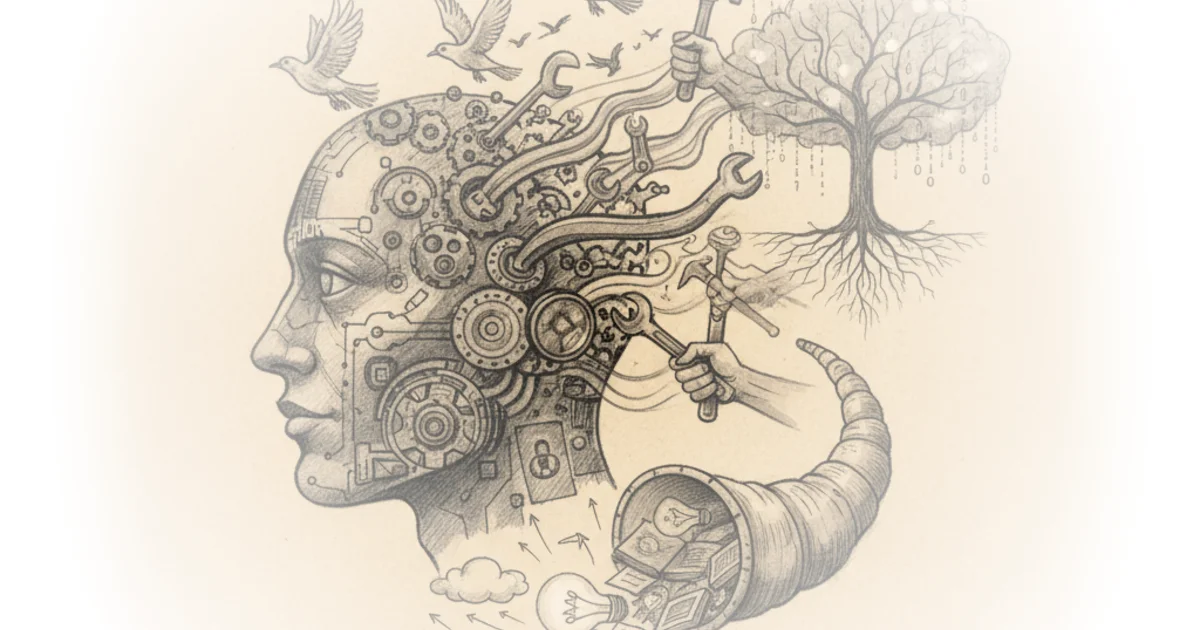
This reframing is crucial. It shifts the conversation from a technological inevitability to a strategic choice. The author argues that "AI" has become a potent justification for management's ulterior goals, whether it is cutting labor costs or shifting to cheaper contract labor. He introduces the concept of "AI-washing," noting that if Amazon claims to fire 30,000 workers because its AI is so advanced, investors react better than if the company admits it is simply over-leveraged or worried about earnings.
The evidence suggests that the technology often fails to deliver on these promises. Merchant cites a major MIT report finding that 95% of companies investing in generative AI saw no profit from the investment, as systems "fail due to brittle workflows, lack of contextual learning, and misalignment with day-to-day operations." Yet, the layoffs proceed regardless. As one Amazon engineer told the press, "Everyone I work with says the AI they've been required to use has not made them significantly more productive... Either way, we're the ones paying the price."
"AI is being deployed not so much as a technology functionally capable of replacing human labor in toto, but as a logic and an ideological justification for management's ulterior goals."
Critics might argue that early adoption phases always involve friction and that the data is too early to judge long-term displacement. However, the immediate human cost is undeniable, and the speed at which "AI" is used as a scapegoat for financial restructuring is the real story here.
The Selective Squeeze on Entry-Level Work
The article then pivots to a specific, worrying trend: the shrinking number of opportunities for recent college graduates. Merchant highlights research from Stanford economists, including Erik Brynjolfsson, who found that early career employment in AI-exposed fields declined by 13% since 2022. This mirrors historical patterns of technological unemployment, where new tools first displace the most vulnerable, entry-level workers who traditionally serve as the pipeline for future expertise.
Merchant is careful to note the potential for bias, given that Brynjolfsson also founded a startup selling AI optimization software. He suggests the decline could be due to outsourcing or a "wait-and-see approach" rather than full automation. However, the data from Henley Chiu of Revealera, which analyzed 180 million global job listings, offers a clearer picture of who is being hit. Chiu found that creative roles are taking a massive hit, with computer graphic artist postings down 33% and writer postings down 28% over two years.
What makes this analysis particularly insightful is the observation of a shift in hierarchy rather than total elimination. "While job listings for writers, artists, and creatives have declined, listings for creative directors have grown," Merchant notes. "This is precisely what you would expect to see as management embraced AI: fewer people actually creating the work, and more people in management roles overseeing the automated production." This dynamic suggests that AI is not just replacing labor; it is restructuring the labor market to favor management and devalue execution.
The Management Leverage
Ultimately, Merchant argues that the uncertainty surrounding AI's true capabilities is being weaponized by bosses. "What is clear is that AI is regardless a powerful way for bosses to exert leverage over workers, depress wages, and effect layoffs." The technology's current inability to handle complex, empathetic, or highly accurate tasks is irrelevant to executives who simply want to reduce headcount.
The piece concludes by connecting these modern tactics to a much longer history of industrial exploitation. Merchant writes, "Bosses are using it the way they've used automation technologies since the Industrial Revolution—to extract maximum value from workers, and to profit from the profound uncertainty around the true extent of its power and utility." This historical parallel grounds the anxiety of the moment, reminding readers that the struggle between capital and labor is not new, even if the tools are.
"Bosses are using it the way they've used automation technologies since the Industrial Revolution—to extract maximum value from workers, and to profit from the profound uncertainty around the true extent of its power and utility."
Bottom Line
Merchant's strongest contribution is exposing "AI-washing" as a deliberate strategy to legitimize cost-cutting, a move that obscures the real economic drivers of layoffs. The argument's vulnerability lies in the difficulty of definitively proving intent versus genuine technological displacement in every case, but the pattern of declining entry-level roles and rising management positions is too consistent to ignore. Readers should watch for whether the promised productivity gains ever materialize, or if this remains a permanent restructuring of the workforce in favor of the C-suite.