The Epstein Files Open a Russian Trail
A new chapter in the Jeffrey Epstein saga has emerged from millions of newly released documents: an alleged Russian connection that some observers claim links the financier and sex trafficker to Kremlin intelligence operations. The evidence is voluminous but the conclusions remain speculative.
Sarah Longwell, Tim Miller, Bill Kristol writes, "The voluminous evidence of Jeffrey Epstein's contacts with various Russians, some of whom had ties to Russia's spy agencies, has led some observers to conclude that the multimillionaire financier, sex trafficker, and rapist was also an intelligence asset belonging to the Kremlin."
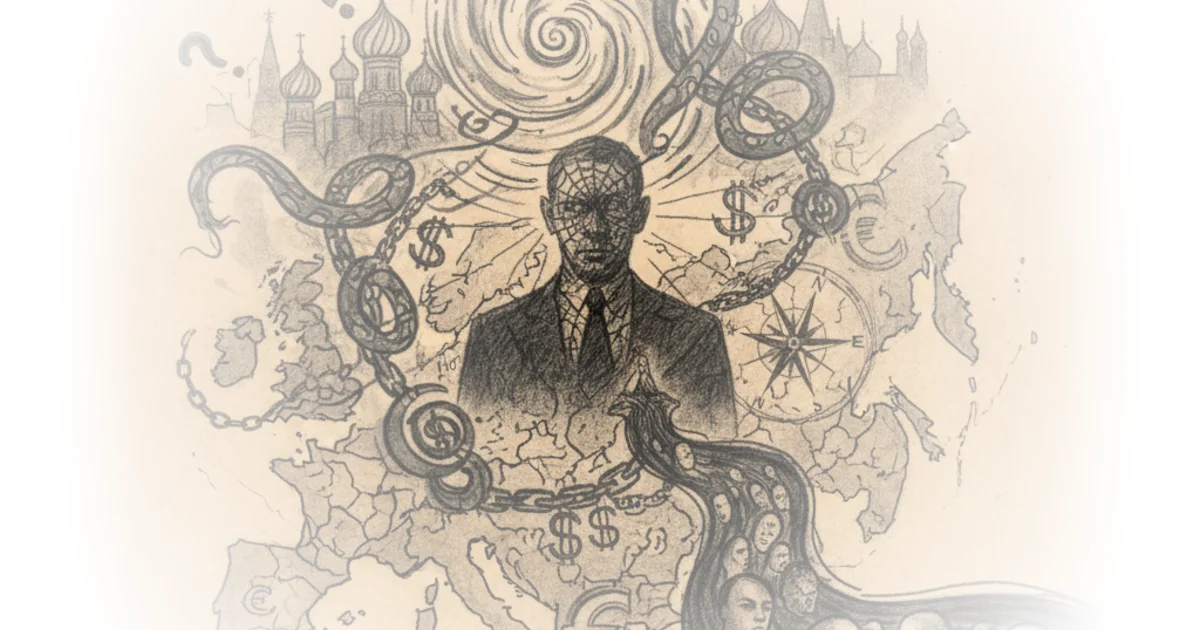
The Daily Mail reported that Epstein was "running 'the world's largest honeytrap operation' on behalf of the KGB when he procured women for his network of associates." Polish prime minister Donald Tusk announced an inquiry to assess whether Epstein had links to Russian espionage—and whether Russia might have compromising materials on various political leaders.
Claims Without Evidence
The authors note that "as with much else in the Epstein story, the facts are often enmeshed with thinly sourced speculation." The Daily Mail headline contains an unsupported assertion that Epstein "had multiple talks with Putin after conviction." But the article itself hedges this claim, saying only that Epstein "seems to have secured audiences with Putin" after his 2008 guilty plea.
A look at the relevant files shows that Epstein talked repeatedly about such meetings. But as the independent Latvia-based Russian news site Meduza concludes, "There's no evidence in the released files that a meeting between Putin and Epstein ever took place."
Other emails document Epstein "desperately trying to secure a meeting with Putin," in the words of the Independent. Some efforts were made via Thorbjørn Jagland, then–secretary general of the Council of Europe. In a June 2018 message, Epstein wrote to Jagland to offer his insights to Putin and by extension to Russian Foreign Minister Sergei Lavrov.
"It is tempting to read something sinister into Epstein's remark about how Churkin 'understood Trump' after talking with Epstein—the mind immediately turns to the possibility of sexual kompromat—but it could have meant simply that Epstein had offered a fairly commonplace understanding of Trump's transactional psychology based on his past interactions with the man."
There is also an FBI document from 2017 recording a claim by a "confidential human source" that "Epstein was President Vladimir Putin's wealth manager and provided the same service for Zimbabwean President Robert Mugabe." But these are, once again, uncorroborated and unvetted assertions.
The Belyakov Connection
Putin aside, Epstein's associations with several other Russian figures are worth discussing, starting with Sergei Belyakov. He served under Putin as Russia's deputy minister of economic development. His relationship with Epstein antedates his time in government, continued while he was in office, and was kept up as he went on to hold high-level positions with Russian entities that focus on public-private partnerships and foreign investments.
The two men met in person several times over the years. Belyakov arranged for Epstein to get a Russian travel visa twice, in 2011 and in 2018, though it appears that Epstein did not travel to Russia either time. Belyakov put Epstein in touch with Russian finance and banking officials. Epstein introduced Belyakov to right-wing billionaire Peter Thiel.
Critics might note that Epstein's 2011 business visa application stated he would be traveling to Russia at the invitation of a nonprofit called Vympel, identified as an association for veterans of a counterterrorism unit of the FSB. But Russia analyst Catherine Fitzpatrick has argued that there are "a dozen Vympels in Moscow" and that it would make no sense for Russian intelligence to "blow [its] cover" by openly using an FSB-affiliated organization.
Belyakov himself has ties to the FSB: he is a 1998 graduate of the FSB Academy. It doesn't mean that Belyakov was himself a spy, let alone that he was Epstein's FSB handler. The world of Russian business is saturated with individuals who have past or present FSB affiliations.
The Women Supply Chain
The new files shed a bit more light on how Epstein used intermediaries to ensure a steady supply of young women from Russia for his sex-and-party circuit. A woman known only as Irina figures prominently in the files as a supplier of Russian and Ukrainian "Epstein girls." Epstein had a much more prolific supplier in Victoria Spiridonova, the daughter of a prominent Russian businessman and politician.
In a 2011 email early in their acquaintance, Spiridonova asked Epstein what he was looking for: "assistant? direct casting? or escort? all types exist but i need to know clear what you wish." As far as we know, there is no record of Epstein ever answering the question. He did, however, insist on youth: one email complained that the model referred by Spiridonova was an over-the-hill 23.
This relationship continued at least until 2018, when Epstein wrote to Spiridonova that he was "interviewing new assistants age 20-24" and she offered to help. "Find me three canditades and we can see," Epstein wrote back.
The Drokova Question
Epstein's most intriguing Russian connection may be a woman named Maria "Masha" Drokova. Before she came to the United States, Drokova first appeared on the public scene at the age of 16 as a teenage leader in the "patriotic" Russian youth movement Nashi, launched in 2005 with state-backed financing to form a cadre of pro-Kremlin youth activists. Drokova gained particular fame for a 2009 episode in which she kissed Putin on the cheek during his visit to a Nashi summer camp.
But around the same time, she began to distance herself from the movement after developing friendships with opposition figures. In 2015, her entry to the United States on a so-called "Einstein visa" was cosponsored by tech investor Esther Dyson and former U.S. ambassador to Russia Michael McFaul.
Drokova's connection to Epstein was first explored by investigative journalist Seth Hettena in 2021. Drokova minimized this connection and asserted that she merely "did some PR work for Epstein as a favor but was never paid by him." In fact, as the Epstein files show, Drokova actively offered Epstein her public-relations services.
Her proposed strategies included writing an autobiography, sponsoring a documentary about Epstein's philanthropy and support for science, and recruiting his friends in the science community to speak on his behalf. She also suggested an annual "Epstein Prize" in science and an "antiharassment foundation" to offer women "legal support and career advice."
Critics might note that French international relations professor Françoise Thom suggests that Drokova's defection from Nashi was faked—that it was a ploy to send her to the United States as an infiltrator to help funnel Russian money into Silicon Valley tech ventures. In December 2022, Drokova was mentioned in a Washington Post report on expatriate Russian investors who were being investigated for possible participation in "a covert effort to aid their native country in developing cutting-edge technologies."
Their last chats on Skype and last in-person meeting took place in late June 2019—less than two weeks before Epstein's final arrest for sexual trafficking of minors. In a bizarre private exchange on Skype, Drokova sent Epstein pictures of herself taken on a recent trip to Paris. The chat ends with Epstein requesting nudes and Drokova responding, "Next time I'm in Paris!"
Bottom Line
The Epstein-Russia connection remains a story of suggestive contacts without definitive proof of intelligence collaboration. What the files reliably show is Epstein's relentless networking with Russian elites and his systematic procurement of young women through Russian intermediaries. The kompromat theories persist because Epstein's death left more questions than answers—but the strongest evidence points to a predator exploiting open doors, not a Kremlin asset executing a mission.