The Gold Rush in the Drizzle
London's rain hasn't stopped, but something else has started: ordinary people queueing outside bullion dealers with cash in hand, buying physical gold despite a historic price crash. Michael Macleod's piece captures a moment when financial anxiety meets atmospheric gloom, when the jet stream's persistence above mirrors uncertainty below.
The Queue Outside Sharps Pixley
Macleod opens with a scene that would be comic if it weren't so earnest. The St James' Street showroom normally sees twenty customers daily. Now it sees two hundred. Music producers and welders stand in line behind the Ritz, waiting to convert paper currency into something they can hold.
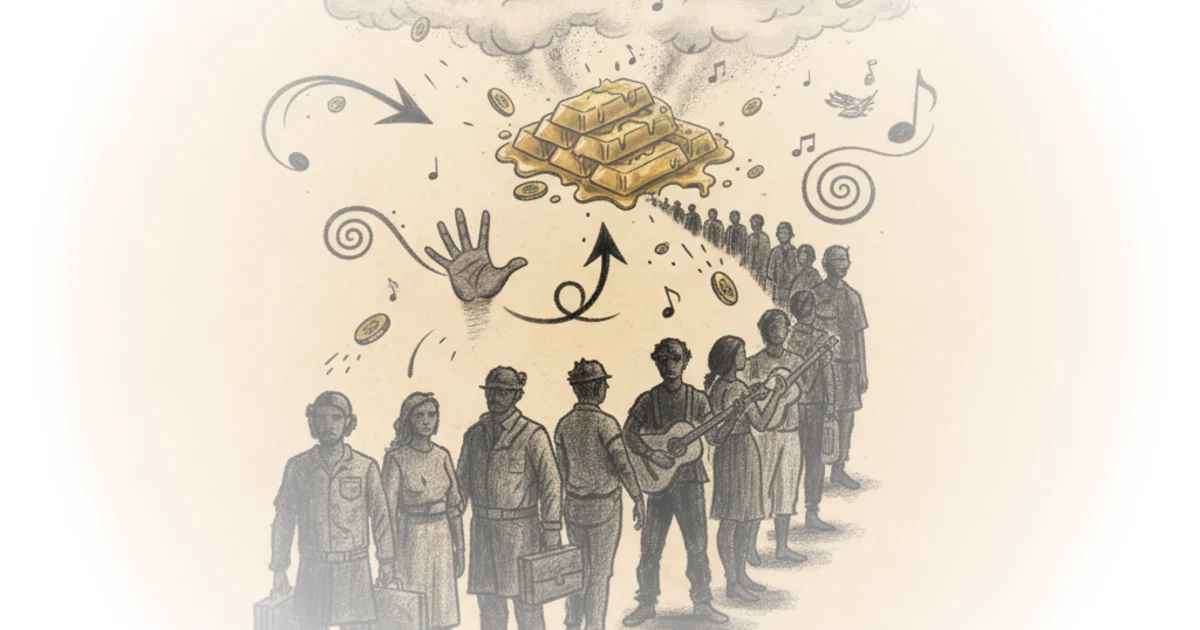
Michael Macleod writes, "Londoners are queuing to buy gold – even though the precious metal just suffered the biggest price crash in 40 years."
The contradiction is the point. Gold dropped ten percent in a single day – volatility that belongs to meme stocks, not to metal that has stored value for millennia. Yet the queue grows. Macleod notes that dealers across London report the same: Direct Bullion too busy to hear properly, Chards and Hatton Garden Metals warning of shipment delays, J Blundell & Sons unable to take calls.
"These Londoners are not just buying a commodity, but a belief system."
The markup on small bars reaches twenty-five percent. Some customers pay up to fifty percent in premiums over spot price. They could buy digital gold for negligible fees. They choose not to. The belief system requires physical possession – something outside the digital world they distrust.
Critics might note that paying fifty percent premiums on an asset that just crashed ten percent is not rational investing. It is insurance against a future the buyer cannot articulate but fears deeply.
The Door Guardians
Bruno Garcia hasn't eaten his lunch sandwich. He moves between the security door and the front counter hundreds of times daily, assessing customers, calming wealthy people accustomed to getting what they want, distinguishing nervous first-timers from seasoned regulars from potential criminals.
As Michael Macleod puts it, "Everyone walks in the first time, looks at him and thinks he's going to be bad cop… but he's lovely."
Bruno's colleague Tomasz looks like a nightclub bouncer – he was one. The uniform is intentional. When trouble arises, Bruno says he is "much quicker to be a prick to someone if they're being that way." The showroom plays light jazz. Copies of the Financial Times rest on tables. Light boxes display gold sovereigns. An iPad shows live prices that will change before you reach the cashier.
A man in muddy Hoka trainers and Polo Sport sweatpants sits waiting. He leaves with six gold coins worth more than twenty thousand pounds. The numbers sound abstract until they do not.
The Conspiracy Theorist
A smartly dressed man in a wheelchair enters. He volunteers that he is "a bit of a conspiracy theorist." He buys gold because he fears Central Bank Digital Currencies and fifteen-minute cities.
Michael Macleod writes, "They'll be able to track everything. If you say the wrong thing and your social credits go down, or you spend too much on meat and go past your CO2 limit, you won't be able to buy any more meat that month."
The man's information comes from an anonymous AI avatar on X called "AG Asian Guy." He says the avatar uses an AI voice and image, but "obviously what he's saying is scripted. No-one knows who he is, but he seems very accurate. He seems to be very well informed."
A welder in dungarees buys a one ounce gold coin with cash from his paycheck. Ninety-two banknotes feed through the counting machine. He says simply: "I don't trust my money in the bank."
Critics might note that the conspiracy theorist's fears and the welder's distrust stem from different sources but arrive at the same conclusion: the digital system cannot be trusted, only metal can.
The Rain Above, The Anxiety Below
Macleod's piece begins with weather. London Centric spotted a glowing orb in Soho's sky – the sun – lasting ten minutes before vanishing into drizzle. Professor Liz Bentley of the Royal Meteorological Society explains that London's 2026 rain is not exceptional in volume but in persistence. Light rain that湿 s you without flooding. The jet stream at thirty thousand feet has sucked Atlantic weather systems toward the UK while high pressure across continental Europe traps low pressure systems overhead.
Michael Macleod writes, "It's been light rain that's enough to wet you, but not lots of heavy rain that would cause flooding problems across London."
Bentley warns the sunshine will be brief. Climate change makes this the new normal. Warmer air holds more moisture, producing wetter winters. Cities like London are not designed for constant rain. Drains block. Surfaces become slippery. The soul suffers.
As Michael Macleod puts it, "Science has shown that when the sunshine is out, our well-being [and] our happiness is much higher."
The seasonal forecast offers no optimism before April. Wetter than average conditions. The umbrellas multiply. The gold queue lengthens.
Critics might note that weather anxiety and financial anxiety feed each other. Grey days without sun lower wellbeing. Grey markets without certainty lower confidence. Both drive people toward something solid they can hold.
The Preposterous Property
Macleod includes a ten-bedroom Hampstead Garden Suburb house completed in 2025, marketed to those wanting "discreet and secure" living with optional twenty-four-hour private security. The listing boasts: "Gold leaf detailing, gilded stucco and intricate murals bring Versailles-level drama to every room." Price: seventeen point ninety-five million pounds.
Some property developers think baroque decoration limits appeal. Macleod calls them cowards. The house exists. The queue exists. Both are real.
Bottom Line
Macleod's piece captures a London where atmospheric persistence meets financial uncertainty, where ordinary people pay extraordinary premiums for metal they can hide, where AI avatars on X shape investment decisions and welders distrust banks. The gold rush is not about wealth preservation. It is about control preservation – the belief that physical possession cannot be tracked, frozen, or erased. The rain continues. The queue continues. Both feel permanent.