A Dark Fable About Identity and Betrayal
Hal Johnson's "Little Mouse" stands out as science fiction that weaponizes absurdity to probe questions of identity, persecution, and moral compromise. The story's dark comedy—a half-Lutheran hired to exterminate the last twelve Lutherans—reads less like pulp fantasy and more like a fable about what happens when minorities become targets.
The Mathematics of Complicity
Johnson opens with cold arithmetic that sets the tone for everything that follows. "My name is Muknik, which means Little Mouse, and I am being paid forty bucks to kill the last twelve surviving Lutherans on earth." The narrator's name is not his own—it was given by William the Bastard, a figure whose authority never gets questioned, only obeyed.
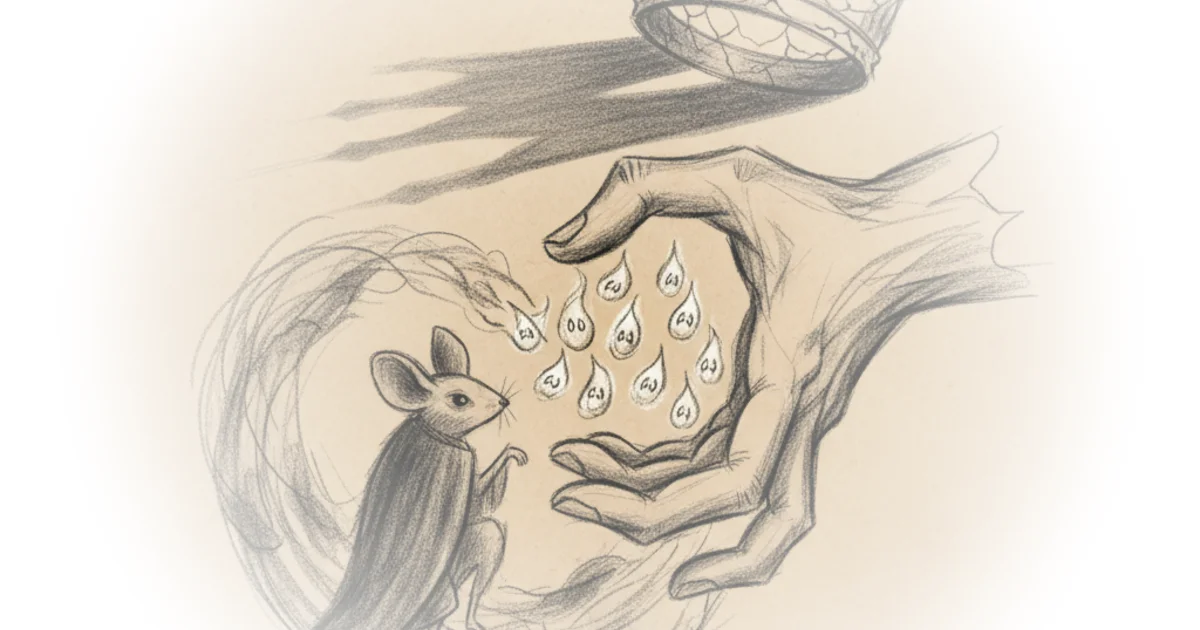
As Hal Johnson puts it, "This is not a job I want. This is a job I got roped into, long ago." The passive construction matters. Muknik is not an enthusiastic killer but someone trapped by circumstance, checking his own dreams for escape routes that no longer exist.
Johnson writes, "I am important today. That is why I will get a double share. That is why the math is right, although it looked wrong." The logic of oppression always finds its calculations. What appears unjustified becomes justified through the sheer weight of participation.
Performance as Survival
The story's central tension revolves around passing—Muknik must convince the Lutherans he belongs among them. Johnson writes, "My mother even changed her name, disguised her accent, and never appeared in bright light, thereby obscuring her Lutheran features, she was so clever." Survival becomes performance. Identity becomes something you can toggle on and off depending on who's watching.
When the Lutherans scrutinize him—"Check here, around the nose," "And the ear flaps"—Johnson captures the grotesque intimacy of ethnic verification. Muknik's half-Lutheran status becomes both his credential and his liability. As Hal Johnson puts it, "I am half Lutheran. That is why William the Bastard thought I ought to have a Lutheran name." The oppressor assigns the identity that makes the betrayal possible.
"I sing it eight times. Then I say, into the tape, 'My! I am in!' and press stop."
The ritual song—"Let Me In, let me in / Or I'll kick you in the shin"—becomes the mechanism of destruction. Trust is the vulnerability. The Lutherans' deliberation ("Can we let him in if he is only half Lutheran?") shows their fatal openness to nuance in a situation that demands absolute boundaries.
The Bomb in the Machine
Johnson writes, "I do not tell them there is a bomb inside it. There is a bomb inside it." The answering machine becomes the story's central symbol—technology that records voice while concealing violence. Muknik's performance of belonging is itself the trigger mechanism.
As Hal Johnson puts it, "William the Bastard will hear me singing. He will hear Let Me In. He will hear it eight times. By that time I will have run far away." The narrator's escape is premeditated but not triumphant. He survives, but the twelve Lutherans do not. The mathematics complete: ten dollars per head, twelve heads, forty dollars for Muknik, five dollars returned for the half-Lutheran who got away.
Critics might note that Johnson's absurdist framing—Lutherans as an endangered minority, karaoke bars as escape attempts, movie theaters as fortresses—risks making persecution itself feel cartoonish rather than consequential. The story's dark comedy could be read as deflecting from the actual weight of ethnic violence rather than illuminating it.
Critics might also argue that Muknik's eventual escape undermines the moral stakes. If the betrayer survives without consequence, the story's arithmetic of guilt becomes too clean.
Bottom Line
"Little Mouse" succeeds as a fable about how oppression recruits its own instruments—minorities turned against minorities, identity weaponized as credential. Johnson's absurdist register keeps the story from becoming preachy, but the cold mathematics of betrayal remain unmistakable. The verdict: dark comedy that cuts deeper than its surface absurdity suggests.