The Space Compute Monopoly Threat
A merger announcement barely registered in political discourse, yet it could reshape the entire artificial intelligence landscape. Matthew Yglesias spots something most observers missed: Elon Musk's plan to combine xAI with SpaceX isn't just another billionaire project—it's a potential antitrust crisis waiting to happen.
Leveraging Launch Dominance Into AI Dominance
Matthew Yglesias writes, "Last week, Elon Musk announced plans to merge xAI and SpaceX, a move that did not attract much political attention despite the intense levels of interest in arguing about both antitrust policy and Elon Musk." The silence is striking. While pundits debate Musk's politics and AI skeptics dismiss the technology, a concrete monopolistic threat is forming.
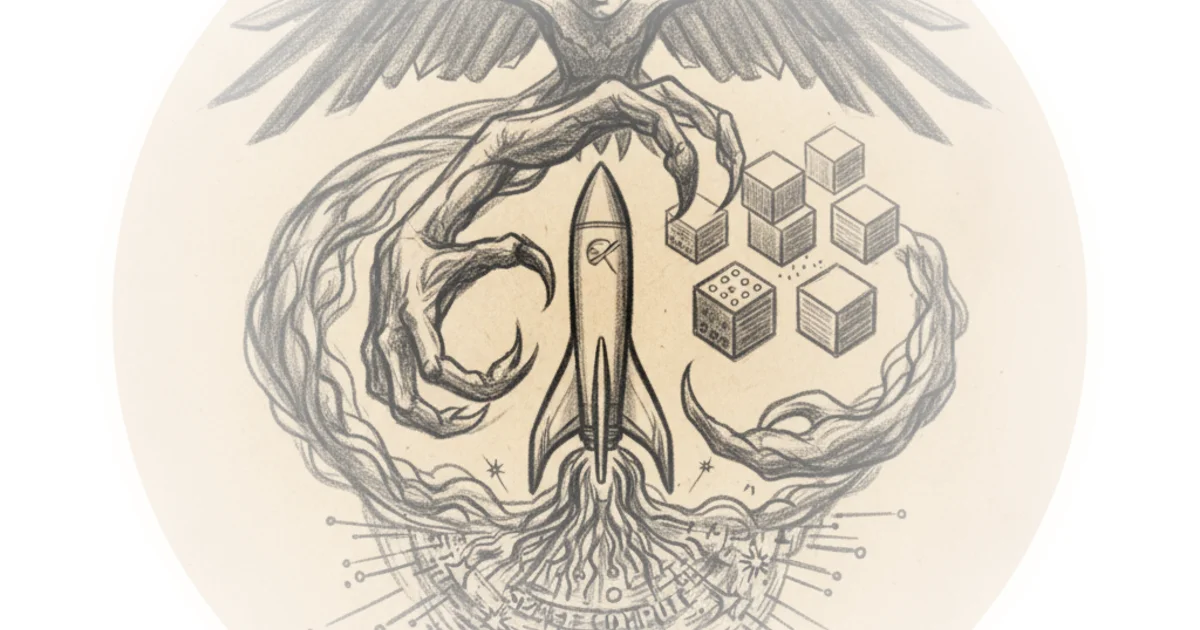
As Matthew Yglesias puts it, "As a result, this merger poses the very real risk that the combined company will be able to leverage a dominant market position in the space launch industry into a dominant market position in A.I." That's the core concern. SpaceX already dominates commercial launch capacity. xAI is Musk's AI venture. Combine them, and one entity controls both the rockets and the computers they carry.
Matthew Yglesias writes, "It's good for the United States and the world to have a competitive A.I. market, one where OpenAI and Anthropic and Google and Meta and others are robustly competing at the frontier." Competition drives innovation. Monopoly stifles it. The AI field currently has multiple players pushing boundaries—that diversity matters.
"But they should not be allowed to leverage it into dominating whole other industries."
The Common Carrier Solution
The remedy Yglesias proposes is regulatory, not revolutionary. Congress should impose common-carrier requirements on SpaceX. The company can charge market prices for launches, but must offer publicly listed rates on non-discriminatory terms. No special access for Musk's other businesses.
Matthew Yglesias writes, "This is how telecommunications infrastructure has historically been regulated, and it's also how railroads were regulated during their heyday as mission critical infrastructure." Phone companies cannot pick which customers get service. Railroads cannot grant secret discounts to favored shippers. Space launch should follow the same logic when it becomes critical infrastructure.
Matthew Yglesias writes, "But they should carry everyone's data centers." That's the principle in plain language. If orbital compute becomes viable, every AI company should access it on equal terms.
Critics might note that common-carrier rules could slow investment in space infrastructure. Regulation always trades efficiency for fairness. The question is whether space launch is sufficiently bottlenecked to warrant intervention.
The Energy Argument
Why space? Two reasons: unlimited solar power and no terrestrial permitting battles. Matthew Yglesias writes, "Once you can launch something into space, providing it with 24/7 solar power is very cheap because solar panels are now inexpensive and in space there's no weather or nighttime." Earth-bound data centers face growing NIMBY resistance. Space has no neighbors to complain.
Musk's FCC filing references Kardashev civilization scales—Type II civilizations harness their star's full power. The ambition is cosmic, but the immediate business logic is terrestrial: energy costs and permitting delays are the bottlenecks.
Matthew Yglesias writes, "But the space idea is something that could pan out, and it would be a mistake to let affective dislike of Musk blind us to the possibility that he's about to become even richer and more powerful." Disliking Musk personally doesn't negate the structural risk.
Critics might note the technical hurdles remain massive. Heat dissipation in vacuum, radiation shielding, maintenance logistics—all unsolved at scale. The timeline Musk suggests may prove fantastical.
Billionaires Versus Billionaires
The political landscape is more fractured than class-warfare rhetoric suggests. Matthew Yglesias writes, "My point here isn't 'not all billionaires' or even that some billionaires are great people who are highly charitable and working to make the world a better place." The observation is simpler: Musk fights Altman. Bezos competes with Musk in launch. Amazon backs Anthropic. Microsoft backs OpenAI. These conflicts create political opportunities.
Matthew Yglesias writes, "All of which is to say, an xAI / SpaceX merger ought to be prohibited." The prohibition is the specific remedy for the specific threat.
Critics might note that targeting one billionaire while ignoring structural wealth concentration feels incomplete. Yet politics advances through concrete victories, not abstract slogans.
Bottom Line
The merger threat is real even if the orbital data centers prove impractical. Common-carrier rules for space launch would prevent any single entity from converting launch dominance into AI dominance. That's narrow regulation for a narrow problem—and exactly what antitrust policy should do.