Sophia Fiedler delivers a searing critique of the contemporary art world's performative emptiness, arguing that the most dangerous threat to creativity isn't a lack of funding, but the dilution of genuine exchange into a hollow social ritual. While many critics focus on market crashes or institutional bias, Fiedler zeroes in on the psychological toll of attending gatherings where "people who called themselves artists and directors but in fact worked as content creators and creative directors made a mockery of themselves." This is not a review of a novel; it is an autopsy of a scene where the "muse" has been replaced by networking, and the result is a chilling portrait of intellectual starvation.
The Architecture of the Empty Box
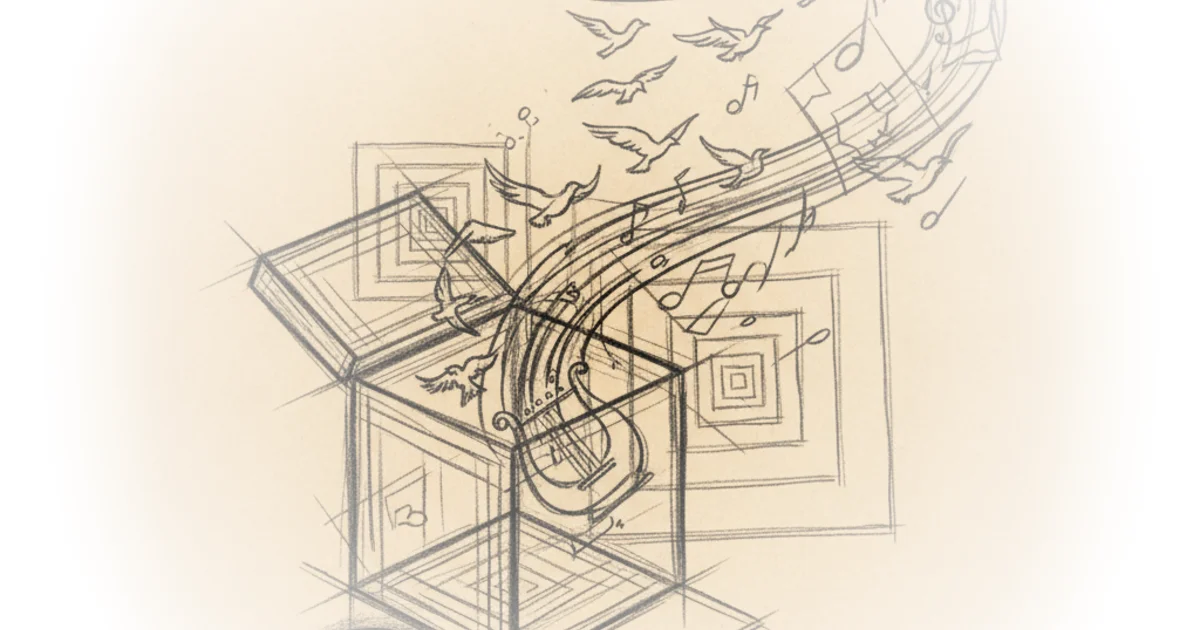
Fiedler anchors her analysis in Zoe Dubno's debut novel, Happiness and Love, using the protagonist's return to a New York dinner party as a lens to examine the decay of artistic community. The narrative centers on a protagonist who, after escaping a toxic circle of "children of 'great, genuinely great artists,'" finds herself trapped again in the same corner of a white linen sofa. Fiedler writes, "The dinner party in the New York Bowery loft... is significantly empty in a separate way: rather than attendees, it's the muse whose invitation must have gotten lost." This framing is potent because it shifts the blame from the individuals to the structure itself. The party is a box that has lost its contents.
The author draws a sharp distinction between the vibrant, chaotic energy of true artistic creation and the sterile, curated performances of the elite. She notes that the hosts, Nicole and Eugene, operate under the delusion that "when they were cruel to others it was for the greater benefit of the higher ideal that was art." In reality, Fiedler argues, they are merely "cannibalized the artistic innovations of their poorer, more creative friends for profit, sapping their ideas of all their revolutionary potential." This dynamic mirrors the historical tragedy of Zelda Fitzgerald, whose talent was often "slowly attenuated, diminished largely because of her failure to actually land any of the parts she tried to embody," leaving her soul eroded by the very scene that promised to elevate it.
"People who gather around an empty box talking about the mass as if it were there. An emperor without his clothes performing polemics in fear of his nakedness being noticed."
The critique here is devastating in its specificity. Fiedler suggests that the modern art world has become a place where "intentional carelessness" with luxury goods is mistaken for profundity, and where the "myth that to be great and worthwhile art must be born in pain" is weaponized to justify cruelty. Critics might argue that this view romanticizes the "struggle" of the artist and ignores the pragmatic realities of making a living in a competitive market. However, Fiedler's point is not about the necessity of struggle, but about the exploitation of that struggle by those who hold the keys to the gate.
The Illusion of Community
As the narrative progresses, Fiedler explores the psychological mechanism that keeps the protagonist trapped: the fear that leaving means admitting the entire enterprise is a sham. The protagonist watches the "performances" from her seat, paralyzed by the realization that "these people were total nonentities, people I was completely free to leave." Yet, the paralysis remains. Fiedler connects this to a broader cultural phenomenon where the "rush to converse" has become an end in itself, devoid of the "private, voluntary and a little scary" experiences that actually fuel art.
She invokes the concept of "fierce, anarchic freedom in a box," referencing an interview with Elizabeth Olsen to suggest that constraints are necessary for creativity to concentrate. But in the novel's world, the box has opened, and the energy has dissipated. The "red-hot, terrifying, magnificent, pulsating mass" of art has turned into a pale imitation, diluted until it "might as well not even be there." This metaphor is particularly striking when contrasted with the experience of viewing Matisse's Jazz series, where the lines are "jagged and multiple," yet still possess a vitality that the dinner party guests have lost.
Fiedler highlights the character of Emily, a "terribly kind, overweight, lesbian photographer's assistant," as the only figure who retains agency. Unlike the others, Emily "evaded Nicole and Eugene's grip" and possesses a "quiet purpose that seems to do without performances of 'great artistic temperament.'" She is the one who organizes the memorial, creating a "carnival in a moment of great tragedy" that pierces the "proclamations of misery marketed as a fabulous dinner party." This suggests that true community is not built on the curated personas of the elite, but on the quiet, unglamorous acts of care that the art world often overlooks.
"The people are the English professors, the rogue art critics, the true friends. They are glimpses of the world we dream about in the one we live in now."
The author's argument is that the "empty box" is not just a failure of the art world, but a failure of the imagination. When the "muse" is absent, the conversation becomes a "mockery," and the participants are left "sick with a philosophical misunderstanding of their experiences." Fiedler's prose is sharp and unflinching, refusing to offer a easy resolution. The protagonist does not find a new community; she simply realizes she can leave. The ending is ambiguous, leaving the reader to wonder if the "particles, a mass, creative kinetic energy" can ever be reassembled, or if they are lost forever to the "aridity and suspicion" of the modern scene.
Bottom Line
Fiedler's commentary is a masterclass in using fiction to diagnose a cultural rot, exposing how the art world's obsession with status and performance has strangled the very creativity it claims to champion. Its greatest strength is the refusal to offer a sentimental solution, instead forcing the reader to confront the uncomfortable truth that the "box" is empty only because we stopped putting anything real inside it. The piece's vulnerability lies in its potential to alienate those who see themselves in the "nonentities," but this discomfort is precisely what makes the argument necessary and urgent.