Brian Merchant delivers a rare, actionable critique of the streaming economy, moving beyond abstract complaints to prove that leaving a tech monopoly is not only possible but sonically superior. While most coverage focuses on the moral outrage of artist exploitation, Merchant provides the technical roadmap to escape it, revealing that the perceived lock-in of music libraries is a myth perpetuated by the platform itself.
The Economics of Extraction
Merchant's central thesis is that the streaming model has fundamentally broken the relationship between listeners and creators. He writes, "Spotify has been driving down wages for artists far longer than the AI companies, reducing payouts for musicians over the years until most are now making a statistically meaningless amount from the platform." This framing is crucial because it shifts the blame from individual consumer habits to the structural incentives of the platform. The author highlights the stark disparity between corporate profitability and artist survival, noting that while the company raked in nearly $700 million in quarterly profits, many musicians earn as little as $0.003 per stream.
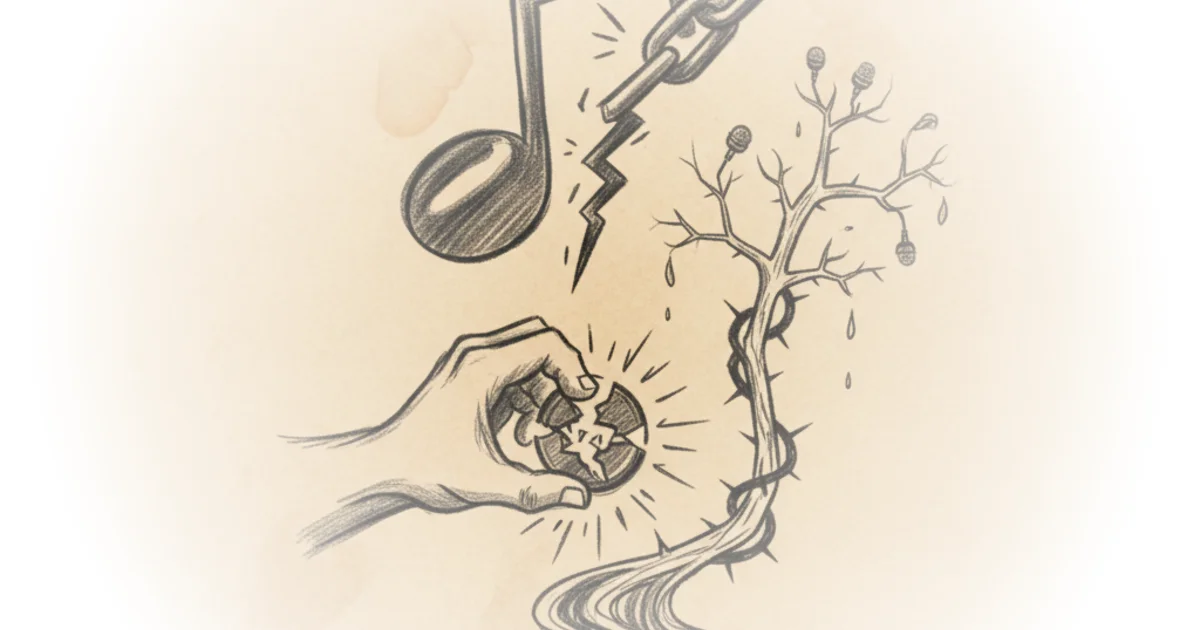
The piece effectively uses high-profile examples to illustrate the absurdity of the current system. Merchant points out that pop star Lily Allen "makes more money selling pics of her feet on OnlyFans than she does from Spotify royalties." This comparison is jarring, but it serves a specific analytical purpose: it underscores how the streaming model has devalued professional artistry to the point where alternative, often non-musical, monetization methods are more viable. Bjork's assessment is cited as the definitive summary of this era: the platform is "probably the worst thing that has happened to musicians."
Critics might argue that streaming provides necessary exposure that traditional sales never could, but Merchant counters this by noting that 81% of musicians on the platform do not even cross the 1,000-stream threshold required to get paid in 2024. The author's argument gains weight when he connects these financial practices to broader corporate behavior, specifically CEO Daniel Ek's investment in a lethal military tech startup, which has prompted artist boycotts. This context reframes the issue from a simple business dispute to a question of ethical alignment for the listener.
"Spotify is everything that's wrong with Silicon Valley's engagement with culture and labor condensed into a single platform."
The Myth of Lock-In
A significant portion of the commentary addresses the psychological barrier to switching services: the fear of losing one's library. Merchant dismantles this fear with empirical evidence from his own migration. He writes, "You are not locked into Spotify even a little bit... It's so easy. The platform that I wound up switching to had a deal that let me do this for free." By detailing the use of tools like Soundiiz to transfer thousands of songs and hundreds of playlists in mere minutes, the author provides a practical counter-narrative to the monopoly's inertia.
The author also challenges the assumption that Spotify possesses a superior catalog. "Spotify's library is not that much better than anyone else's," he asserts, noting that even with "weird stuff" like Dutch experimental black metal, the selection on other platforms was nearly identical. This observation suggests that the platform's dominance is maintained by habit and interface, not by exclusive content. The piece implies that the industry has matured to a point where distribution is ubiquitous, making the "walled garden" argument obsolete.
The Search for a Better Alternative
Merchant's evaluation of alternatives is rigorous, filtering options based on audio quality, payout rates, and corporate ethos. He dismisses Apple Music as a "Spotify clone" that still hands money to a tech giant, and he is particularly scathing about YouTube Music, which pays artists even less than Spotify. The analysis of Tidal is nuanced; while it offers better pay, the author expresses distrust due to its volatile ownership history and leadership by Jack Dorsey.
The endorsement of Qobuz stands out as the piece's most distinctive contribution. Merchant writes, "Receiving Qobuz's pay report, the indy musician and analyst Jordan says, 'was the first time I looked at streaming royalties and felt fairly compensated.'" The platform pays $0.0138 per stream, a figure that is more than four times Spotify's rate. Beyond the economics, the author praises the user experience, noting that the interface "foregrounds its offerings" and includes a magazine section with thoughtful articles rather than algorithmic sludge.
However, the author maintains a critical eye even in his recommendation. He acknowledges that Qobuz is owned by a multimedia conglomerate and has taken venture capital, stating, "It's not some scrappy artists' collective that can be counted on to keep musicians' pay decent and AI sidelined." This caveat is essential; it prevents the piece from devolving into a simple advertisement and reinforces the idea that the current landscape is a patchwork of imperfect solutions rather than a perfect fix.
"On Qobuz, the Replacements' Let It Be is raw and crackling, the Flaming Lips' Soft Bulletin is lush and beautifully layered."
Bottom Line
Merchant's strongest asset is his ability to combine moral urgency with technical feasibility, proving that the ethical choice is also the superior consumer experience. The argument's vulnerability lies in the assumption that all listeners prioritize audio fidelity and artist pay over the seamless, algorithm-driven convenience that Spotify offers. Readers should watch for whether Qobuz can maintain its high payout rates as it scales, or if it too will succumb to the extractive pressures of the venture capital model.
The Human Cost of the Algorithm
While the piece focuses on economics, the underlying theme is the dehumanization of the creative process. By highlighting how the platform incentivizes the spread of AI-generated songs and boosts them into playlists, the author points to a future where human expression is drowned out by synthetic content designed solely for engagement. This is not just a financial issue; it is a cultural one. The author's call to action is a rejection of a system that treats music as a commodity to be mined rather than art to be supported. The shift to platforms like Bandcamp and Qobuz is framed not as a retreat, but as a reclamation of the listener's agency in the cultural ecosystem.