Musa al-Gharbi offers a startling diagnosis for the current cultural fracture: the divide isn't just political, it's psychological, rooted in a specific cognitive profile that has become the default setting for the professional class. He argues that the very institutions meant to cultivate leadership are systematically filtering for a mindset that is increasingly alien to the general population, creating a feedback loop of isolation.
The Architecture of the "WEIRD" Mind
Al-Gharbi begins by grounding his sociological observation in anthropology, specifically the work of Joseph Henrich, to define a specific cognitive type. He writes, "People from WEIRD societies tend to be much more future-oriented than other people: We prioritize patience, discipline, efficiency and planning." This isn't just about being organized; it is a fundamental rewiring of how one perceives time and agency. The author suggests that this orientation toward a linear future and the belief in "progress" is not a universal human trait, but a regional anomaly that has been amplified by higher education.
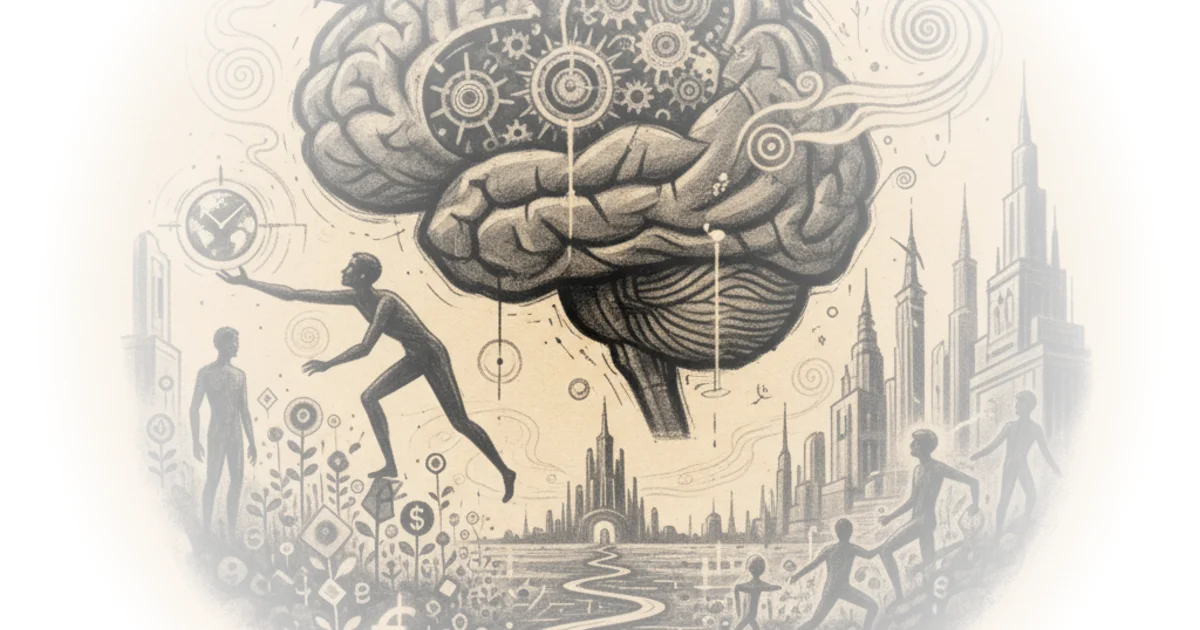
The piece posits that colleges act as the primary filter for this mindset. As al-Gharbi notes, "college admissions essays are, fundamentally, about presenting a unique and compelling curated self to help applicants 'stand out' against competitors with similar (or even superior) qualifications." This selection process doesn't just find smart people; it finds people who have already internalized the need to view themselves as distinct, marketable entities. The system rewards those who can detach from their immediate community and family history to craft a narrative of individual ascent.
"Colleges and universities tend to select for people with WEIRD tendencies, and then refine and exacerbate those inclinations further over the course of one's academic career."
This institutional reinforcement creates a specific moral framework. Al-Gharbi cites Christian Smith to describe the resulting ethos: "the emancipation, equality, and moral affirmation of all human beings as autonomous, self-directing, individual agents." While this sounds like a noble ideal, the author argues it creates a rigid expectation where any form of judgment or exclusion is seen as a moral failure. Critics might note that this framing risks dismissing the legitimate need for social norms and boundaries that hold communities together, but al-Gharbi's point is that the intensity of this individualism has become a barrier to connection.
The Urban Crucible
The argument deepens as al-Gharbi moves from the classroom to the city, arguing that geography accelerates these psychological shifts. He invokes sociologist Georg Simmel to explain how the sheer density of urban life forces a specific kind of emotional detachment. "In order to manage the complexity and diversity of their social milieu, Simmel argued, city dwellers tend to cultivate an intellectualized distance from most phenomena they encounter."
This isn't just about being busy; it's a survival mechanism that morphs into a personality trait. Relationships become transactional because the cost of deep investment in a transient population is too high. Consequently, the professional class feels a desperate need to differentiate themselves to be noticed at all. As al-Gharbi puts it, "It becomes a psychological and practical imperative to differentiate oneself from the masses that everyone crosses paths with daily."
This drive leads to a peculiar form of status signaling. The author points out that denizens of these hubs spend heavily on "fancy clothes, makeup, cosmetic surgery and so on" not just for vanity, but as a way to signal membership in a distinct tribe. The result is a class that is "so WEIRD, in fact, that our rise has exacerbated global cultural divides."
"We are the WEIRDest of the WEIRD."
This is the piece's most provocative claim: that the professional class is not just a step ahead of the average citizen, but a different species entirely in terms of cognitive processing. The author suggests that this gap is widening, with symbolic capitalists worldwide feeling more kinship with their peers in other countries than with the "normies" in their own backyards.
The Cost of Alienation
The final section of the commentary addresses the political fallout of this psychological divergence. Al-Gharbi argues that the polarization we see today is not merely a disagreement over policy, but a fundamental inability to relate. He writes, "More and more, polarization across and within countries turns on constituents' sociological proximity or distance with respect to the symbolic professions."
The tragedy, according to this analysis, is that the very traits that make the symbolic class effective in their jobs—abstract thinking, future orientation, instrumental relationships—are the exact traits that make them ineffective at building broad coalitions. They have built a world of "abstract standards that apply to everyone" that feels cold and exclusionary to those who value context, kinship, and tradition.
"Finding a way to bridge these growing divides is one of the core sociopolitical challenges of our times — perhaps a prerequisite for effectively addressing many other pressing social issues."
The author does not offer a simple solution, but rather a stark warning: if the institutions of the symbolic economy continue to select for and amplify these specific cognitive biases, the disconnect will only grow. The "WEIRD" mindset is not going away, and the rest of the world is unlikely to adapt to it.
Bottom Line
Al-Gharbi's most compelling contribution is reframing political polarization as a collision of incompatible psychological operating systems rather than a simple clash of values. The argument's greatest vulnerability lies in its potential to sound like an elite lamentation of the "normie" world, yet it successfully forces a necessary self-examination on the professional class. The critical takeaway is that until the symbolic professions acknowledge their own cognitive distinctiveness, they will remain unable to govern or lead a society that does not share their specific psychological profile.