Brian Merchant delivers a diagnosis that cuts through the hype: the defining legacy of the current artificial intelligence boom isn't a technological revolution, but a pervasive, low-quality coating of mediocrity that is hardening around our cultural institutions. While investors pore over earnings reports and executives promise transformation, the actual user experience has become an encounter with a "slop layer" that is cheap, ubiquitous, and aesthetically draining. This piece matters now because it moves beyond the abstract fear of job loss to describe a tangible, sensory reality where the line between human creation and automated garbage has not just blurred, but vanished entirely.
The Sedimentary Layer of Mediocrity
Merchant frames the current moment not as a sudden explosion, but as a geological process. He argues that what began in earnest in 2023 with the release of tools like ChatGPT and Midjourney has, by 2025, solidified into a permanent stratum of our digital lives. He writes, "If the slop explosion began in earnest in 2023... then now, in 2025, we're seeing that slop hardening into the outer shells of our cultural institutions and social spheres, like a layer of so much automata-inflected sedimentary rock." This geological metaphor is particularly potent because it draws on the concept of sedimentary rock formation, where layers of pre-existing material compress over time. Just as the US Geological Survey notes that these rocks are formed from "pieces of once-living organisms," the author suggests our current digital landscape is built from the compressed, recycled remains of human creativity.
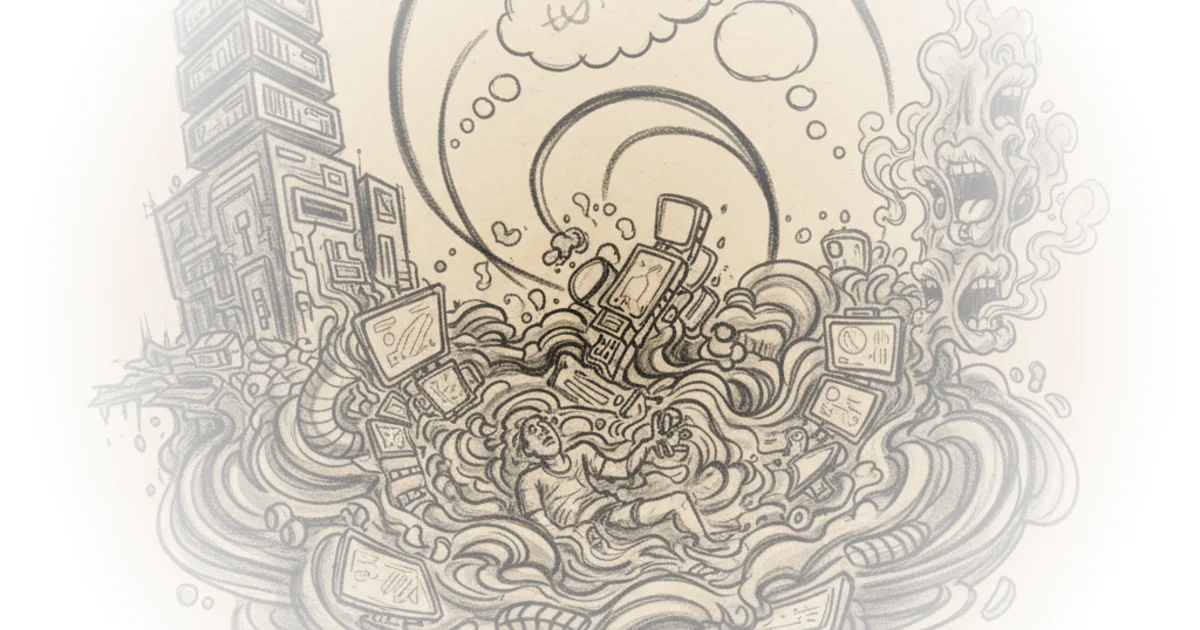
The argument gains weight by connecting this phenomenon to the broader concept of "enshittification," a term describing the degradation of online platforms. Merchant posits that the slop layer is essentially "enshittification made total and constant." He illustrates this by pointing to the music industry, where an AI-generated country song by a fake artist named "Breaking Rust" recently topped a Billboard chart. The song is described as "generic, pretty terrible," yet it succeeded because it was "not too out of step with the performatively masculine/hip hop-inflected/uncomfortably Imagine Dragon-adjacent trendlines in modern country pop." This example is chilling not because the AI is clever, but because it is indistinguishable from the worst of human-made content.
The slop layer would be offensive enough if it was limited to creative labor, but I'm afraid it coats even our social spaces now.
Critics might argue that this focus on aesthetic quality ignores the genuine utility of AI in coding or data analysis. However, Merchant's point is that the sheer volume of low-effort content is drowning out the signal, creating an environment where the "statistical mean" of culture is being lowered to the lowest common denominator. The ubiquity of this content forces a weary inability to discern what is real, turning the internet into a place of "faintly unpleasant aesthetic homogeneity."
The Economics of Cheapness
The driving force behind this deluge, according to Merchant, is not innovation, but cost-cutting. The author traces a direct line from the desire to reduce labor costs to the proliferation of AI-generated art in major video games and advertising campaigns. He notes that in the latest installment of the Call of Duty franchise, developers have "pushed customers face-first into the up-chuck of machine-generated visuals," including art that is so obviously AI it features six-fingered zombies or mimics the "Ghiblified style" that has become shorthand for low-effort generation.
This trend is not limited to gaming. Merchant highlights a Coca-Cola holiday campaign that the Verge described as a "sloppy eyesore," yet the company's Chief Marketing Officer defended it because it was "cheaper and speedier to produce." The executive admitted that while traditional campaigns started a year in advance, "Now, you can get it done in around a month." This speed comes at the cost of quality, but for corporations, the trade-off is clear. Merchant writes, "Every piece of Ghiblified video game art from a triple AI studio or AI-generated article on a media outlet's website is the visual representation of slashed labor costs, the aesthetics of digital deskilling."
The financial incentive is staggering. Citing a study, the author notes that training a large language model to emulate a professional writer costs a median of $81 per author, representing a "dramatic 99.7% reduction compared to typical professional writer compensation." This economic reality explains why the "slop layer" is expanding so rapidly; it is a rational business decision to replace human labor with cheap automation, even if the result is culturally toxic. As Merchant puts it, "It's cheap as dirt to turn on the slop spigot to try to juice post views on Facebook or X or yes Substack."
The Human Cost of Automation
Beyond the economic and aesthetic degradation, the article explores the profound social and psychological impacts of living in a world saturated with AI-generated content. The author describes chatbots as the "automation of human interaction, or slop friends," and points to the disturbing rise of AI tools that allow users to create deepfakes of loved ones or deceased family members. This commodification of intimacy is described as a "toxic brand of slop" that has already led to massive data leaks and the exploitation of personal grief.
Merchant draws on the observations of The Atlantic's Charlie Warzel, who described AI as "a mass delusion event," but Merchant suggests the broader effect is even more insidious: a "great cheapening" of human experience. He argues that we are facing a future where our cultural artifacts, social interactions, and even our sexual fantasies are "lathered onto reality, embedded with the telltale sediments of their plagiarism and automation." This framing shifts the conversation from the fear of a singular, catastrophic event to the dread of a slow, ambient decay.
The slop layer is enshittification made total and constant.
While the author acknowledges that some might argue this is simply the next step in technological evolution, the evidence presented suggests a fundamental break in the social contract. The proposal of a "slop tax" by some critics and the push for legislation like California's AB-412, which would require AI companies to alert copyright holders, indicate a growing recognition that the current trajectory is unsustainable. Merchant notes that on December 8, 2025, a hearing will be held to discuss these issues, offering a glimmer of hope that the "slop layer" might be excavated or at least regulated.
Bottom Line
Merchant's strongest argument is his ability to name and describe the "slop layer" as a tangible, geological force that is reshaping reality, moving the debate from abstract economic theory to the visceral experience of daily life. The piece's greatest vulnerability lies in its potential to induce fatalism; while the diagnosis is sharp, the path to "excavating" this layer remains speculative and reliant on regulatory intervention that may be too slow to stop the hardening of the sediment. Readers should watch for the outcome of the upcoming California hearing and the adoption of the proposed "slop tax," as these will be the first real tests of whether society can push back against the economics of cheapness.