This isn't just another monthly poll release; it is a forensic accounting of a presidency hitting a wall where economic anxiety and foreign policy overreach collide. G. Elliott Morris presents data that moves beyond simple approval ratings to reveal a structural collapse in public trust, driven by a specific, volatile mix of surging gas prices and an unpopular military intervention. For the busy reader trying to grasp the mood of the nation in early 2026, this piece offers a rare, data-driven map of where the political ground has shifted beneath the administration's feet.
The Price of Conflict
The core of Morris's argument rests on a brutal correlation: the administration's foreign policy decisions are directly eroding its domestic standing. He notes that "the national average price of a gallon of gas is now $3.96... up over a dollar from $2.93 before the U.S. war in Iran began on Feb. 28, 2026." This isn't abstract inflation; it is a tangible cost of war hitting the consumer at the pump. Morris writes, "Trump's approval on prices and inflation has cratered to net -39, the worst rating on any issue in the history of our poll." The author effectively uses this historical low to illustrate a breaking point. When voters feel the pinch of a dollar-a-gallon increase, they do not credit geopolitical maneuvering; they blame the executive branch for the cost of living.
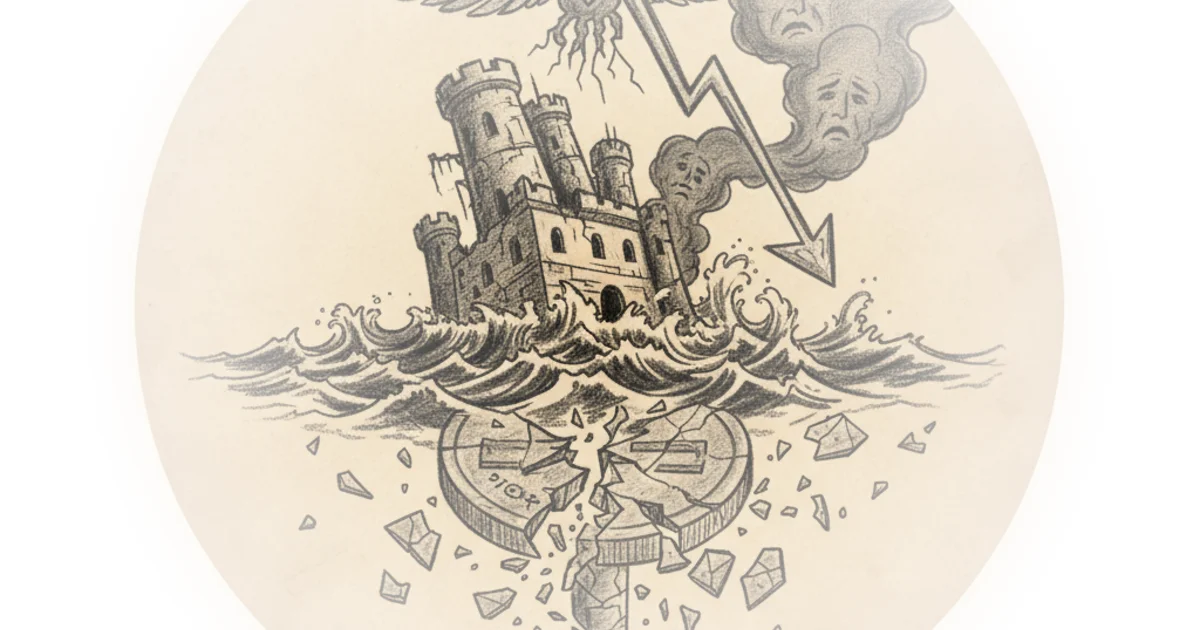
This dynamic mirrors the 1973 oil crisis, where a sudden spike in energy costs, driven by geopolitical conflict, triggered a stagflation that defined a decade of political instability. Just as the 1970s saw public trust evaporate alongside purchasing power, Morris highlights that "only 10% say things are going well in America," while a majority demand "major, disruptive changes." The data suggests the administration is fighting a war that the public views as a liability rather than a necessity. As Morris puts it, "58% of Americans say the war is a bad use of taxpayer dollars... and 61% would oppose it if gas prices were to rise by $1 or more per gallon." The link between the battlefield and the grocery store is no longer theoretical; it is the primary driver of electoral sentiment.
Voters are punishing the president on the thing they care about most: the price of filling up their cars.
The Collapse of the Base
Perhaps the most alarming finding for the administration is not the opposition's strength, but the erosion of its own coalition. Morris points out a disturbing trend: "13% of Trump voters say they regret how they voted in 2024 — twice the rate of Harris voters." This "buyer's remorse" is a critical vulnerability. In political science, the Hawthorne effect suggests that people change their behavior when they know they are being observed or when the stakes feel immediate. Here, the immediate stakes are economic survival, and the administration's base is beginning to question the return on their investment.
The author details how the administration has lost its traditional strongholds. "Border security goes underwater: Trump's last remaining bright spot — border security — slipped from net 0 to net -2." This is a significant shift. For years, the right flank of the electorate viewed border control as an exclusive Republican competency. Morris notes that while Republicans still maintain leads on immigration and crime, "those advantages keep narrowing." The data indicates a broad-based dissatisfaction where the president "doesn't have a single positive issue rating." Critics might argue that a single poll can be an outlier or that the margin of error allows for some statistical noise, but the consistency of the downward trend across multiple months suggests a deeper, structural issue rather than a temporary blip.
The Generic Ballot and the Path Forward
The implications for the upcoming midterms are stark. Morris writes, "Democrats have led the generic ballot in every poll we've conducted since we launched the monthly partnership in May 2025." He contextualizes this by noting that "the out-party typically gains ground on the generic ballot as a midterm approaches," and if that pattern holds, "Democrats would be looking at a margin well into wave territory by Election Day." The author's analysis moves beyond the current snapshot to project a trajectory where the administration's unpopularity compounds over time.
The trust gap is widening on the very issues that matter most. On prices and inflation, Democrats lead by 6 points; on health care, the lead is 18 points. Even on the administration's traditional turf, the lead is shrinking. Morris observes that "voters trust Democrats more than Republicans" on almost every top-tier issue, including the newly measured "elections and democracy," where Democrats hold a 10-point advantage. This suggests that the administration's strategy of focusing on culture war issues is failing to resonate with a public that is primarily worried about their wallet and their safety.
Bottom Line
G. Elliott Morris delivers a damning, data-rich indictment of an administration that has lost its grip on the economic and foreign policy levers of power. The strongest part of the argument is the direct causal link drawn between the Iran conflict, rising gas prices, and the historic low in approval ratings. The biggest vulnerability for the administration is not just the opposition's strength, but the growing fissure within its own base, where regret is doubling. As the midterms approach, the question is no longer if the administration will face a backlash, but how severe the wave will be when the electorate finally goes to the polls.