In an era when longer, healthier lives are framed as "problems," Wes Cecil argues that late capitalism has eliminated our ability to discuss what really matters. This provocative piece reveals how financial questions have completely displaced moral ones—and why we should be alarmed.", ## The Problem No One Talks About
Most people would agree that longer, healthier lives represent genuine progress. Yet when politicians and economists discuss demographic shifts—people living longer—they frame it as a crisis. "Too many people living longer, healthier lives," they say, is a problem that needs solving.
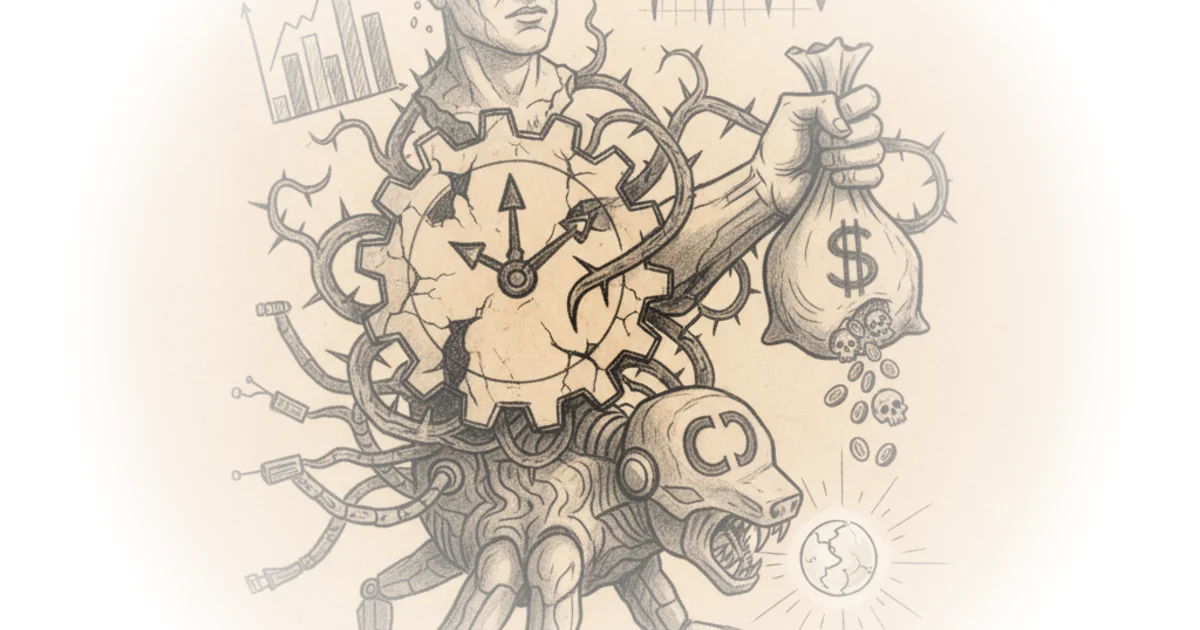
This is the heart of what Wes Cecil calls the end of ethics in late capitalism: we've lost the ability to discuss values like dignity, justice, and human flourishing. Everything gets filtered through one question—how much does it cost?
The Retirement Debate That Reveals Everything
Consider how we debate retirement programs worldwide. In the United States, France, Germany, and elsewhere, these discussions dominate political discourse. But notice what's missing from the conversation.
When pension systems were first established in the Western world during the Victorian era, they emerged from moral concerns: people should not live in poverty when they age. The language used was about dignity, eliminating poverty, and social hygiene—a healthy society requires healthy citizens.
Today, that conversation has completely flipped. Instead of asking "how do we ensure elderly people live with dignity?" we ask only "how much will it cost and who will pay?"
Cecil observes this shift is so complete that most people don't even notice it happening. The moral questions have been answered—dignity and poverty reduction are now assumed goals—and then immediately pivoted to financial ones. The original ethical framework has vanished.
Why This Matters
This isn't just about retirement programs. It's about how we frame every social problem. When did we stop asking what kind of society we want and start only asking what's affordable?
The same pattern appears across debates about healthcare, education, and social safety nets everywhere. The underlying moral questions—about justice, dignity, and what we owe each other—are treated as settled, then replaced entirely by fiscal ones.
Cecil argues this represents the elimination of history itself. We no longer compare how different societies handled similar challenges. We've lost the ability to think outside the box drawn around cost.
The Shift From Moral to Fiscal
What's striking is how quickly this shift happens. Someone raises the issue of people living longer, healthier lives—and the response immediately becomes about financial strain on pension systems.
But here's what gets ignored: we could simply design a new system with different assumptions. We could frame it around dignity rather than cost. The original impulse wasn'tabout saving money—it was about human flourishing.
The choice to address these problems through inflation, printing money, or any other method exists. Every policy has economic impacts, but we've stopped asking whether those impacts serve our actual values.
Counterpoints
Critics might note that this analysis oversimplifies the real constraints governments face. Pension systems genuinely require sustainable funding, and ignoring fiscal realities has led to crises in some countries. Additionally, framing every issue as purely a moral question ignores the legitimate complexity of economic governance.
Others might argue that the original Victorian concerns about dignity were themselves limited—often excluding poor people entirely—and that we've actually moved beyond their assumptions in important ways.
We've agreed that people living longer, healthier lives is a problem, but what if it's actually an opportunity?
Bottom Line
Cecil's strongest insight is that we've stopped debating whether we want dignity and justice for elderly people—that debate has been settled by assumption—and moved entirely to how we'll pay for it. The original moral arguments have simply disappeared from public discourse.
His vulnerability lies in the practical question: if we genuinely embrace dignity as a value, we still need sustainable systems to fund it. Simply printing money isn't a viable long-term solution. But his core observation remains valuable: we've stopped asking what kind of society we want and started only asking what's cheapest.