In a cultural landscape increasingly dominated by algorithmic efficiency and identity-based categorization, John Pistelli offers a provocative defense of literature as a necessary sanctuary for the irrational. He argues that the true value of the written word lies not in its ability to communicate facts or enforce moral codes, but in its power to "defunctionalize" language, freeing the human imagination from the twin tyrannies of ancient theocracy and modern technocracy.
The Architecture of Imagination
Pistelli begins by tackling the seemingly simple question of what literature actually is, only to dismantle the very premise of a descriptive definition. He posits that "Literature as we know it is a post-Enlightenment historical formation meant to preserve an autonomous, ordered space for psychologically, socially, and spiritually necessary non-rational thought." This is a bold framing that elevates literature from mere entertainment to a vital counter-force against the totalizing logic of the modern age. By characterizing the genre as a shield for the imagination, Pistelli suggests that when we lose the capacity for non-rational thought, we lose a fundamental part of our humanity.
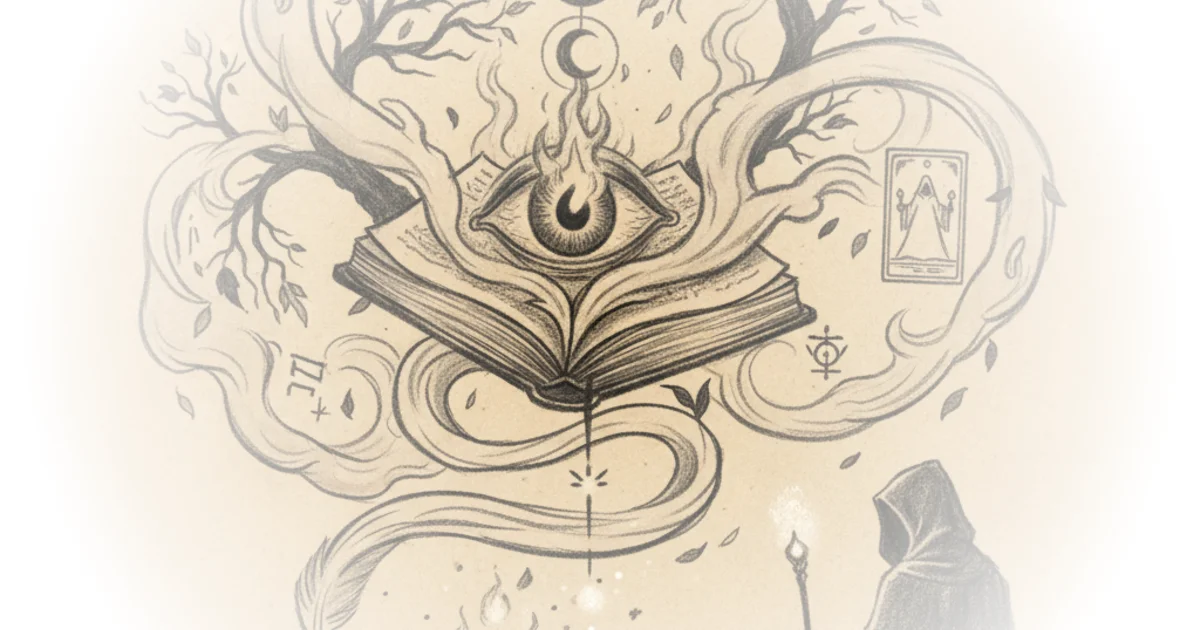
He draws a sharp distinction between functional communication and the aesthetic experience, noting that literature's hallmark is a "metacognitive awareness exhibited somewhere in the text of language or narrative's aesthetic dimension." In this view, a text that merely delivers a command or a clear message fails as literature. Instead, it must invite the reader to step back and reflect on the medium itself. This perspective challenges the prevailing trend of reducing all media to its utility or its political utility, insisting that the "aesthetic and the prompt to meta-awareness defunctionalizes the rhetorical function of language."
"Literature liberates into social freedom energies once requisitioned as textual commands by the now-vanquished ancien régime and keeps triumphal Enlightenment from rationalizing them out of existence."
Pistelli's argument here is compelling because it reframes the purpose of art not as a tool for social engineering, but as a space of resistance against all forms of totalizing systems, whether they be religious dogma or rigid rationalism. However, critics might note that this definition is so normative that it risks excluding vast swathes of popular culture that, while lacking high-modernist complexity, still serve to expand the human imagination for millions of readers.
The Politics of Aesthetics
The commentary shifts to a critique of contemporary debates surrounding identity and literature, specifically addressing the paradox of Djuna Barnes's Nightwood. Pistelli revisits his own decade-old essay to argue that the novel is "among the most reactionary of American classics, despite or even—what will confound the identity politics of today—because of its having nary a straight white male in its cast of characters." This counter-intuitive claim serves as a pivot point for his larger argument: that great literature transcends the specific identities of its characters to address the universal human dilemma.
He suggests that the modern obsession with identity politics can sometimes obscure the broader, more profound visions that literature offers. By defending Barnes's work as a "universal vision of the human dilemma in excess of all ideologies," Pistelli pushes back against the idea that literature must be judged primarily by its adherence to current social frameworks. He warns that descriptive definitions of literature often dissolve into "esoteric power-plays by various actors who wish to subject the imagination either or both to the pre-modern polities the Enlightenment subdued or/and to unrevised Enlightenment in its rationalist totalization."
"The concept of 'literature' can be applied retrospectively to texts that pre-date but anticipate 'literature' from Greek and Biblical poetry through the Renaissance, and can also be applied to non-literary media of all sorts from philosophical treatises to pop song lyrics."
This expansive view allows Pistelli to connect disparate cultural artifacts, from the poetry of William Blake to the lyrics of Grimes, under a single umbrella of imaginative resistance. He notes that Grimes's song "Artificial Angels" serves as a fitting soundtrack to his own ideas, capturing the sentiment that "the only thing I covet is my own annihilation" in a world where artifice is enveloping the planet. While this synthesis is intellectually stimulating, it relies heavily on the reader accepting a very specific, high-brow definition of what constitutes valid cultural commentary.
Cinema and the Failure of Intersubjectivity
Pistelli turns his critical eye to Luca Guadagnino's film After the Hunt, offering a scathing review that doubles as a case study in the failure of contemporary art to navigate complex social dynamics. He describes the film as a "weak solution of Lydia Tár" that attempts to grant "all contending parties in the woke vs. anti-woke debate their due" but ultimately collapses under the weight of its own pretensions. The film, he argues, tries to use a complex character study to prove that "art is superior to politics," only to end up discrediting both sides.
He critiques the film's portrayal of the "therapeutic state," where a husband-therapist condemns his wife's authentic testimony with "ethical abstraction." In Pistelli's reading, the failure of intersubjectivity in the film lies in the husband's inability to listen, instead replacing the wife's experience with a rigid moral framework. He writes, "He tells her what is and isn't right while she's just trying to tell him what is." This observation cuts to the heart of the film's thematic failure, suggesting that the director's attempt to be nuanced results in a profound lack of empathy.
"The governing conceit has potential but is probably too precious to animate a whole film instead of just a skit: as signaled by the credits sequence, this is, content-wise, a Woody Allen film, neurotic intellectuals in erotic extremis, but formally it's shot and scored more like Alfred Hitchcock."
Pistelli's analysis highlights the disconnect between the film's intellectual ambitions and its emotional execution. He notes that the film's attempt to satirize the "woke hegemony" feels more like a "one-off joke" than serious cinema, ultimately failing to meet even the standard of entertainment. While his critique is sharp, it may overlook the possibility that the film's awkwardness is intentional, a reflection of the very confusion it seeks to depict.
The Melancholy of Resistance
Finally, Pistelli touches upon the work of Nobel laureate László Krasznahorkai, questioning whether the author has gone too far in his defense of the "holy fool." As the narrative of The Melancholy of Resistance descends into chaos, with a mob destroying a town, Pistelli sees the novel becoming a "precise Heideggerean-Levinasian fable." He humorously notes his own reliance on academic shorthand, admitting that "if someone says 'face' you're supposed to reply 'Levinas,' and the same goes for 'hammer' and 'Heidegger.'"
This section serves as a reminder of the dense, often impenetrable nature of the high-modernist tradition Pistelli champions. While he appreciates the novel's quest for "metaphysical unity in a chaotic world," he also acknowledges the difficulty of sustaining such a vision without succumbing to abstraction. The tension between the chaotic reality of the mob and the quiet, desperate barricading of the characters mirrors the broader tension in Pistelli's own argument: how to preserve the autonomous space of literature in a world that demands constant engagement and utility.
"Literature emerges as the death of rhetoric."
This concise definition, borrowed from art theorist Boris Groys, encapsulates Pistelli's entire thesis. It suggests that true literature exists only when language stops trying to persuade, command, or define, and instead opens a space for pure, unmediated experience. It is a radical claim that challenges the very foundation of how we consume and value stories today.
Bottom Line
John Pistelli's commentary is a vigorous, if occasionally dense, defense of literature as a sanctuary for the irrational in an age of totalizing systems. His strongest argument lies in reframing the aesthetic dimension of language as a form of resistance against both religious dogma and technocratic rationalism. However, his reliance on high-modernist jargon and his dismissal of popular culture as potentially non-literary may alienate readers who seek a more inclusive definition of the art form. The reader should watch for how these ideas play out in the ongoing debate between identity-focused criticism and universalist aesthetics, a conflict that shows no signs of abating.