The Kingdom of Kush was ancient Egypt's closest neighbor — a civilization so intertwined with its more famous counterpart that Egyptian pharaohs buried Kushite soldiers in their tombs. For decades, Western historians overlooked this African kingdom's story. Now, a new book finally lets Africans tell it themselves.", "ADAPTED BODY": "## The Kingdom of Kush
The Kingdom of Kush was located in what is now Sudan — Egypt's closest neighbor to the south. Their relationship stretched back to prehistoric times and remained remarkably close throughout antiquity.
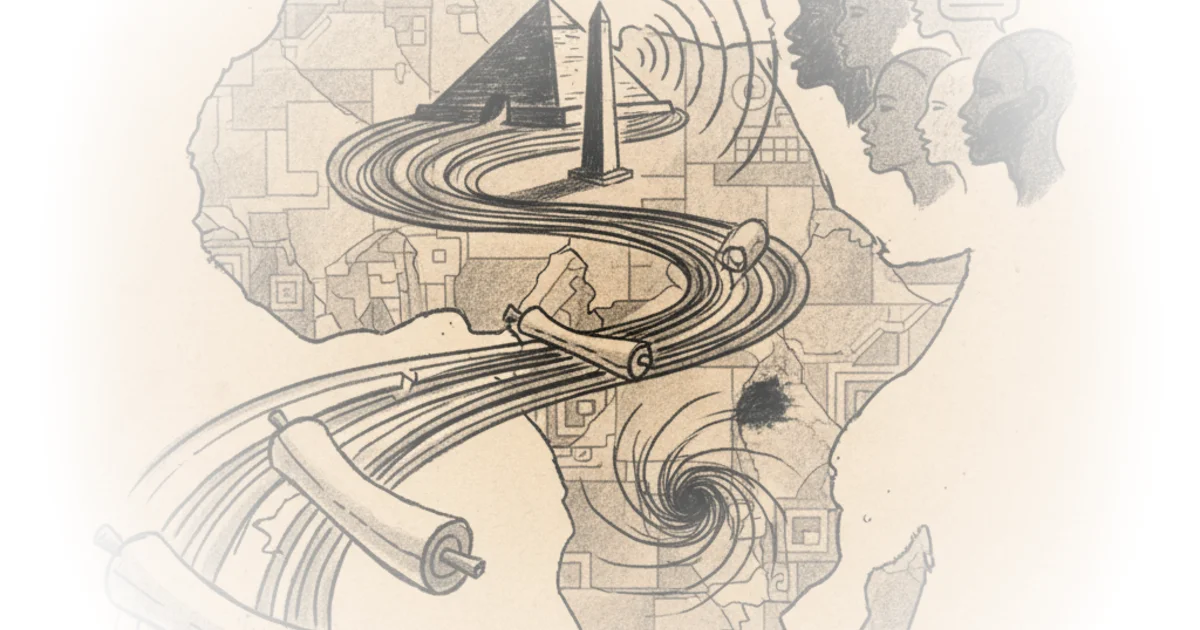
Archaeologists have uncovered carvings in Old Kingdom pharaoh tombs dating to 2300–2400 BCE that depict Kushite soldiers in Egyptian armies. These warriors earned a reputation that spread across the ancient world: they were known as "the land of the bow," skilled archers whose arrows could find their mark with terrifying precision.
The Greek historian Herodotus described these troops when recounting the Persian king's vast army — black-skinned warriors painting their bodies in war paint, carrying bows as long as a man. Their arrows were reportedly poisonous. The reputation for shooting at an opponent's eyes earned them significant kudos among fellow warriors.
A Dynasty Forgotten
Why does this matter? Because Egypt's 25th Dynasty — the "black pharaoh" dynasty — represents one of history's most fascinating and overlooked chapters: African rule over ancient Egypt.
Dan Carlin discovered this period through a friend's wargaming army, painted with black skin to represent soldiers from Sudan rather than Mediterranean coastal figures. It wasn't political statement-making but historical accuracy — the 25th Dynasty was indeed an African dynasty, several pharaohs of Nubian descent ruling from roughly 747 BCE.
Yet Carlin admits he's never understood why so many people try to reach for complicated explanations about Cleopatra's ethnicity or how Napoleon shot the Sphinx's nose off when the evidence sits plainly in front of them. The African connection to Egypt is staring everyone in the face, and there should be a movie about it.
A Scholar Returns Home
Zay Abu Badawi was born in Sudan — the very land where Kush once flourished. Her new book covers Africa's history from the dawn of humanity to recent times.
After making documentary films across more than 30 African countries over seven years, interviewing dozens of historians and archaeologists, she grew troubled by how much knowledge ended up on what she calls "the cutting room floor." She decided writing a book was the only way to give these scholars their due.
"Let us hear Africans telling their own story rather than having it related by outsiders," she said. That mission drove her work — using her international platform to put African voices center stage.
The Science of Origins
The evidence is settled: all humanity originated from Africa. Every person alive today traces their ancestry to the continent.
"There are obviously some people who find it rather unpalatable that all humans originated from Africa," Carlin observed, "but there we go." Africans themselves derive pride from this fact — knowing their continent is literally the mother of all human civilization.
Why Oral Tradition Matters
A critical misunderstanding has plagued African history: critics claim because Africans didn't always write records, they had no history. This view is shortsighted and has denigrated Africa's precolonial past.
African historians rely heavily on oral tradition — knowledge held communally rather than individually. A great grandmother might be the custodian of her people's historical memory, passing down tales of leaders and deeds through generations.
This approach supplements Western written records rather than replacing them. Looking at African history only through a Western prism misses something essential: the African mindset operates differently, and understanding requires diversifying how we tell these stories.
"If you only look at African history through a western prism you will miss something."
The Mosaic of History
Carlin sees history as a mosaic — individual tiles adding clarity and dimension. Zay Abu Badawi adds missing tiles by talking to local historians, museum curators, and oral storytellers on the ground in Africa.
When archaeologist Derek Welby wrote about Kush in 1996, his book was roughly 180 pages covering "all that is known" — and that was nearly three decades ago. Much more is known now. But beyond archaeological finds, what African voices bring is irreplaceable: perspective from people whose ancestors built these civilizations.
Bottom Line
This piece's strongest argument is simple: Africa's story has been told by outsiders for too long, and hearing it from Africans themselves reveals dimensions invisible to Western eyes. Its vulnerability lies in the tension between academic rigor and popular accessibility — Carlin admits he "monopolizes" the conversation to focus on one kingdom, which means listeners miss broader context. But that narrow focus is precisely what makes this episode compelling: a deep dive into Kush proves there's gold in going depth over breadth.", "PULL QUOTE": "> "If you only look at African history through a western prism you will miss something."", "COUNTERPOINTS": "Critics might note that framing Africa's history as primarily about correcting Western oversights risks reducing the continent's rich civilizations to a corrective lens. Some scholars argue this approach understates how much we already know archaeologically while underplaying internal African agency.", "BOTTOM LINE": "The strongest part of Carlin's argument is his concrete example — the 25th Dynasty isn't controversial history but rather overlooked because nobody wants to talk about it. His vulnerability is that he admits he's monopolized the conversation, focusing on one kingdom when the full book covers Africa's entire history. That tension between what we want and what we're given makes this episode work.