This isn't just a canonical update; it's a definitive line in the sand drawn between traditionalist Catholicism and the institutional Church. The Pillar cuts through the theological fog to reveal that the Vatican has moved from ambiguous warnings to explicit, declared penalties, fundamentally altering the legal status of those who follow the Society of Saint Pius X.
The Mechanics of Schism
The piece opens by dissecting the immediate fallout of the illicit bishop consecrations. It reports that Bishop Alfonso de Galarreta "incurred the penalty of excommunication, for two named offenses: consecrating a bishop without a papal mandate, and (by defying the pope over that) committing an act of schism." This distinction is crucial. The article clarifies that while the penalty for unauthorized ordination is "reserved to the Apostolic See," meaning only Rome can lift it, the penalty for Bishop Bernard Fellay was found less severe in its procedural requirements because he merely "adhered" to the act.
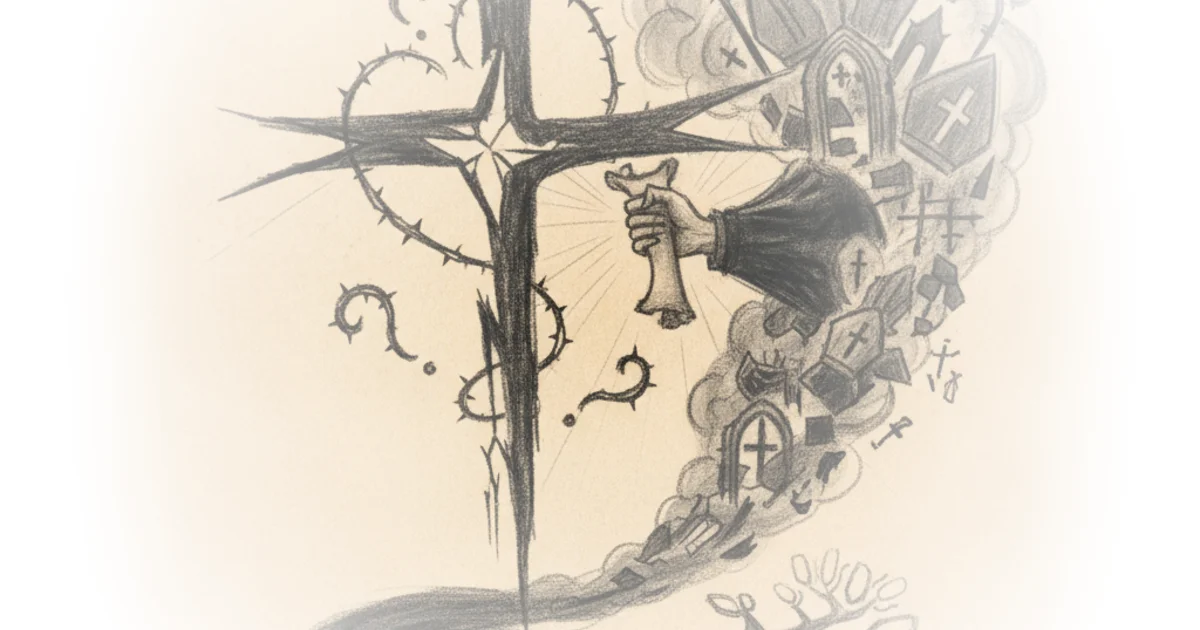
The commentary here is sharp: it strips away the mystique of excommunication to reveal its legal function. The piece argues that these are not declarations on a person's soul, but rather "medicinal penalties intended to call a person who has committed some grave act to repentance and conversion." This framing is vital for busy readers trying to grasp the stakes; it suggests the door isn't locked, but the key is now held exclusively by those previously ignored.
An excommunication, from the canonical perspective, is not itself a declaration on the state of a person's soul, or a dismissal from the Church, it is instead a penalty intended to convey with practical consequences the spiritual consequences of a person's actions.
The Pillar notes a critical nuance often missed in headlines: while the bishops are explicitly excommunicated, the Vatican has not declared the entire Society of Saint Pius X (SSPX) as an entity to be schismatic. This is because, technically, "the society was canonically suppressed" back in 1975 and "doesn't technically recognize the group as a group." Instead, the documents target individuals. However, the piece highlights a July 2 explanatory note that shifts the ground for priests: "from now on … the sacred ministers belonging to the Priestly Fraternity of Saint Pius X are in schism and must therefore be considered schismatic." This creates a precarious legal limbo where individual priests face an undeclared excommunication simply by remaining in their current structure.
The Trap for the Faithful
Perhaps the most unsettling section of the coverage concerns laypeople. The article explains that while casual attendance doesn't automatically trigger penalties, "formal adherence" does. The Pillar defines this as a specific combination of intent and action: "freely and consciously sharing the substance of the schism, that is, in opting in such a way for the [SSPX] that this option is placed above obedience to the pope."
This definition is where the analysis gets granular. The piece warns that exclusive attendance or financial commitment could cross the line into schism. Yet, it also offers a lifeline: "lay people who attended SSPX liturgies without rejecting the authority of the pope would not be subject to a penalty, and could return to the full communion of the Church just by talking with their priest." This distinction is the piece's most practical value—it separates the devout but confused from the rebellious.
Critics might argue that this binary definition of "formal adherence" is too rigid for the complex reality of traditionalist communities, where loyalty to a local chapel often stems from spiritual hunger rather than political defiance. The article acknowledges this tension, noting that "each individual case has to be considered on a case-by-case basis," but leaves open the question of how much pressure diocesan bishops will apply to enforce these distinctions.
The Sacramental Paradox
The coverage hits its most contentious point when addressing the validity of sacraments. The Dicastery for the Doctrine of the Faith issued a stark warning that "the sacrament of penance administered by them and the marriage assisted by them are invalid." This directly contradicts recent concessions made by Pope Francis, who had granted SSPX priests faculties to hear confessions during the 2015 Year of Mercy and to witness marriages in 2017.
The Pillar points out a glaring canonical inconsistency: "excommunication prohibits the exercise of faculties given, but doesn't explicitly revoke them." The article notes that under Canon 1335, an excommunicated priest can still validly confer sacraments if requested by a faithful Catholic in need. This leads to a baffling conclusion from the editors: either the Vatican is about to issue further clarification, or Pope Leo XIV has secretly rescinded these faculties without public announcement. "Given the tenor of the conflict to date," the piece observes, "that point seems unlikely to be merely abstract." This ambiguity leaves Catholics in a state of uncertainty regarding the very spiritual acts they rely on.
The warning about penance and marriage has raised some canonical questions... suggesting that canonically, there is not yet a public expressed reason to account for the DDF's assertion that the sacrament of penance would be invalid when celebrated by a priest of the SSPX.
A Path Forward?
The article concludes with a humanizing perspective from Archbishop Bernard Hebda of Minneapolis-St. Paul, who recognized the sincerity of those involved. "I have been impressed by the strength of their families and their commitment to traditional Catholic values," Hebda is quoted saying. The Archbishop's response offers a pragmatic solution: he noted that the "traditional Eucharistic liturgy beloved by those who have worshiped with the SSPX in the past continues to be celebrated" within his archdiocese, providing an alternative home for the faithful.
This local approach contrasts sharply with the heavy-handed canonical decrees from Rome. While the Vatican issues warnings of invalidity and schism, bishops on the ground are trying to shepherd people away from the brink without alienating them entirely. The Pillar's reporting suggests that the real battle won't be fought in decrees, but in parishes where priests must decide how to interpret "formal adherence" for their flock.
Bottom Line
The strongest part of this analysis is its ability to disentangle the legal status of individuals from the non-existent status of the organization, clarifying that the crisis is one of personal obedience rather than institutional existence. Its biggest vulnerability lies in the unresolved tension regarding sacramental validity; by highlighting the contradiction between recent papal concessions and new DDF warnings without a definitive answer, it leaves readers with more questions about their spiritual safety than they started with.