In a landscape saturated with rigid doctrinal defenses, Wayfare offers a startlingly human counter-narrative: faith may not collapse when feelings fade, but rather find its only true stability when reason steps in to hold the structure until the heart heals. This piece does not merely recap Pascal; it weaponizes his 17th-century insights against modern spiritual burnout and mental illness, proposing a radical reversal of the traditional order where intellect serves emotion.
The Architecture of Feeling vs. Reason
Wayfare begins by acknowledging the quiet attrition of belief, describing a state where "prayers become monologues; the scriptures, merely a text." This observation resonates deeply with the experience of many who have served in high-intensity religious roles and subsequently felt their internal compass spin. The piece draws a powerful parallel to the 17th-century French polymath Blaise Pascal, whose own journey from mathematician to mystic serves as the article's backbone. Wayfare notes that on November 23, 1654, Pascal experienced an encounter he recorded as "Fire. 'God of Abraham, God of Isaac, God of Jacob,' not of philosophers and scholars," a moment that shifted his focus from geometric proofs to moral arguments designed to "incline the heart, not to convince the intellect."
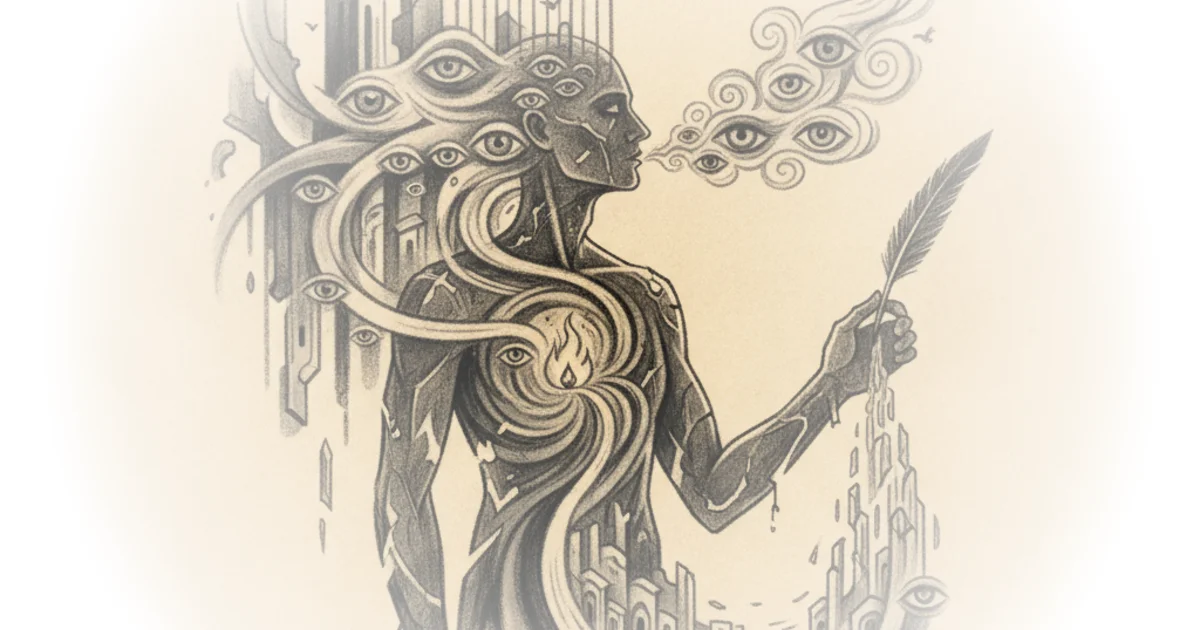
The article argues that Pascal understood faith as something felt rather than deduced. "It is the heart which experiences God, and not the reason," Wayfare reports, quoting Pascal's assertion that "the heart has its reasons, which reason does not know." This distinction is crucial for the piece's thesis: it suggests that relying solely on intellectual puzzles to justify belief is a category error. However, the commentary then pivots to a critical vulnerability in this framework. If the "heart"—the seat of intuition and feeling—is compromised by depression or anxiety, what becomes of the foundation?
It is as useless and absurd for reason to demand from the heart proofs of her first principles, before admitting them, as it would be for the heart to demand from reason an intuition of all demonstrated propositions before accepting them.
Wayfare posits that for those suffering from mental illness, the traditional model fails. The piece asks a piercing question: "Can these persons trust in their feelings or intuition... especially in their worst moments?" The answer offered is a bold inversion of Pascal's hierarchy. The editors suggest that when the heart is broken or clouded by chemical imbalance, reason must not be silenced but elevated. "My proposal, modest but firm, is yes, the order can be reversed, reason may sustain the structure while the heart heals," Wayfare argues. This reframing is particularly timely as it validates the struggle of those who feel spiritually abandoned not because they lack faith, but because their biological capacity to feel that faith has been temporarily severed.
The Danger of Blind Authority
The piece does not stop at validating reason; it warns against the consequences of abandoning it entirely. Wayfare critiques Pascal's own willingness to accept "mystery" over rational coherence, specifically regarding the doctrine of original sin. The article notes that Pascal accepted dogmas that seemed "very unjust" to human reason, such as the condemnation of infants for a sin committed millennia prior. This acceptance, the piece argues, creates a dangerous precedent where "faith is only human and useless for salvation" if it relies solely on authority rather than the harmony of heart and mind.
Drawing on Dostoevsky's The Brothers Karamazov, Wayfare illustrates the peril of replacing conscience with blind obedience. The editors quote the Grand Inquisitor: "We have corrected Thy work and have founded it upon miracle, mystery and authority." This historical reference serves as a stark warning against institutional rigidity. When an organization demands that questions be silenced in favor of dogma, it risks alienating those whose reason cannot reconcile with their heart's confusion.
Critics might note that elevating reason to the level of a primary spiritual faculty could lead to a hyper-rationalized faith that lacks the transformative power of mystery. If one builds too many "metaphysical castles," the piece acknowledges, God may still "tear them down." Yet, the article insists that building with reason is not an act of doubt, but of stewardship: "To build with reason is not to doubt; it is to give foundations to what the heart has given us."
Reclaiming the Human Element in Revelation
The final thrust of the commentary addresses the human element in scripture and prophecy. Wayfare argues that because prophets are human, their writings are inevitably "victims of their era, their time, and their culture." This admission is a significant departure from fundamentalist interpretations that view texts as entirely static and error-free. The piece urges readers to exercise reason alongside revelation, noting that even mystics like Julian of Norwich spent lifetimes trying to translate their direct experiences into understandable truths.
The article concludes by suggesting that the ultimate goal is not a perfect theological system, but a living relationship where both faculties are engaged. "We believe in a God who reveals Himself... and allows us to know Him," Wayfare states, reminding readers that revelation involves removing a veil, not erasing the mind. The piece implies that for those walking away from faith due to internal conflict or external dogma, the path back may require trusting their intellect as much as their emotions.
When there is a dissonance between the heart and reason, this should serve as an indicator that something is wrong with one of the two faculties. We must not submit to dogmas without first having achieved a harmony between both.
Bottom Line
Wayfare's strongest contribution is its compassionate re-engineering of Pascal's epistemology for a modern audience grappling with mental health and institutional disillusionment; it successfully argues that reason can be a life raft when the heart sinks. Its biggest vulnerability lies in the risk that an over-reliance on rational structure could inadvertently sterilize the very spiritual experiences it seeks to preserve, though the piece wisely acknowledges this tension. Readers should watch for how this synthesis of faith and reason plays out in broader religious discourse as mental health awareness continues to reshape spiritual communities.