Kings and Generals reframes the 10th-century Byzantine resurgence not as a mere series of skirmishes, but as a calculated, psychological dismantling of a rival superpower. While standard histories often gloss over the tactical nuances of the Middle Ages, this documentary zeroes in on the specific moment the balance of power shifted from a defensive stalemate to an aggressive reconquest. The piece argues that the true victory was not just territorial, but the shattering of the Hamdanid emirate's aura of invincibility.
The Asymmetrical Turn
The narrative begins by establishing the context of a three-century defensive posture for the Eastern Roman Empire, only to pivot sharply to the year 961. Kings and Generals writes, "in march of 961 the imperial eagle flew proudly over the island of crete for the first time in 160 years symbolizing a turning tide." This visual metaphor effectively captures the magnitude of the event, transforming a military landing into a symbolic restoration of imperial identity. The author notes that while the conquest of Crete was a triumph, the real test lay on the eastern frontier against the Hamdanid emirate of Syria.
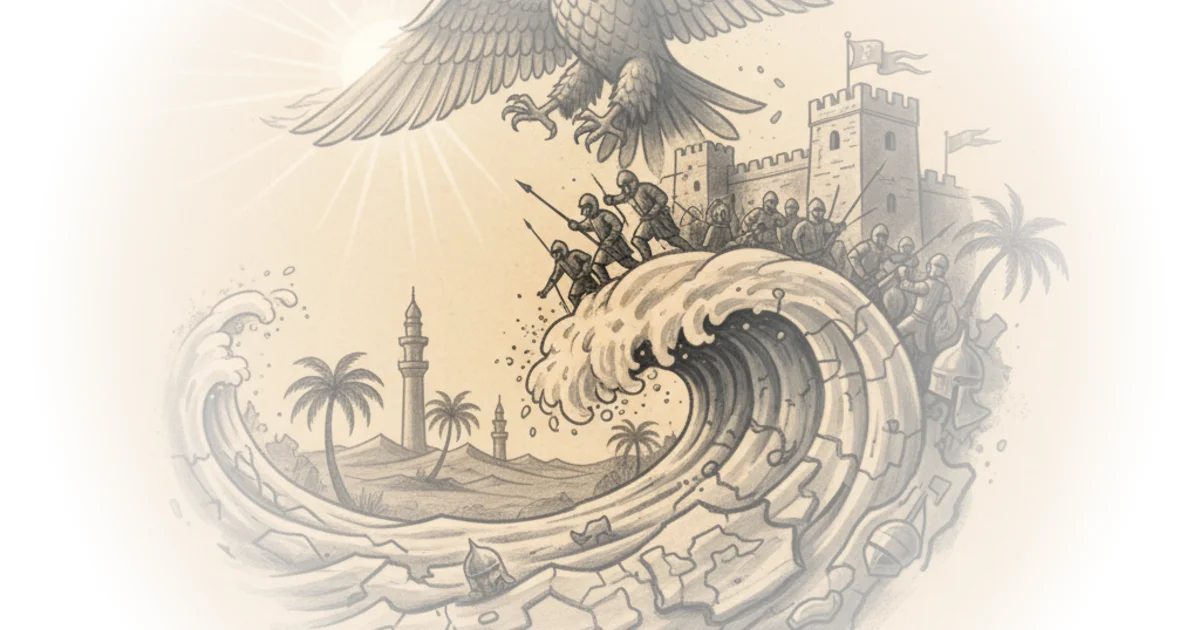
The coverage highlights the personal duel between two capable leaders: the Byzantine general Nikephoros Phokas and the Hamdanid Amir Sayf al-Dawla. Kings and Generals describes the latter as "the wily and ambitious handini amir seif al-dawla known as the sword of the dynasty," whose capital of Aleppo had become a beacon of learning and arts. This framing is crucial; it humanizes the adversary, presenting him not as a faceless horde but as a sophisticated ruler whose defeat would carry profound cultural weight. The documentary argues that the war had become a stalemate of wits until the younger brother of Nikephoros, Leo Phokas, employed asymmetrical warfare to break it.
"Years of being forced to defend with a weaker force had forged the younger focus into a master of asymmetrical warfare."
This point is the analytical core of the piece. By detailing how Leo Phokas lured a massive 30,000-strong army into a narrow mountain pass at the Adrassos Valley, Kings and Generals illustrates how terrain and timing can neutralize numerical superiority. The ambush on November 8th was not just a battle; it was a strategic pivot that curbed the Amir's ability to launch major offensives. Critics might note that the reliance on ancient sources for troop numbers can be speculative, but the tactical outcome—crippling the enemy's offensive capacity—is historically undeniable.
The Sack of Aleppo
With the eastern frontier stabilized, the focus shifts to the 962 campaign into Syria. The documentary details how Nikephoros Phokas systematically dismantled the Arab princes in Cilicia, creating a "wedge of devastated territory" to isolate Aleppo. The narrative suggests that the Amir, perhaps overconfident or misled by winter conditions, fell into a trap by leaving his capital to reassert control in the north. Kings and Generals writes, "this illusion of safety was shattered when in november byzantine forces smashed past the walls of manbij capturing the cousin of amir aldola in the process."
The approach to Aleppo reveals a stark disparity in resources. While the Byzantines marched with a massive host, the Hamdanids could barely muster a fraction of that force. The documentary posits that the Amir's decision to split his already small force into two contingents was a fatal error. "Lionhearted even in the face of overwhelming odds seif aldola seems to have sallied his 1 000 or so men out of the city to meet the byzantine horde," Kings and Generals notes, describing the inevitable rout. The subsequent sack of the city is depicted not as a chaotic frenzy, but as a calculated act of psychological warfare. After seven days of carnage, the Byzantines tore down the walls, enslaved thousands, and departed, leaving the city in ruins but the citadel unconquered.
"The sack of aleppo was a blow to the psyche of the muslim world and when word spread of its scouring at christian hands panicked riots erupted in mosul and baghdad."
This quote underscores the documentary's central thesis: the campaign was designed to break the enemy's will as much as their army. The ripple effects of the sack, causing panic from Egypt to Iran, demonstrate the strategic success of the operation. However, the narrative also touches on the brutal reality of medieval warfare, where the "domestic cast did not attempt to permanently occupy the city" because his army was "inundated with lute was anxious to go home to enjoy their spoils." This highlights a limitation of the era's logistics; even a decisive victory could not be immediately consolidated into permanent governance.
The Political Aftermath
The commentary concludes by shifting from the battlefield to the imperial court in Constantinople. The death of Emperor Romanos II in 963 created a power vacuum that threatened to undo the military gains. The documentary introduces Joseph Bringas, the eunuch who held de facto power, as a pragmatic but fearful figure who saw the popular general Nikephoros as a threat. Kings and Generals writes, "for anyone seeking control over the throne it was often easier to have these highly popular generals disposed of rather than risk them becoming a political rival."
The administration's attempt to neutralize Nikephoros by sending him back to the eastern front backfired spectacularly. Surrounded by loyal soldiers, Nikephoros was declared emperor, leading to a civil conflict that ended with Bringas fleeing and Nikephoros being acclaimed co-emperor. The documentary notes that Nikephoros spent his reign "away from his palace and inside military encampments," prioritizing the defense of the empire over courtly intrigue. This final section ties the military narrative to the political reality, showing how the reconquest was inextricably linked to the stability of the imperial throne.
"Most importantly nikiforos married the ifano the widow of the late emperor romanos ii tethering him to the family tree of the imperial macedonian dynasty which lent his reign legitimacy."
This move to marry the widow of the previous emperor was a masterstroke of political legitimacy, securing his rule without the need for further bloodshed. It demonstrates that the success of the reconquista was not solely due to military prowess but also to the ability of its leaders to navigate the treacherous waters of Byzantine politics.
Bottom Line
Kings and Generals delivers a compelling analysis of how the Byzantine reconquest was achieved through a combination of asymmetrical tactics, psychological warfare, and political maneuvering. The strongest element of the argument is the focus on the psychological impact of the sack of Aleppo, which shifted the regional balance of power far more than the territorial gains alone. The piece's vulnerability lies in its reliance on dramatic troop numbers from ancient sources, which may exaggerate the scale of the forces involved, but this does not diminish the clarity of the strategic narrative. Readers should watch for how these military successes set the stage for the even more ambitious campaigns of the subsequent decades, cementing the Byzantine Empire's status as a dominant Mediterranean power.