Perun delivers a rare, unvarnished look inside a NATO wargame, revealing that in an age of artificial intelligence and digital simulations, the most potent tool for predicting modern warfare remains a room full of officers pushing cardboard counters and rolling twenty-sided dice. The author's most striking claim is not that these games are fun, but that they are the only mechanism capable of capturing the chaotic, creative, and dangerous nature of human decision-making that algorithms consistently miss.
The Human Element in a Digital Age
Perun sets the stage by demystifying the event, noting that while the venue buzzed with high-tech innovation, the core of the exercise was surprisingly analog. "While I wasn't allowed to slap any fire prisms or battle mechs down on the board, I did get to spend most of last week with teams drawn from NATO countries as they slugged it out on the wargaming table." This grounding in the physical reality of the game serves to strip away the mystique of modern military tech, focusing instead on the human operators. The author argues that despite the allure of synthetic environments, the unpredictable creativity of a human opponent is something no computer model can replicate.
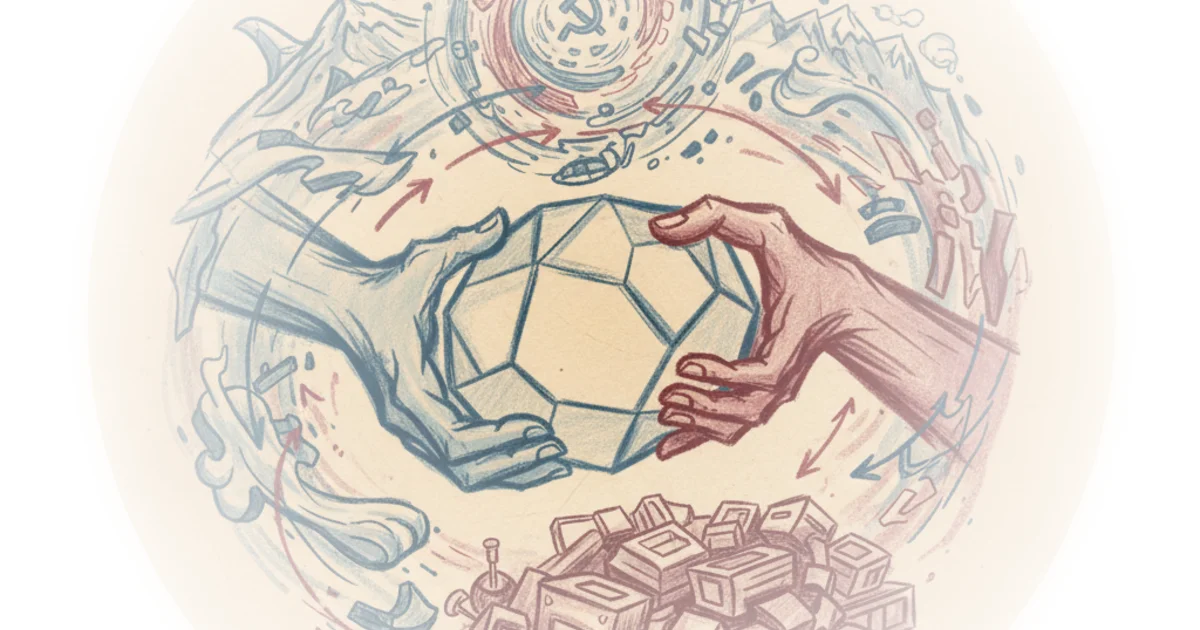
The piece traces the lineage of this practice back to Prussia in the 1820s, where the goal was never mere recreation. Perun writes, "This is not a game. This is training for war. I must recommend it to the whole army." This historical anchor is effective because it reframes the activity from a hobbyist pastime to a serious strategic imperative. The author suggests that the German military's dominance in the early 20th century was partly built on this rigorous, low-cost method of stress-testing tactics before committing real blood and treasure. Critics might note that the Prussian system eventually led to catastrophic strategic overreach, suggesting that wargaming can also reinforce flawed doctrines if the underlying assumptions are wrong.
Training vs. Discovery
The commentary distinguishes between two primary objectives of wargaming: training officers and discovering new information. Perun explains that while training is intuitive, the discovery aspect is where the real value lies for senior leadership. "War games themselves can vary a lot and so too can their purpose. But generally, as I said, they tend to fit into one of two categories or try to do both at the same time." The author posits that these exercises allow militaries to fail safely, exploring "plausible" scenarios rather than just "probable" ones. This distinction is crucial; it means the goal isn't to predict the future with certainty, but to expand the range of possibilities decision-makers can handle.
The process of exploration and discovery can also play out when a war is already on, helping predict enemy actions and devise tactics to counter them.
Perun illustrates this with the British Royal Navy's Western Approaches Tactical Unit during World War II. The author details how British players, through the game, realized that U-boats would use the convoy itself as cover, a tactic the Germans were already employing. "The WATU war games helped predict enemy actions and devised tactics to counter them. Sometimes before those tactics had even appeared." This evidence is compelling because it shows a direct causal link between a tabletop exercise and a life-saving tactical shift. It underscores the idea that human intuition, when structured by rules, can outpace statistical models.
The Failure of Purely Digital Models
The most provocative section of the piece challenges the assumption that advanced computing has rendered tabletop games obsolete. Perun points out that while digital simulations are extensive, they often suffer from a lack of human unpredictability. The author cites the lead-up to the 1991 Gulf War, where computer models projected tens of thousands of casualties, while a modified commercial board game, updated with classified data, correctly predicted a swift victory with minimal losses. "On several occasions prior to the ground war, army and joint staff planners used the game with real information on forces, and the entire war only took two game turns and ended with almost no losses on the American side."
This anecdote serves as a powerful critique of over-reliance on algorithmic forecasting. The author suggests that computers struggle to model the psychological and strategic nuances of an enemy, whereas a human player can intuitively grasp the "fog of war." A counterargument worth considering is that the 1991 Gulf War was a unique conflict with a massive asymmetry in force, which might not translate to peer-to-peer conflicts like the one NATO is currently simulating. However, Perun's point remains: the human element in the loop is irreplaceable for stress-testing strategy.
Bottom Line
Perun's analysis successfully argues that wargaming is not a relic of the past but a vital, evolving discipline that bridges the gap between abstract data and human reality. The piece's greatest strength is its historical grounding, which validates the method against the skepticism of the digital age. Its biggest vulnerability is the lack of specific details on the NATO scenario itself, leaving the reader to infer the lessons from the historical analogs rather than the immediate event. Readers should watch for how NATO integrates these human-centric insights into their broader digital transformation strategy.