A fundamental shift is happening in British politics that could end the two-party system as we know it. That's the claim at the center of this discussion, and the evidence is mounting.
The recent local elections painted a grim picture for Labour. They came fourth in several races, lost their sixteenth safest seat, and watched Reform UK surge to a seven-point lead. But the real story isn't just about electoral margins—it's about what these results reveal about Labour's relationship with the British public.
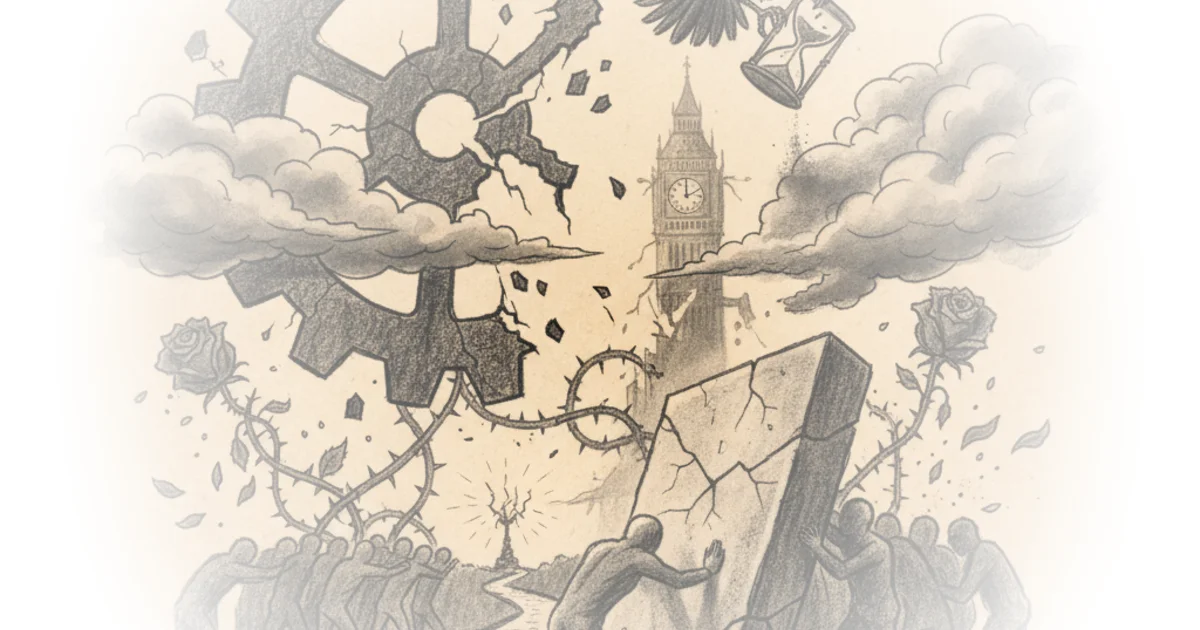
The Winter Fuel Blunder
The winter fuel allowance cut represents one of the most politically idiotic decisions in recent memory. By removing a benefit from millions of pensioners who paid into the system their entire working lives, Starmer and Rachel Reeves managed to attack precisely the group of voters who are most likely to turn out and geographically spread across marginal seats.
The policy essentially told voters: "This is whose side we're on." And for many people, the answer was clear—they're not on the side of ordinary people. The political class that won a cost of living election is now actively betraying those who trusted them.
Critics might note that wealthy pensioners receiving universal benefits do represent a genuine policy problem worth addressing. Means-tested approaches could have preserved savings while protecting vulnerable recipients. But the way it was executed—cutting from 12 million recipients to just 2 million—demonstrates a breathtaking lack of political judgment.
The Attention Economy
Beyond specific policies, there's something deeper wrong with Labour's approach to politics. A recent analysis points to how the attention economy has fundamentally changed political communication. Companies and individuals now compete for our attention constantly. Unless you're proactively reaching people like Donald Trump or Emmanuel Macron, you've already lost.
Starmer is terrible at this. He doesn't do press conferences regularly. He's not constantly in the news cycle. And when you compare him to Tony Blair—a politician who was quite good at reading emotions and mirroring them back—the gap becomes stark.
Starmer has many of Blair's weaknesses but none of his strengths.
Blair could be relaxed, jovial, and connect emotionally with voters. Starmer is stiff, awkward, and struggles with the storytelling that politics now requires.
The Riots Missed Opportunity
The August 2024 riots represented a moment where Starmer could have connected with the public. Everyone hates disorder on the streets—it should have been a strong moment for a prime minister who seemed in control. But instead of defining who we are as a nation, Starmer struggled to tell the story effectively.
What emerged from that chaos was something called "two-tier"—a real loss of control narrative that further damaged public perception.
The 1990s Mode Problem
The core issue is that Starmer and Reeves approach politics as if it still belongs to the 1990s. They operate by spreadsheet, adding up numbers for Treasury savings without realizing they're building a block of interests who become radicalized very quickly.
From pensioners to farmers on inheritance tax to small business owners facing national insurance increases—the government has managed to alienate multiple voting blocs simultaneously. And they did this all while looking statesmanlike at international summits, flanked by world leaders, seemingly oblivious to domestic consequences.
Bottom Line
The strongest argument in this discussion is that Labour's fundamental approach to politics is outdated and tonedeaf. They keep making decisions that alienate precisely the voters they need—pensioners who turn out, small business owners who are geographically concentrated, and ordinary people who expected better after winning an election.
Their biggest vulnerability is structural: Starmer lacks the charisma and emotional intelligence required to command attention in modern politics. Without fixing both the policies and the personality, Labour's trajectory appears genuinely bleak—possibly doomed in the traditional sense of electoral defeat and possibly finished as a relevant political force entirely.