This Seventh Circuit ruling doesn't just tweak a background check; it fundamentally challenges whether a past medical crisis can permanently strip an American of their constitutional rights. Reason's analysis of U.S. v. Rose exposes a glaring legal contradiction: the government treats a temporary, resolved mental health episode as a lifetime ban, ignoring that the Supreme Court has recently insisted on proof of current dangerousness. For anyone navigating the complex intersection of civil liberties and public safety, this is the critical pivot point where old assumptions are colliding with new constitutional realities.
The Core Conflict: Past vs. Present Danger
The piece anchors its argument in a stark legal disconnect. It notes that while previous Supreme Court decisions like Heller acknowledged "longstanding prohibitions on the possession of firearms by felons and the mentally ill" as presumptively valid, those remarks specifically targeted people who are mentally ill, not those who used to be. Reason highlights how the current statute, 18 U.S.C. § 922(g)(4), creates a permanent disability for anyone "who has been adjudicated as a mental defective or who has been committed to a mental institution," regardless of their recovery.
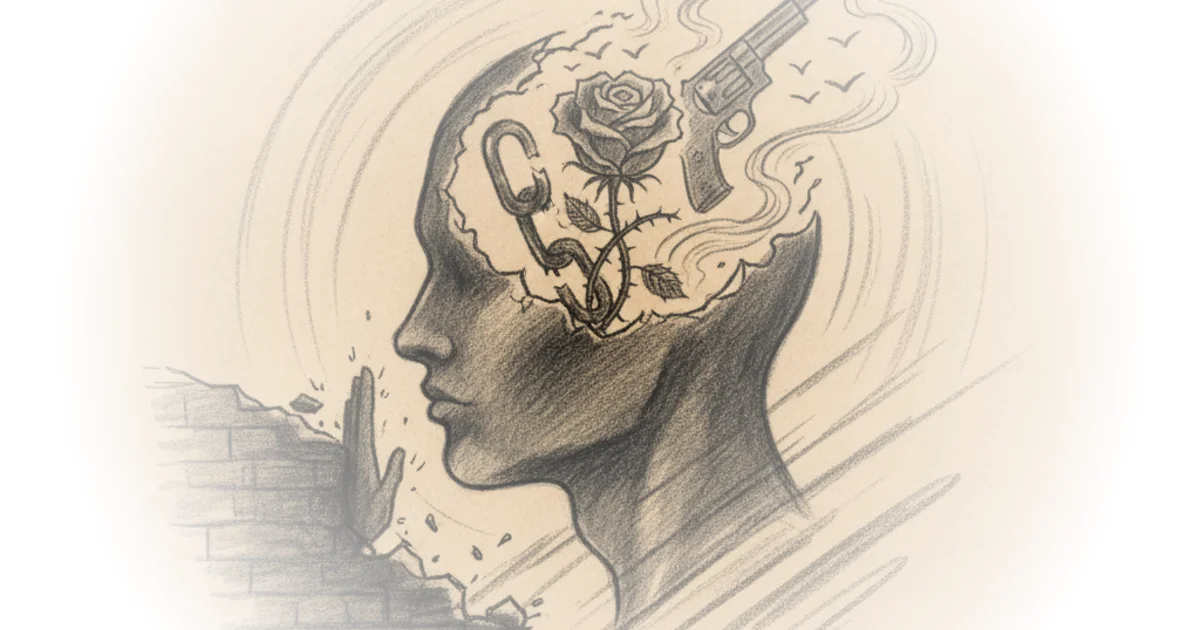
This framing is crucial because it shifts the debate from abstract policy to individual justice. The article points out that the law fails to distinguish between someone currently posing a threat and someone who was committed in error or whose condition was transitory. As Reason argues, "Every relevant historical practice disarmed a mentally ill person only during civil commitment or ongoing insanity." This historical analysis is the piece's strongest evidence, effectively dismantling the government's claim that a lifetime ban has deep roots in American tradition.
Rahimi explains at length that someone who is now dangerous (or has recently been adjudicated dangerous) may be disarmed... But the Court's use of the present tense—in this language and throughout Rahimi—shows that § 922(g)(4) is problematic as applied to someone who is now mentally healthy.
Critics might argue that relying on an individual's self-reporting or a decade-old medical record creates too much risk for public safety, especially given the severity of mass shootings like the 2023 Lewiston tragedy where background check failures were a central issue. However, the piece counters this by noting that the Supreme Court recently rejected similar lifetime bans in Hemani regarding drug users who are not currently dangerous, suggesting a consistent legal principle: danger must be demonstrated, not assumed.
The Evidentiary Void and Procedural Failure
The commentary takes a sharp turn from constitutional theory to procedural reality, exposing how little actual data exists in the case of Jonathan Rose. Despite his 2009 commitment, the record is virtually silent on the specifics that matter most today. Reason reports, "The record does not name the disorder or contain a detailed evaluation by a mental-health professional," and notes that even the physician's comments were vague, stating only that the patient had "poor stress tolerance."
This lack of evidence makes the lifetime ban particularly arbitrary. The article emphasizes that Rose was released in 2010 and has not been recommitted, yet he faces federal charges for buying guns a decade later based on a file that contains no assessment of his current state. Reason suggests that the district court erred by assuming Rose's mental health status without an evidentiary hearing. The piece argues that "Rose bears at least the burden of production on these topics," but also notes that the government must supply "individualized proof" of danger if they wish to uphold the ban.
We cannot tell on this record whether Rose presented such a threat in 2009 when he was committed, in 2010 when he was released, in 2022 when he purchased firearms, or today.
This procedural gap is significant because it reveals how bureaucratic inertia can override constitutional rights. The article points out that while Indiana has a mechanism to restore rights, the system is discretionary and requires the applicant to prove "clear and convincing evidence" of harmlessness—a high bar that often fails even for recovered individuals. This creates a catch-22 where the law presumes danger but offers no clear path to disprove it.
The Path Forward: Individualized Hearings
The ultimate conclusion of the Seventh Circuit, as reported by Reason, is not a total strike-down of the mental health ban, but a demand for individualized adjudication. The court vacated the dismissal of charges against Rose, ordering a remand where both sides can present evidence regarding his current condition. This approach aligns with recent Supreme Court precedents that reject broad, categorical bans in favor of case-by-case analysis.
Our tradition of firearm regulation allows the Government to disarm individuals who present a credible threat to the physical safety of others.
This shift from a "one-size-fits-all" prohibition to a dynamic assessment of risk is the most profound implication of the ruling. It forces the legal system to confront the reality that mental health is not a static label but a fluctuating condition. By requiring proof of current danger, the court acknowledges that a person who recovered from a crisis a decade ago may no longer pose a threat. This nuance is essential for balancing public safety with civil liberties, ensuring that those who have genuinely recovered are not permanently disenfranchised by a past medical event.
Bottom Line
The strongest part of this argument is its rigorous application of the Bruen and Rahimi standards to expose the anachronism of lifetime bans for resolved mental health crises. Its biggest vulnerability lies in the practical difficulty of assessing "current dangerousness" without invasive or unreliable medical testing, a challenge the remand will now have to address. Readers should watch how lower courts handle these evidentiary hearings, as they will set the de facto standard for who regains their Second Amendment rights and who remains permanently barred.