In an era defined by information overload and reactive decision-making, Ryan Holiday cuts through the noise with a deceptively simple premise: ignorance is not merely a lack of data, but a moral failing that actively generates suffering. This piece from The Daily Stoic reframes the ancient pursuit of wisdom not as an academic exercise, but as a critical survival mechanism for the modern mind. Holiday argues that the ability to distinguish between what we can and cannot control is the only path to genuine psychological stability.
The Architecture of Ignorance
Holiday begins by dismantling the common assumption that knowledge is just about facts. He writes, "In Stoic philosophy, 'ignorance' refers not only to a lack of factual knowledge, but to a lack of deep understanding of the mechanisms by which oneself and the world operate." This distinction is crucial. It suggests that being well-read is insufficient if one cannot map those facts onto the underlying laws of physics or human behavior. The author posits that without this structural understanding, we are doomed to make poor judgments.
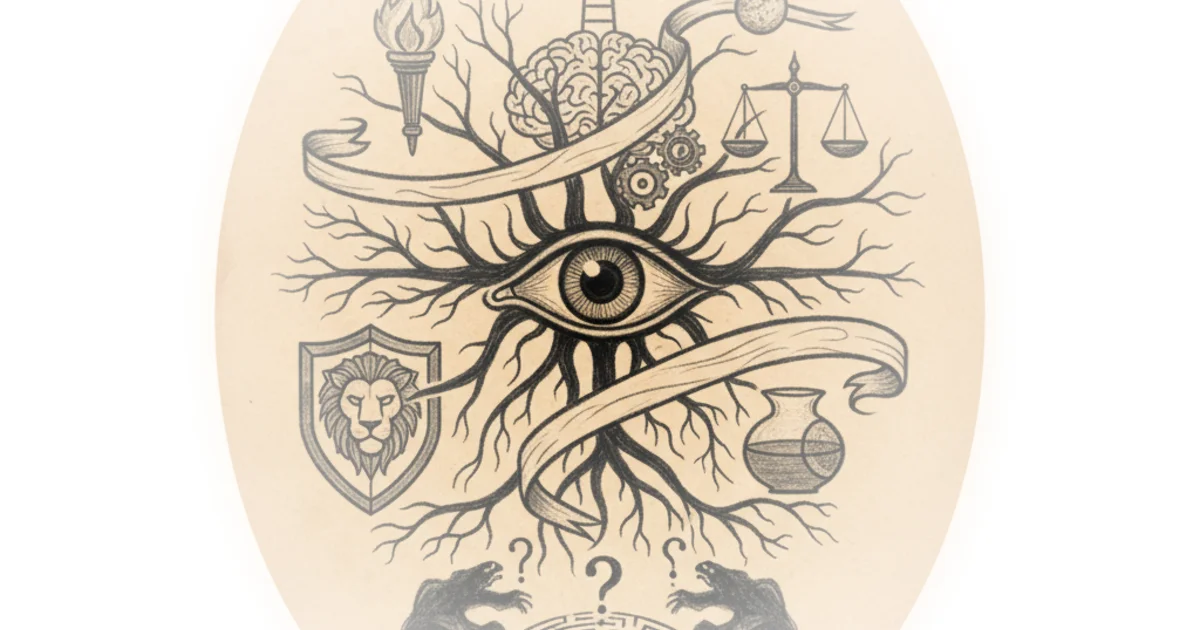
The stakes of this framing are high. Holiday asserts that "ignorance leads to inappropriate judgments and behaviors, thereby producing unnecessary suffering." This is a bold claim that shifts the blame for personal distress from external circumstances to internal cognitive gaps. By linking ignorance directly to the creation of pain, Holiday elevates the pursuit of knowledge from a hobby to an ethical imperative. Critics might argue that this places an undue burden on individuals to solve systemic problems through personal enlightenment, but the argument holds weight when applied to personal agency and emotional regulation.
The Four Pillars of Control
The commentary then pivots to the practical application of this philosophy: the four cardinal virtues. Holiday identifies these as the foundation for a "good life" (eudaimonia). He defines "wisdom" specifically as the capacity to "distinguish the essence of things, understanding what is controllable and what is not." This is the core operational tool of the Stoic toolkit. Without this specific type of wisdom, the other virtues lack direction.
Holiday expands on the remaining virtues with precision. "Courage is the firmness and bravery in the face of difficulties and challenges," he notes, while "temperance means knowing self-control and discipline, especially regarding physical and psychological desires." Finally, he describes "justice" as fairness toward others and society. The strength of Holiday's approach here is how he ties these abstract concepts back to the central theme of control. He argues that these virtues are "the key to achieving a 'good life' in Stoic philosophy, and the foundation for maintaining psychological balance and a sense of happiness when facing uncontrollable factors."
Ignorance is the only true evil, and knowledge and wisdom are the only true good.
This central thesis serves as the anchor for the entire piece. It is a stark, binary view of the world that offers clarity to busy readers who are often paralyzed by ambiguity. Holiday suggests that the reason we must remind ourselves to "learn for a lifetime" is not to accumulate credentials, but to continuously refine our ability to navigate the gap between our expectations and reality. The argument is compelling because it offers a tangible metric for success: not the accumulation of wealth or status, but the reduction of unnecessary suffering through better understanding.
Bottom Line
Holiday's strongest contribution is his redefinition of ignorance as an active source of pain rather than a passive state of not-knowing. The piece's greatest vulnerability lies in its potential to oversimplify complex societal issues into individual cognitive failures. However, for the reader seeking a framework to maintain equilibrium in a chaotic world, the distinction between controllable and uncontrollable factors remains an indispensable tool.