John Campbell, a former nurse lecturer and clinical practitioner with nearly three decades of experience, pivots from a standard health update to a profound critique of how modern medicine evaluates truth. Following a recent content strike from YouTube for allegedly contradicting official health bodies, Campbell reframes the incident not as a policy violation, but as a symptom of a larger systemic failure where "vested interest" and funding priorities distort the scientific record. For busy professionals seeking clarity amidst conflicting health data, this piece offers a rare, on-the-ground perspective from someone who has worked in emergency departments and academic settings, arguing that the current reliance on peer-reviewed journals is compromised by the very entities that fund the research.
The Erosion of Independent Science
Campbell begins by addressing the immediate controversy: a YouTube warning that restricts his channel for three months due to a breach of community guidelines regarding medical misinformation. He admits the error was his own but quickly contextualizes it within a broader struggle against rigid institutional narratives. "The guidelines are very much based on contributors not being allowed to contradict official teaching for example in areas of Health from National Health bodies or... the World Health Organization," Campbell notes, highlighting the tension between platform enforcement and scientific inquiry. He argues that this mechanism effectively silences legitimate debate, creating an environment where dissenting views are flagged as misinformation rather than investigated as potential insights.
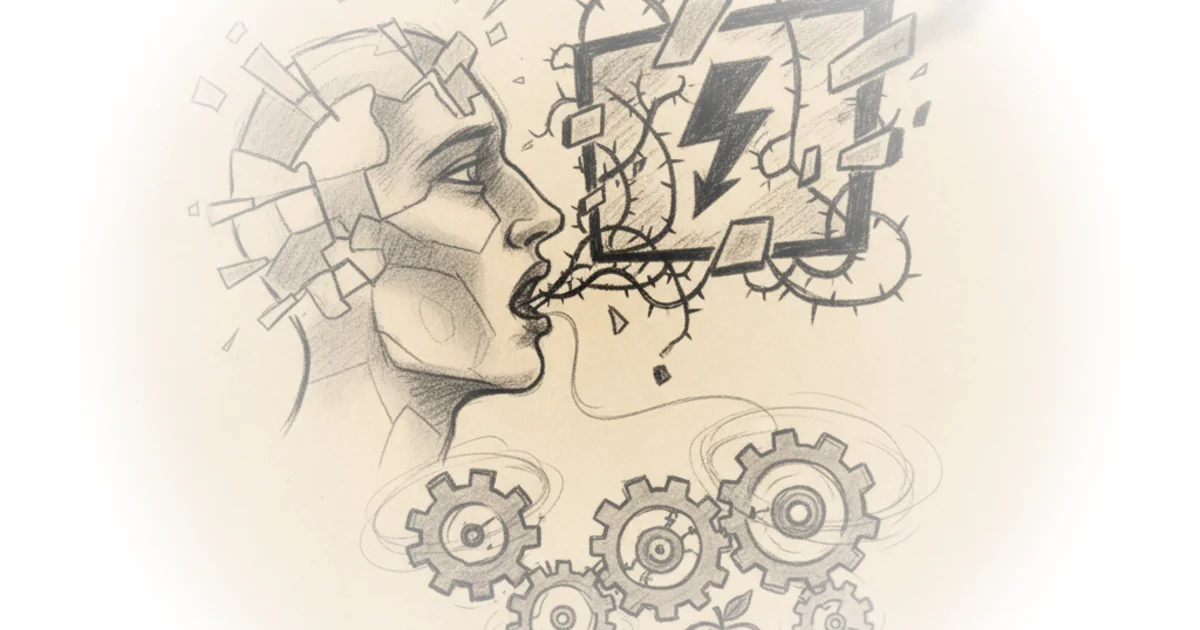
The core of Campbell's argument rests on the idea that the academic publishing model is no longer a neutral arbiter of truth. He suggests that "if a particular group wants to promote their ideas they can sponsor the research, get that written up and they can even help to write that up in journals." This observation strikes at the heart of evidence-based medicine, suggesting that the "peer review process" is vulnerable to manipulation by those with deep pockets. While critics might note that funding sources do not automatically invalidate scientific findings, Campbell's point about the selection of research topics is compelling: brilliant ideas from independent researchers often remain unheard simply because "there's no big money behind them."
"We have got to sort of Nuance it and work out what's going on... if you had a journal then the people in that journal can decide who they send the peerreview Articles too."
Campbell's framing is effective because it moves beyond conspiracy theories to a structural critique of incentive structures. He posits that the system rewards what is profitable, not necessarily what is most effective for patient care. This leads to a situation where "missed opportunities" abound, from repurposed drugs to natural treatments that lack the marketing budget of pharmaceutical giants. The implication is clear: the medical establishment is not just slow to adapt; it is actively filtering out solutions that don't align with commercial interests.
A New Framework for Truth
In response to these systemic flaws, Campbell outlines a personal methodology for evaluating health claims that relies on a triad of evidence: published research, expert opinion, and patient experience. He elevates the latter, stating, "we would been believe that the patient's experience is perhaps the best possible opinion." This is a significant departure from traditional hierarchies of evidence, which often dismiss anecdotal data as unreliable. Campbell argues that when a patient reports an adverse reaction or a positive outcome that contradicts the official narrative, that data point deserves serious consideration.
He describes his channel's mission as a "pro-Humanity" effort aimed to "minimize human pain suffering and death," a goal he believes is being undermined by bureaucratic inertia. "One of the things that really really grapes on me is the missed opportunities," he says, listing diet, repurposed drugs, and ecological farming as areas where innovation is stifled. By grounding his argument in his own clinical history—working in accident and emergency departments and teaching nursing for 28 years—Campbell lends weight to his skepticism. He is not an outsider looking in; he is a practitioner who has seen the gap between textbook theory and bedside reality.
"I don't want to be controlled. I want to be free to think and act as I I I decide by my own my own ethical standards... we want independent cognitive evaluation of claims."
This call for cognitive independence resonates strongly in an era of information overload. Campbell advocates for a return to basic scientific principles, urging viewers to ask whether a claim "is consistent with scientific principles" or if it "doesn't make any sense at all." He acknowledges that this requires a level of literacy that not everyone possesses, but he trusts his audience to be "interested intelligent adults" capable of making their own decisions. A counterargument worth considering is that this approach places a heavy burden on individuals to navigate complex medical data without professional guidance, potentially leading to dangerous self-diagnosis. However, Campbell's emphasis on cross-referencing multiple sources and consulting world-leading experts attempts to mitigate this risk.
The Stakes of Existential Threats
The commentary concludes by elevating the discussion from individual health choices to global existential threats. Campbell warns that issues like food security and agricultural ethics are not merely technical problems but matters of human survival. He questions whether the United States has true food security or if it is subject to "vested interest heavily involved in agriculture" that degrades soil and exploits labor. "If you're hungry that that becomes what you try to do," he observes, linking basic biological needs to the potential for social control.
He frames the current moment as a critical juncture where humanity must decide between submission to centralized control and the freedom to pursue independent solutions. "We don't want the thought police knocking on the door," he asserts, linking the suppression of medical dissent to a broader erosion of civil liberties. This connection between health policy and personal freedom is the piece's most provocative element, suggesting that the fight for accurate health information is inextricably linked to the fight for autonomy.
Bottom Line
John Campbell's commentary succeeds by reframing a platform violation as a case study in the fragility of modern scientific discourse. His strongest argument lies in exposing how funding biases can skew research agendas, a vulnerability that threatens the integrity of public health. However, his reliance on patient anecdote as a primary evidence source remains its most contentious point, requiring viewers to exercise significant discernment. The piece serves as a urgent reminder that in a complex world, the most dangerous assumption is that official narratives are always the final word.
"We don't want the thought police knocking on the door. We want independent cognitive evaluation of claims."
The strongest part of this argument is its structural critique of the funding mechanisms that drive medical research, a perspective often missing from mainstream health coverage. Its biggest vulnerability is the potential for misinterpretation of anecdotal evidence as definitive proof. Readers should watch for how Campbell continues to balance his skepticism of institutions with his commitment to rigorous, principle-based analysis in future updates.