Rezgar Akrawi strips away the utopian hype surrounding artificial intelligence to reveal a stark, material reality: the technology is not a neutral tool for human advancement, but a refined instrument of class domination and profit extraction. While most coverage fixates on the technical capabilities of algorithms, Akrawi forces a confrontation with the economic architecture that built them, arguing that AI is simply the latest iteration of a system designed to turn human dignity into a mere exchange value. This is a necessary, if uncomfortable, read for anyone trying to understand why the digital revolution feels less like liberation and more like a new form of feudalism.
The Commodification of Intelligence
Akrawi begins by dismantling the myth of technological neutrality. He argues that AI does not develop in a vacuum but is inextricably bound to the "class structure of the system that produced it." The author writes, "Artificial intelligence, as developed today, is not an independent or neutral entity, it is directly subject to the dominance of capitalist powers, which steer it in ways that serve their economic, political, social, and ideological interests." This framing is crucial because it shifts the blame from the code itself to the owners of the code. It suggests that the current trajectory of AI is not an inevitable result of scientific progress, but a deliberate choice made by those seeking to maximize returns on capital.
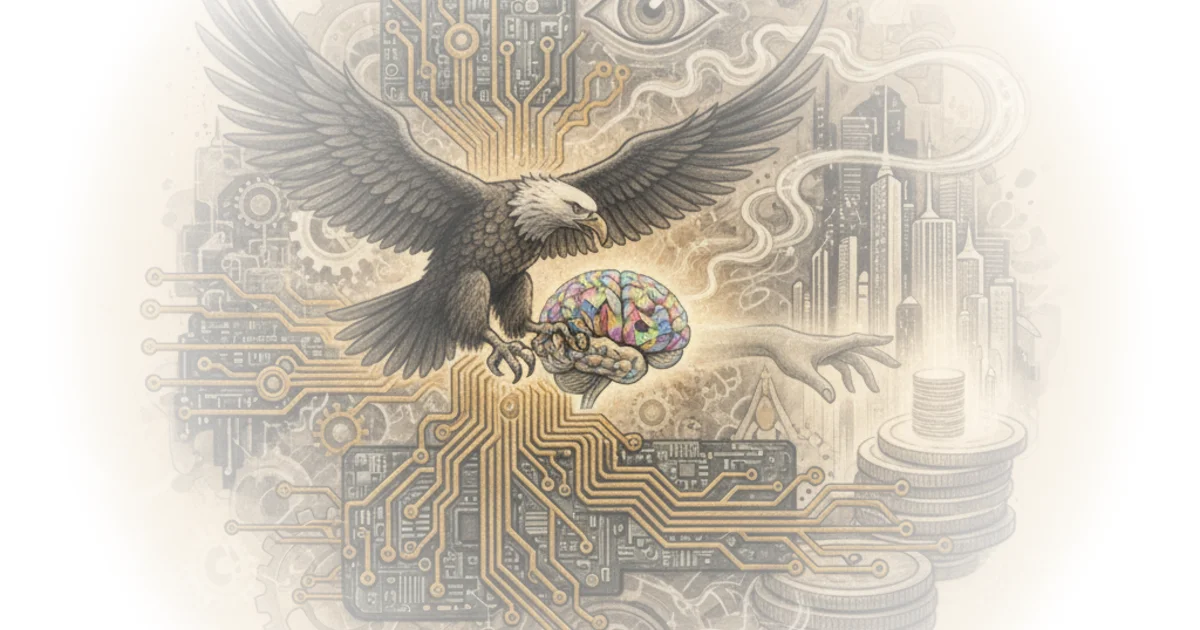
The piece draws a sharp line between the potential of AI to solve human problems and its actual deployment to solve corporate problems. Akrawi notes that while the technology could enhance public services, it is instead "commodified to become a tool for maximizing profits and strengthening class control." This argument lands with particular force when considering the historical precedent of the internet. Much like the early days of the ARPANET, where the technology was developed within closed military and intelligence environments before being released to the public, Akrawi warns that "many technological developments that are usually developed and used secretly for military and security purposes" are now being repurposed for commercial exploitation. The history of the Turing test, once a philosophical benchmark for machine intelligence, is now overshadowed by the reality of algorithms designed to manipulate consumer behavior rather than simulate human thought.
"The bourgeoisie has left nothing in common between man and man except naked self-interest, the callous 'cash payment'... It has turned personal dignity into a mere exchange value, and has transformed everything, including knowledge, into a mere tool for profit."
By invoking Marx and Engels, Akrawi provides a theoretical backbone that explains why the benefits of automation are so unevenly distributed. The argument is that the algorithms are "ideologically directed to serve their designers," a claim that challenges the common narrative of AI as an objective arbiter of truth or efficiency. Critics might argue that this view ignores the genuine productivity gains that have lowered costs for consumers, but Akrawi counters that these gains are "channeled toward increasing the profits of major corporations, rather than improving wages or reducing working hours."
The New Digital Feudalism
The most striking section of the commentary is Akrawi's analysis of how the definition of labor has expanded under the digital economy. He posits that we have moved beyond traditional factory floors to a system where every user is an unpaid worker. "In the digital economy, human behavior and data have become the new sources of value," he writes. "Every click, search, and interaction becomes raw material that digital capitalism accumulates, without any legal or contractual recognition." This reframing of the user experience is powerful; it transforms the act of scrolling through a social media feed from a leisure activity into an act of production that generates "digital surplus value."
Akrawi illustrates this with concrete examples of corporate behavior. He points to IBM's 2023 announcement to halt hiring for 30% of administrative roles in favor of AI, and Dropbox's 2024 layoff of 16% of its staff, both justified by the efficiency of automation. "These two examples clearly reflect the impact of artificial intelligence on the labor market and the growing risks of unemployment among manual and intellectual workers," Akrawi observes. The author argues that this is not a temporary disruption but a structural shift where "the masses are largely either exploited as data and cheap labor or marginalized by automation."
The comparison to feudalism is particularly apt here. Akrawi writes, "Just as feudal lords monopolized land in the Middle Ages, today's tech giants monopolize digital systems, imposing their conditions on users and denying them any real control over the tools of digital production." This "digital feudalism" creates a scenario where the boundary between work and leisure dissolves, turning the entire internet into a "24/7 digital factory." The Cambridge Analytica scandal serves as a grim case study, where the data of millions was sold to influence elections, proving that this data extraction is not just about selling ads but about shaping political reality. A counterargument worth considering is that users voluntarily trade data for free services, but Akrawi dismantles this by noting that the "rhetoric of 'free access'" is an illusion that hides the reality of "indirect form of unpaid labor."
The Two Faces of Surplus Value
Akrawi's distinction between "traditional surplus value" and "digital surplus value" offers a sophisticated lens for understanding modern inequality. In the traditional model, exploitation is visible: workers in factories like those producing Apple devices in Southeast Asia are paid wages far below the value they create. "In 2023, Apple's profits exceeded $100 billion, most of which came from selling products produced under intense labor conditions," Akrawi notes, grounding the abstract concept in hard financial data.
However, the digital model is more insidious because it extracts value without a labor contract. "Digital capitalism does not purchase labor time, it extracts value from everyday life itself, disguising this exploitation behind the façade of 'free service'." This is the core of the author's critique: the system has evolved to capture value from the very fabric of daily existence. Whether it is location data from Google Maps or voice commands to Amazon's Alexa, the user's activity is harvested to train algorithms and sell to advertisers. The result is a system where "capitalist tech elites hold near-absolute power, while manual and intellectual workers are pushed further toward marginalization and exclusion."
"If the capitalist system continues to dominate artificial intelligence, the outcome could be a deeply polarized and unequal society, where capitalist tech elites hold near-absolute power, while manual and intellectual workers are pushed further toward marginalization and exclusion."
This warning is not merely theoretical; it is a prediction of a future where the concentration of wealth and power becomes so extreme that it threatens the stability of democratic institutions. The author suggests that without protective policies or strong unions, the "vulnerability varies according to class power dynamics," leaving the majority to bear the burden of technological transformation.
Bottom Line
Rezgar Akrawi's piece is a vital corrective to the techno-optimism that dominates the current discourse, successfully arguing that AI is a mirror reflecting the inequalities of the system that created it. Its greatest strength lies in the rigorous application of classical economic theory to the digital age, revealing how "digital surplus value" is extracted from the unpaid labor of billions of users. The argument's only vulnerability is its reliance on a binary view of class struggle that may underestimate the potential for regulatory intervention or the emergence of alternative, non-capitalist models of AI development. Readers should watch for how the administration and other governments respond to these monopolistic trends, as the coming years will likely determine whether AI remains a tool of feudal control or is repurposed for genuine public benefit.