In a landscape saturated with rigid writing formulas, Jeannine Ouellette offers a counterintuitive truth: the most productive path forward for a writer is often to embrace the discomfort of not knowing. Rather than promising a shortcut to a polished draft, this piece argues that the messy, inefficient act of generating excess material is not a failure of discipline, but a necessary geological process of creation. For the busy professional seeking to reclaim their creative voice, Ouellette's reframing of uncertainty as a tool rather than an obstacle provides a rare permission slip to be imperfect.
The Architecture of Uncertainty
Ouellette begins by validating the anxiety that often accompanies the return to creative work. She highlights a comment from writer Peg Conway, who described the structured prompts as "just enough structure to provide stability" after a long fallow period. This observation is crucial because it dismantles the myth that inspiration must strike fully formed. Instead, Ouellette posits that the "Essay in Twelve Steps" intensive works precisely because it forces writers to engage with the "inefficient and unruly" nature of the craft.
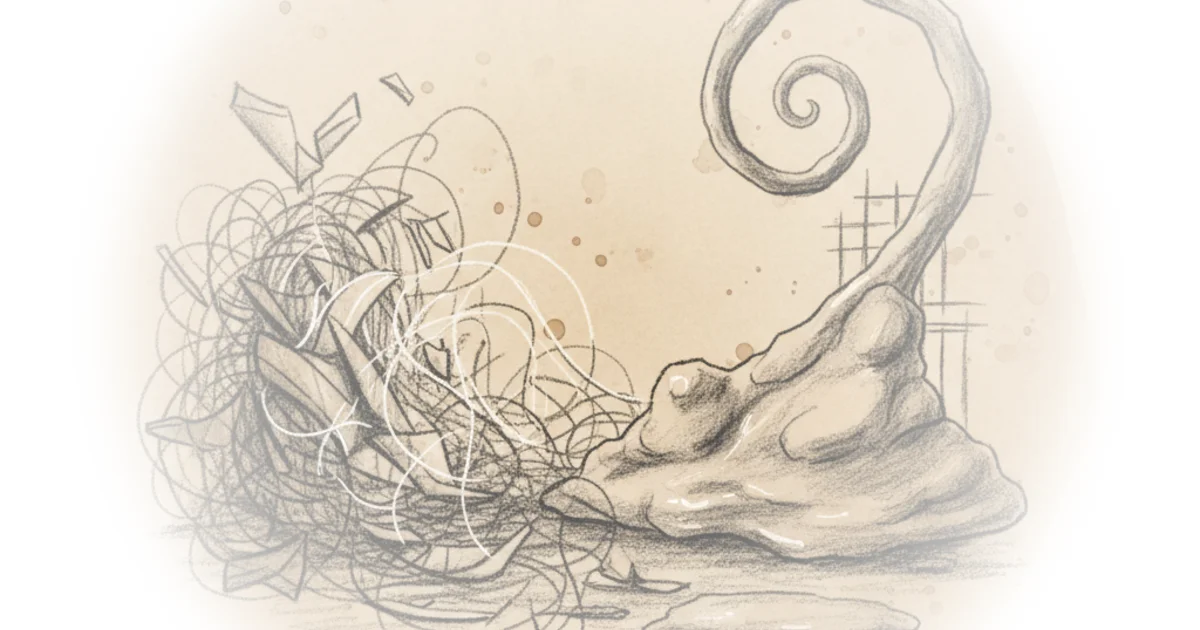
She writes, "First we make the granite, then we carve it!" This metaphor shifts the focus from the final product to the raw material, suggesting that the initial phase of writing is about volume and texture rather than precision. The argument holds significant weight for those who feel paralyzed by the blank page; it suggests that the "two to three times as many words" that end up on the cutting room floor are not wasted effort, but the essential quarry from which the final piece is hewn. Critics might argue that this approach is too time-consuming for busy professionals, yet Ouellette counters that the "smallness of the writing life" is often exacerbated by the fear of making mistakes, not by the time spent.
"Writing is inefficient and unruly, and most working writers acknowledge that they usually write at least two to three times as many words as end up in a final draft."
The Power of Shared Vulnerability
The piece pivots from the mechanics of drafting to the psychology of the writer, arguing that isolation is the true enemy of good work. Ouellette observes that the comment sections of her workshop have become a "masters-level class on literary writing," driven by participants willing to admit confusion. She notes that when writers say, "I'm not sure I'm cut out for this," they are actually engaging in a vital act of courage that accelerates development.
This communal aspect is framed not just as emotional support, but as a cognitive necessity. Ouellette asserts, "when we express ourselves 'out loud,' we learn and grow more than when we think silently." This aligns with research on cognitive processing, suggesting that the act of articulating struggle transforms it into a solvable problem. The argument is bolstered by the historical context of the MeToo movement, where the act of breaking silence transformed individual trauma into a collective force for change; similarly, Ouellette suggests that breaking the silence of the solitary writer transforms private doubt into public art. The framing is effective because it removes the stigma of "not knowing," turning it into a shared professional standard rather than a personal failing.
Weaving the Objective and Subjective
As the piece moves into specific craft instructions for Week Five, Ouellette introduces the concept of braiding, distinguishing between "objective" and "subjective" threads. She defines the objective thread as dealing with "anything that describes and/or delineates something factual and entirely outside of the self," such as the history of tea or the process of dyeing silk. Conversely, the subjective thread is the personal narrative, the "I" that navigates these facts.
To illustrate this, she points to Eula Biss's essay Time and Distance Overcome, which weaves the history of telephone lines with the history of lynching. This specific reference adds necessary gravity to the craft discussion, reminding readers that the "objective" thread is not merely trivia but can carry the weight of historical truth. Ouellette writes, "we have many paths forward," emphasizing that there is no single formula for how these threads must intertwine. She encourages writers to look at Sejal Shah's Curriculum for a collage-style approach and Emilia Phillips's Lodge for visual experimentation.
The distinction is vital because it prevents the essay from becoming a solipsistic diary entry or a dry report. By forcing the writer to hold both the "moss covered" stone of personal memory and the "jagged" stone of external fact, the writer creates a dynamic tension. As Ouellette puts it, "I am always, and will always be, vulnerable to my own work, because by making visible what is most intimate to me I endow it with the objectivity that forces me to see it with utter, distinct clarity." This quote, drawn from Anne Truitt, serves as the philosophical anchor of the piece, suggesting that vulnerability is not a weakness but a "guardian of integrity."
"I make a home for myself in my work, yet when I enter that home I know how flimsy a shelter I have wrought for my spirit."
Bottom Line
Ouellette's strongest argument is that the fear of uncertainty is the primary barrier to completing a piece of writing, and that the solution lies in rigorous, structured play rather than rigid discipline. The piece's vulnerability is its reliance on a specific, intensive workshop model, which may feel inaccessible to those unable to commit to a synchronous community. However, the core insight—that we must "make the granite" before we can carve it—remains a universally applicable strategy for anyone looking to move from the paralysis of perfectionism to the momentum of creation.