Daniel Parris transforms the morbid curiosity of celebrity death into a rigorous statistical inquiry, arguing that Wikipedia traffic serves as a modern, quantifiable measure of cultural immortality. By treating the online encyclopedia not just as a reference tool but as a "digital burial ground," Parris offers a startling new lens on how we collectively mourn, suggesting that the persistence of a star's memory is now dictated by data rather than just the passage of time.
The Digital Graveyard
Parris begins by dismantling the old model of grief, where a celebrity's legacy was confined to newspaper obituaries and fleeting television retrospectives. He writes, "Before Wikipedia, mourning a public figure's death was shaped by media gatekeepers and the public's attention span." This shift is profound; the internet has democratized remembrance, allowing millions to flock to a single page the moment news breaks. Parris notes that this phenomenon has created a paradox where the most-trafficked page on the site in 2024 was "Deaths in 2024," drawing more views than even the most prominent political figures of the year.
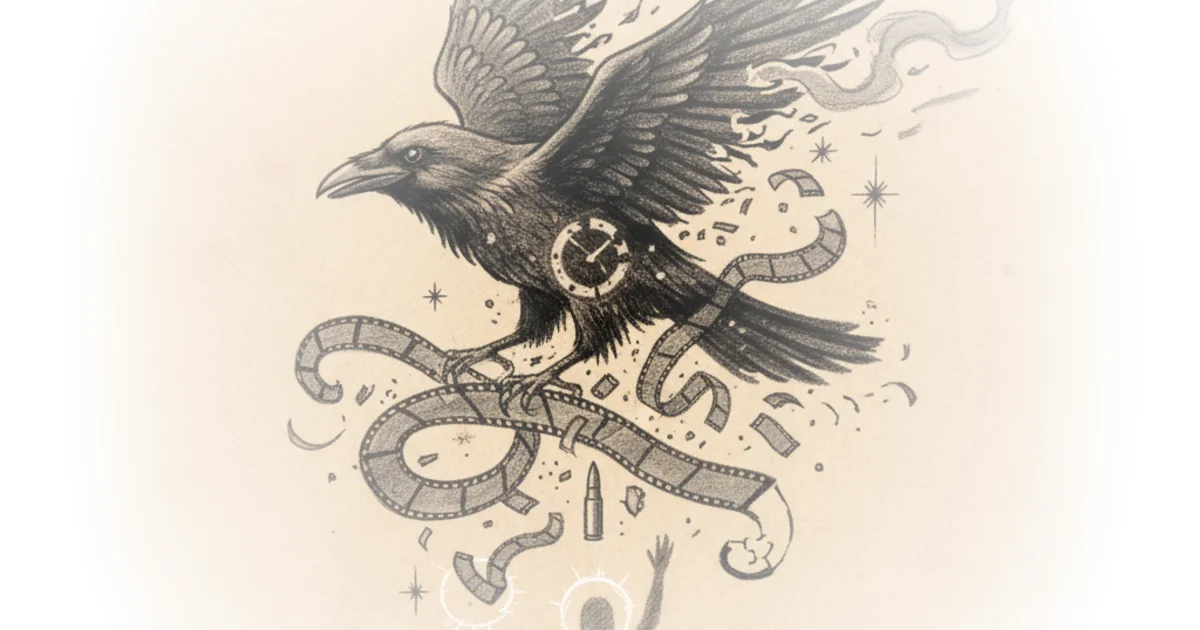
The author's choice to frame Wikipedia as a living memorial is both cynical and deeply human. He observes, "These entries were widely accessible, unconstrained by time and space, while also being deeply informative." This accessibility means that the grieving process is no longer a finite event but a persistent, searchable archive. However, this framing invites a counterpoint: does the sheer volume of traffic truly equate to reverence, or does it merely reflect a morbid fascination with tragedy? Parris anticipates this, suggesting that while some view it as "drivers gawking at a car crash," the platform functions more as a place to "wander, reflect, and learn about those we've lost."
"Wikipedia's role as digital graveyard extends beyond reactive grief: people actively visit the site to learn who might have died."
The Mathematics of a Tragic Legacy
To move beyond anecdotal evidence, Parris constructs a regression model that adjusts for the inevitable decay of traffic over time. He acknowledges that a modern star like Heath Ledger will naturally have more views than James Dean simply due to the era in which they lived. To solve this, he compares actual traffic to the expected average for actors born in the same year. The result is a "bleak roll call of Hollywood tragedies" where the metric is percent above expected web traffic. Parris explains, "Brandon Lee's Wikipedia article received 165% more views than the norm for an actor born the same year."
This data-driven approach reveals a striking pattern Parris calls the "Forever Young Effect." He argues that "most of these figures are iconographically frozen in time, their deaths coinciding with the peak of their cultural influence." The tragedy of their passing locks them in a state of mythic permanence, preventing the natural erosion of their public image that comes with aging or career decline. Parris illustrates this with the example of James Dean and Kobe Bryant, noting that "as far as I can tell, the only thing these two have in common is that they both died young and lived in Los Angeles," yet they are forever linked in the public imagination by their untimely ends.
Critics might argue that this model privileges tragedy over talent, potentially overlooking actors who had long, prolific careers but died of old age. Yet, Parris's focus is specifically on the "premature passing" that disrupts the natural arc of a career, making the data a valid proxy for this specific type of cultural disruption.
The Intersection of Fact and Fiction
Perhaps the most compelling part of Parris's analysis is his examination of how an actor's final role can deepen the meaning of their death. He uses the example of Brandon Lee, whose film The Crow tells a story of resurrection and death that eerily mirrors his own fate. "The Crow's narrative confers deeper meaning on Lee's death, just as his passing heightens the performance's impact," Parris writes. This blending of fact and fiction creates a feedback loop where the art and the artist become inseparable.
Parris extends this logic to John Cazale, whose entire filmography consists of five films, all of which were nominated for Best Picture. He describes Cazale's career as "the metaphorical equivalent of a baseball pitcher throwing a perfect game and subsequently retiring." The author posits a thought experiment: if Cazale had starred in a mediocre film like Weekend at Bernie's, his legacy would be diminished despite his acting talent remaining unchanged. "His legacy is shaped by two intertwining forces: His Actual On-Screen Performances... and His Myth," Parris asserts. This suggests that cultural immortality is not just about the quality of work, but the narrative coherence of the life story.
"In the case of John Cazale, James Dean, and Brandon Lee, the resonance of their work and the mythology surrounding their deaths ensure they remain unforgotten—and that their Wikipedia pages remain well-visited."
Bottom Line
Parris's statistical approach successfully reframes celebrity death from a fleeting news cycle into a measurable cultural phenomenon, proving that our digital footprints are the new epitaphs. While the model risks reducing complex human lives to traffic metrics, its strength lies in exposing how the convergence of timing, narrative, and digital permanence creates a unique form of modern immortality. The most vital takeaway is that in the age of the internet, we do not just remember the dead; we actively curate their legacy through our clicks, ensuring that the "perfect game" of a life cut short remains statistically visible forever.