Dan Snow doesn’t just recount the Black Death—he dismantles the myth of a sudden, isolated catastrophe. His interview with Dr. Helen Carr reveals a Europe already reeling from famine and livestock plague, making the pandemic’s devastation not an anomaly but the brutal climax of a century-long unraveling. Most crucially, he traces the plague’s origin not to rats, but to marmots in Kazakhstan—upending centuries of pop-culture shorthand. In an age of pandemic hindsight, this reframing feels urgently relevant: disasters rarely strike virgin soil.
The Century Before the Storm
Snow wisely avoids starting with 1347. Instead, he has Carr paint Europe’s pre-plague fragility: "the 14th century has been nicknamed... the calamitous 14th century." She details the Great Famine (1314–1320), where ceaseless rain destroyed harvests, driving people to "eating rats and other unclean things," followed by the Great Bovine Mortality that wiped out 60% of cattle. This wasn’t mere backdrop—it created a generation "lacking these key components in their diet" to withstand disease. The core insight? The Black Death didn’t hit a thriving society; it finished off one already starved and weakened. This lands because it forces us to see pandemics as multi-act tragedies, not single events—a lesson modern leaders still ignore when treating health crises as isolated emergencies.
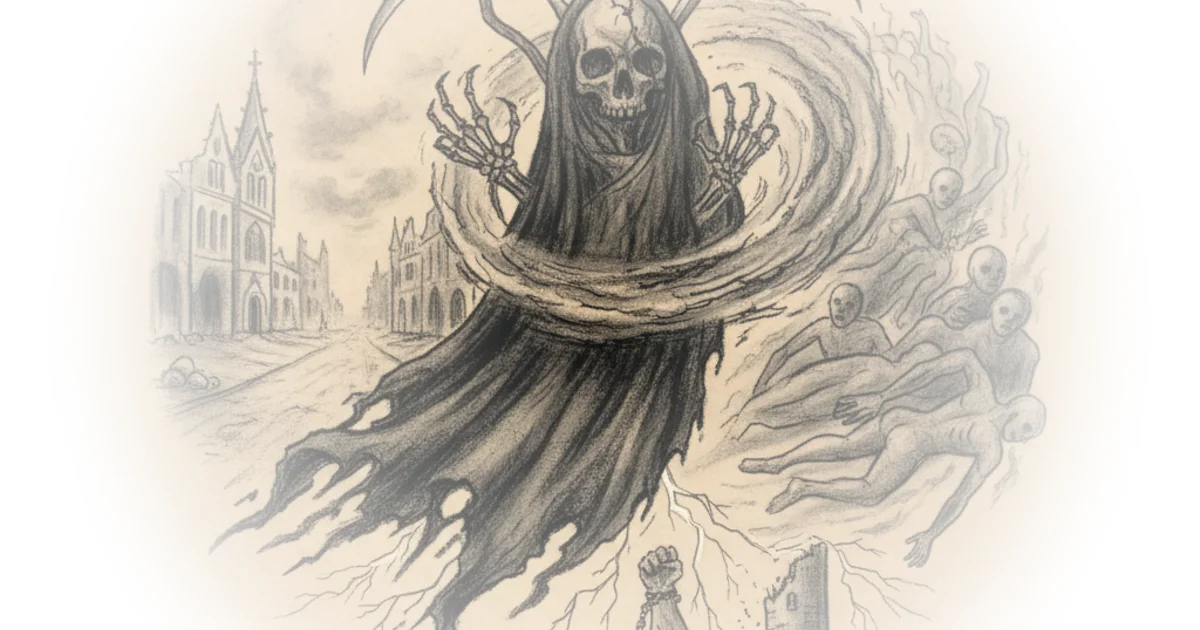
Critics might note Carr slightly overstates Europe’s political fragmentation; the Holy Roman Empire and Papacy provided fragile cohesion. But her point stands: states had "very basic level of response," like unenforceable price caps during famine. Snow smartly parallels this to 2020’s struggles, underscoring how crisis exposes institutional rot.
From Marmots to Mass Graves
"It was marmots, another rodent native to these regions... that carried the Yersinia pestus."
Here, Snow delivers his most revelatory evidence. Carr debunks the rat-centric narrative, explaining how Mongol expansion into the Tian Shan mountains disrupted marmot ecosystems, allowing the bacterium to "jump a species." Snow immediately grasps the implication: "the Black Death is... an interaction with politics, military affairs, and human beings that turn it into this kind of extraordinary catastrophe." This is epidemiology as geopolitical history—a perspective missing from most plague accounts. He doesn’t just name the pathogen; he shows how empire-building literally reshaped biology. The detail about Mongol hordes carrying infected grain (and thus rats) makes the transmission chain viscerally clear.
Yet Snow overlooks a counterpoint worth considering: recent DNA studies suggest plague may have circulated in Europe before 1347, potentially weakening populations further. Still, his focus on the Mongol vector remains the freshest contribution here.
The Anatomy of Apocalypse
Carr’s description of buboes—"infected glands... growing to as big as apples," turning black with "blood poisoning"—makes the horror tangible. But Snow’s sharpest editorial move is highlighting how society responded. When Carr notes people realized "it was this myasma... the stench" that spread plague, Snow pushes: "Did they know... person-to-person contamination?" Her reply—that quarantine (from Italian quaranta giorni, 40 days) emerged as nobles fled cities while the poor "shared a room with 12 other people"—exposes inequality’s role in survival. This reframes quarantine not as modern innovation but as medieval class privilege, a nuance often lost in today’s pandemic retrospectives.
Snow wisely avoids overclaiming. He lets Carr stress that while plague mortality was apocalyptic—"communities just chopped in half"—it was "incomparable" to modern pandemics. His restraint here builds credibility; he’s not forcing false parallels.
Bottom Line
Snow’s greatest strength is exposing the Black Death as the second act of catastrophe, not the first—a narrative that transforms how we view societal resilience. His biggest vulnerability? Underplaying regional variations in mortality that complicate the "60%" figure. Still, by rooting the plague in Mongol ecology and pre-existing famine, he delivers a masterclass in connecting dots across disciplines—a reminder that the past’s true lessons lie in its messy, interconnected wounds.