Matt Stoller delivers a rare and explosive look inside the mechanics of modern antitrust enforcement, arguing that a recent corporate settlement is not just a policy failure, but the tip of a Watergate-style corruption scandal. While most observers focus on the immediate market effects, Stoller uncovers a document that details how political connections were weaponized to dismantle professional legal standards within the Department of Justice. This is not a story about a single bad deal; it is an indictment of an entire system where the rule of law is being auctioned to the highest bidder.
The Illusion of Settlement
Stoller frames the recent drama surrounding the Live Nation/Ticketmaster case as a deliberate attempt to short-circuit the judicial process. He writes, "The deal reached by the company and Trump would compel Live Nation to allow rival ticket sellers to use its platform for secondary ticket sales, force it to give up control, though not ownership, of just 13 amphitheaters nationwide, and have a modest payout to states." This settlement was widely viewed as a corporate pardon, a move that surprised even the presiding judge. Stoller notes the judge called the circumstances "mind boggling," highlighting the procedural impropriety of springing a deal on the court without prior notice to co-plaintiffs.
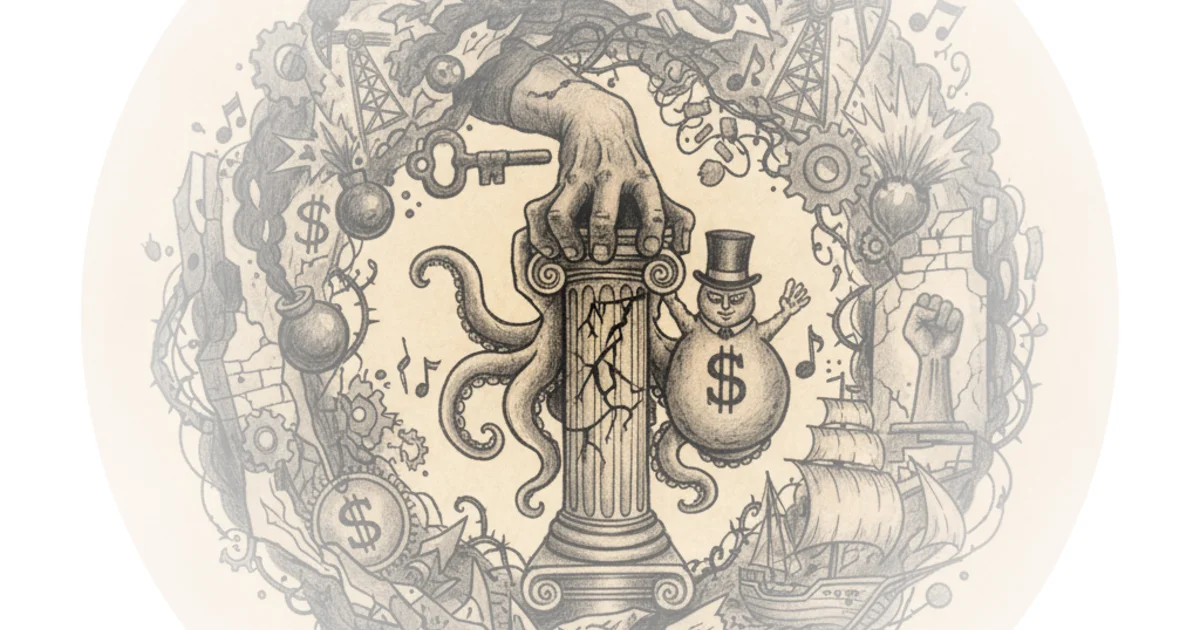
The author's analysis gains depth by connecting this event to a broader historical pattern. He draws a parallel to the investigations led by Congressman Wright Patman in the 1970s, noting that "Watergate was seen as a case about a break-in. It was more broadly a conspiracy to cover up widespread campaign finance misdeeds, with links to the Vietnam War, and corruption around the ITT antitrust case." By invoking the ITT antitrust case, Stoller reminds readers that the entanglement of corporate power and political cover-ups is not new, but the mechanisms have evolved. The current administration's approach mirrors these historical failures, where professional enforcers are sidelined by political loyalists.
The series of events that led to the Settlement are unprecedented and should shock the conscience.
Critics might argue that settlements are a standard part of antitrust litigation, often preferred to the uncertainty of a trial. However, Stoller's evidence suggests this was not a negotiated resolution based on legal merit, but a political maneuver designed to protect specific interests. The fact that the Department of Justice's own lead litigating attorney was unaware of the deal until it was announced underscores the breakdown of internal governance.
The Mechanics of Capture
The core of Stoller's argument lies in the detailed timeline of how the Hewlett Packard acquisition of Juniper Networks was forced through the system. He describes a network of lobbyists and political operatives who bypassed the professional antitrust division to secure a favorable outcome. "Instead of trying to defend its acquisition on the merits," Stoller quotes Colorado Attorney General Phil Weiser, "HPE hired lobbyists who used their political connections to push aside the Antitrust Division and pressure the DOJ to accept a meager settlement that addressed none of the concerns expressed by the professional antitrust enforcers."
Stoller meticulously details the human element of this corruption, describing meetings at exclusive Washington clubs where deals were struck over "boozy martinis." He points out that the previous Antitrust chief, Gail Slater, was fired after resisting pressure to approve the merger, while her replacement, Omeed Assefi, was an "inexperienced MAGA acolyte" who promptly aligned with corporate demands. This narrative of retaliation against professional enforcers is the most damning part of the piece. Stoller writes, "First Ms. Slater's top two deputies were fired, and just eight months later, so was she, with Mr. Davis gloating that it was his handiwork."
The use of the Tunney Act, a law passed in the wake of Watergate specifically to ensure judicial oversight of antitrust settlements, becomes a tool for exposure rather than a shield for the public. State attorneys general, led by Weiser, utilized the Act to depose lobbyists and DOJ officials, uncovering a trail of misconduct that the federal government tried to hide. This legal maneuvering allowed the states to force witnesses to answer questions under penalty of perjury, revealing that "key figures in corporate America are, well, quite dirty."
The Institutional Fallout
Stoller suggests that the consequences of these actions extend far beyond the specific mergers at hand. He argues that the state-level investigations are now the only meaningful check on executive overreach in this domain. "These people are co-plaintiffs in a bunch of different cases with the Trump Justice Department, and the Live Nation settlement isn't the first time they've witnesses such bad acts," he notes. The involvement of a diverse coalition of state attorneys general, including conservatives like Ken Paxton, signals a bipartisan rejection of the administration's approach to antitrust enforcement.
The author's comparison to the historical context of the Tunney Act reinforces the gravity of the situation. Just as the Act was designed to prevent the kind of backroom deals that characterized the ITT scandal, its current invocation reveals that the safeguards have been compromised. Stoller writes, "Every antitrust settlement has to be overseen by a judge, according to a law passed in the wake of Watergate known as the Tunney Act." The fact that this law is now being used to expose corruption rather than prevent it is a profound failure of the system.
Bottom Line
Stoller's piece is a masterclass in connecting specific legal documents to a broader narrative of institutional decay. His strongest argument is the detailed evidence of how political loyalty was prioritized over legal expertise, leading to the firing of professional enforcers and the approval of anti-competitive mergers. The biggest vulnerability of the argument is its reliance on the assumption that state-level investigations will successfully translate into legal or political consequences for the federal officials involved. However, the sheer volume of evidence uncovered by the states makes it difficult for the administration to dismiss these findings as mere political posturing. Readers should watch closely as these state-led depositions continue, as they may well provide the most significant legal challenges to the administration's antitrust record in years.