Sam Denby doesn't just recount the collapse of Southwest Airlines; he reframes a corporate disaster as a cautionary tale about how financial engineering can dismantle a 50-year culture of operational excellence. The piece is notable for its forensic dissection of a single winter storm, revealing how a legacy of cost-cutting and outdated software turned a manageable weather event into a nationwide logistical meltdown. For busy leaders, this is a masterclass in how short-term efficiency gains can destroy long-term resilience.
The Erosion of a Brand
Denby begins by establishing the unique position Southwest held in the aviation landscape, a status built on a distinct philosophy rather than just low fares. He writes, "Southwest Airlines used to be the stuff of legend. An audacious upstart turned industry giant." This opening sets the stage for a dramatic fall, contrasting the airline's historical reputation with its current trajectory. The author argues that the company's decline wasn't a sudden accident but a gradual surrender to market pressures that prioritized shareholder returns over the customer experience.
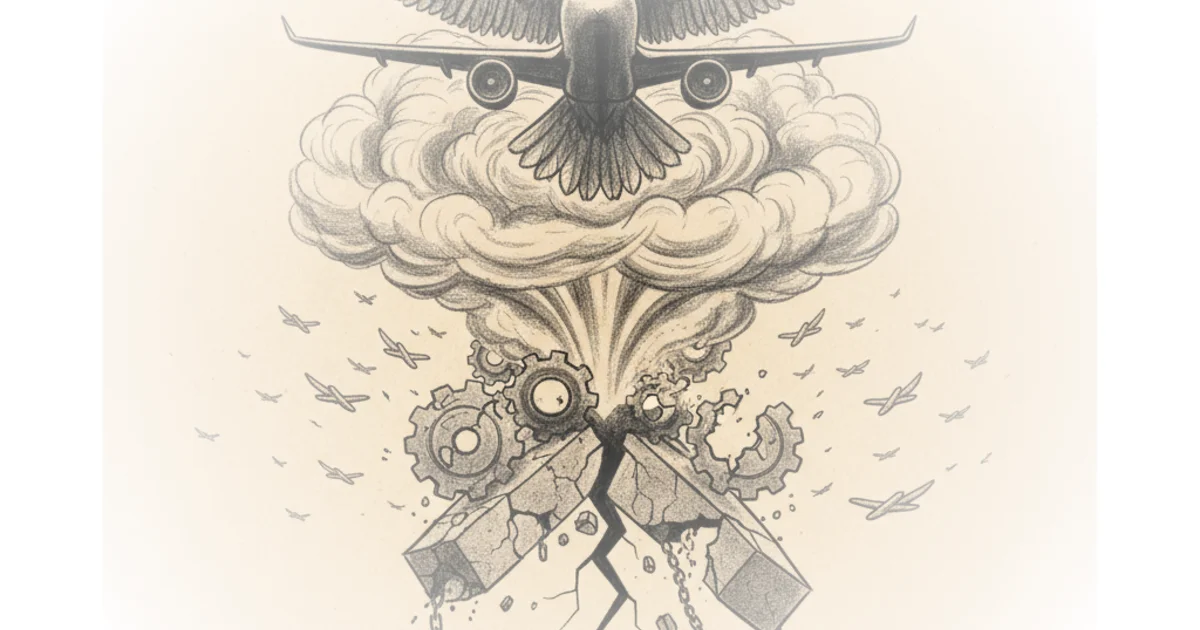
The narrative highlights how the airline systematically dismantled its core differentiators. "In one quick moment, Southwest eroded five decades of industry-leading brand image in favor of squeezing the customers for more," Denby observes. This is a sharp, damning assessment that cuts through the usual corporate spin about "necessary adjustments." The author details how free checked bags became paid add-ons, flight credits began to expire, and the beloved open seating was replaced with a tiered system that reduced legroom for everyone to create a premium product.
It's an age-old tale. It's the story of big finance destroying one of America's most beloved institutions.
This framing is powerful because it shifts the blame from a simple operational error to a structural shift in corporate governance. Denby suggests that the "benevolent executive team" was replaced or overruled by a "hostile force" focused on immediate financial extraction. Critics might note that the airline industry has been under immense pressure from rising fuel costs and labor shortages, making some of these changes inevitable for survival. However, the author's evidence that competitors managed similar pressures without abandoning their core identity suggests that Southwest's choices were ideological, not just economic.
The Architecture of Failure
The commentary then pivots to the technical and operational roots of the company's recent collapse, specifically the 2022 winter storm that paralyzed the network. Denby provides a granular look at how Southwest's unique point-to-point model, once its greatest strength, became its Achilles' heel. He explains that while competitors like United and Delta operate hub-and-spoke networks that allow for easy swapping of crews and aircraft, Southwest's system relies on complex, interdependent flights between smaller airports.
The failure was compounded by a proprietary software system called SkySolver, which was designed to optimize crew scheduling but proved disastrously inadequate under stress. "The only problem was it wasn't very good at that," Denby writes regarding the software's ability to handle cascading disruptions. He details how the system took 25 minutes to generate a solution, a timeframe that was too slow for a rapidly evolving crisis where conditions changed every few minutes.
You see, SkySolver took about 25 minutes to run and propose one set of solutions. In a high impact storm like Elliot, though, the situation was certain to have changed within any span of 25 minutes.
This section is the technical heart of the piece, illustrating how a lack of investment in modern infrastructure led to a total systemic failure. The author notes that the airline's decision to own its de-icing equipment rather than hire third-party contractors, intended to save money, backfired when extreme cold exposed staff to dangerous conditions, forcing frequent rotations and slowing operations. Furthermore, the manual backup systems were woefully understaffed, with a single desk of two people tasked with managing thousands of stranded crews.
As daily cancellations started to count in the thousands, the desk tasked with solving these issues was quickly overwhelmed, meaning it was taking longer and longer to find crew or aircraft to operate disrupted flights, leading to more cancellations.
The narrative effectively demonstrates a feedback loop of failure: the software couldn't keep up, so humans took over, but the humans were overwhelmed, which caused more delays, which further confused the software. Denby points out the absurdity of the situation, where pilots were sent on nonsensical routes just to move them to the right location, wasting valuable rest time mandated by federal regulations.
The Human Cost of Efficiency
Beyond the logistics, Denby weaves in the human element, reminding readers that Southwest's success was historically built on treating employees well. The airline had a 45-year streak of profitability and a culture of never laying off staff, even during crises. "Southwest argued that taking good care of their staff allowed them to take good care of their customers," the author notes, highlighting the moral and strategic logic that once drove the company.
The breakdown of this culture is evident in the chaos of the winter storm. Flight crews were left waiting for hours on hold, unable to accumulate the rest hours required to fly the next day, which further crippled the airline's ability to recover. This stands in stark contrast to the airline's founding principles. Denby writes, "The fact that the decision makers from the airline didn't come from other airlines who did things differently was almost certainly why the airline stayed so unique for so long." The implication is that the influx of executives from other carriers, who prioritized different metrics, eroded this unique culture.
It was a fairy tale scenario where everyone won. Employees, customers, and even investors.
The author suggests that this "fairy tale" ended when the company lost its internal compass. The shift from a culture of mutual benefit to one of extraction is portrayed as the root cause of the operational collapse. While some might argue that the pandemic created an unprecedented financial strain that forced these changes, Denby's account suggests that the seeds of the disaster were sown long before the storm hit, in the decision to replace robust systems with fragile, cost-cutting alternatives.
Bottom Line
Sam Denby delivers a compelling indictment of how corporate myopia can destroy a legacy institution, using the Southwest meltdown as a case study in the dangers of prioritizing short-term margins over operational resilience. The piece's greatest strength is its ability to connect the dots between cultural erosion, outdated technology, and catastrophic failure, proving that efficiency without redundancy is a recipe for disaster. The biggest vulnerability in the argument is the somewhat binary view of "big finance" as the sole antagonist, which may oversimplify the complex economic pressures facing the entire aviation industry, but the core lesson remains undeniable: a brand built on trust cannot survive when it stops honoring its promises.