Cory Doctorow delivers a blistering indictment of a political class that seems to have lost the ability to understand cause and effect in the digital realm. The piece's most arresting claim is that "age verification" is not just a flawed policy, but a physical impossibility that functions only as a Trojan horse for total surveillance. For busy listeners tracking the erosion of digital rights, this is not abstract theory; it is a roadmap of how good intentions are weaponized to dismantle the open internet.
The Illusion of Object Permanence
Doctorow begins by invoking a developmental milestone to expose a political failing. He writes, "Object permanence is the ability to understand that even if you can't see something, it still exists. Most toddlers acquire a thorough sense of object permanence by the age of two. But when it comes to technopolitics, object permanence eludes even full-grown lawmakers." This framing is devastatingly effective because it strips away the veneer of legislative sophistication to reveal a fundamental cognitive gap. The author argues that politicians repeatedly ignore warnings that their policies will create collateral damage, only to be surprised when those damages materialize.
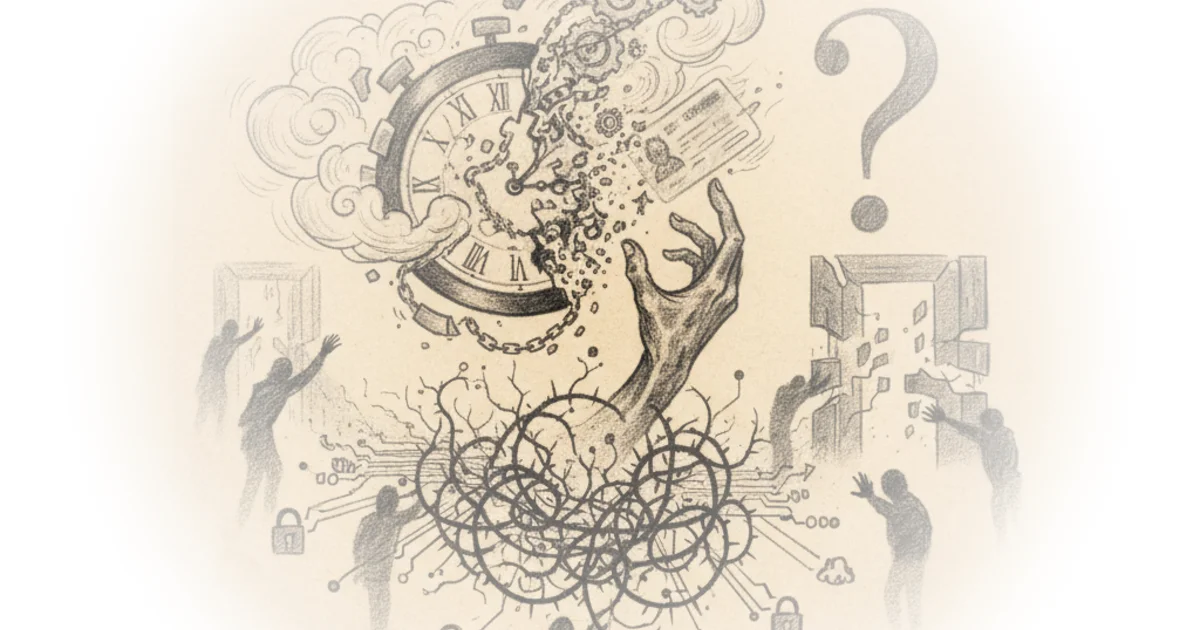
The commentary suggests this is a deliberate strategy rather than mere incompetence. Doctorow points to Bruce Schneier's "security syllogism" to explain the dynamic: "Something must be done! There, I've done something." The author notes that the specific solution does not need to work; it only needs to be enacted so the politician can claim a victory. This creates a dangerous feedback loop where the initial failure of a policy is not a reason to stop, but an excuse to escalate restrictions further.
"These motherfuckers would lose a game of peek-a-boo."
Critics might argue that the author's tone is needlessly abrasive, potentially alienating moderate readers who are genuinely concerned about online safety. However, the vitriol serves a specific purpose: it underscores the frustration of experts who have warned of these exact outcomes for decades, only to be ignored until the damage is done.
The Hallucination of Streaming and Verification
The piece then pivots to how these political delusions reshape reality itself. Doctorow argues that when the executive branch or legislature declares a technical concept exists, they force the world to bend to that fiction. He writes, "Take 'streaming.' There is no such thing as 'streaming.' A 'stream' is just 'a download that is transmitted to an application that doesn't have a 'Save As…' button'." This distinction is crucial because it reveals that laws against "streaming" are actually laws against inspecting, modifying, or fixing code.
The author connects this to historical precedents, noting that the Communications Assistance for Law Enforcement Act (CALEA) from 1994 set a dangerous precedent by forcing telecoms to build surveillance capabilities into their networks. Doctorow argues that the current push for age verification is the next logical, disastrous step in this lineage. He states, "You can't 'verify the age' of an internet user – you can only attempt to attribute every byte that traverses the entire internet to affirmatively identified persons." This is the core of the argument: you cannot verify a person without verifying their data, and verifying all data requires a central database that becomes a honeypot for identity thieves and dictators.
The commentary highlights the irony that these policies, designed to protect children, actually endanger them. Doctorow writes, "It is a gift to every future dictator, every identity thief, and every would-be sexual exploiter of children, who will have access to the hacked, leaked, and badly secured troves of data that this doomed effort produces." The logic is sound; creating a massive repository of biometric or identity data guarantees a breach, turning a safety measure into a security liability.
"When cornered on the issue, they were affronted: 'Can't you see that something must be done? How dare you attempt to stop me from doing something?'"
A counterargument worth considering is that some form of age assurance is necessary to comply with child safety laws, and that the industry must find a middle ground. Doctorow anticipates this by noting that the current proposals are not about middle grounds; they are about total attribution. He points out that the inevitable result is a ban on the very tools that allow users to bypass these broken systems, such as Virtual Private Networks (VPNs).
The Escalation to Bans
The final section of the piece documents the inevitable escalation. Once the initial policy fails to stop the behavior it targets, the response is to criminalize the workaround. Doctorow observes, "And now, every single one of these chucklefucks is proposing bans on VPNs, from Utah... To the UK." He notes that this was entirely predictable: "This was entirely obvious from the very instant that 'age verification' was mooted, and yet our policymakers pretended they couldn't hear the chorus of people who pointed it out to them."
The author draws a parallel to the history of cryptography bans, where attempts to outlaw strong encryption led to the requirement that every device be inspected and every update vetted, effectively crippling critical infrastructure like pacemakers and power grids. Doctorow writes, "You make it impossible to reliably update the software in pacemakers, anti-lock brakes and nuclear power plants, and you make it easy for identity thieves, foreign powers and corporate spies to raid your government, your corporations, and your households – and it still won't work!" This historical context, reminiscent of the struggles seen during the crypto wars of the 1990s, adds weight to the warning that current policies will have far-reaching, unintended consequences.
"They were warned that this would happen. We told them not to swallow that fly. Now we're telling them not to swallow whole bucketloads of spiders."
The piece concludes with a grim prediction of future escalation, suggesting that policymakers will continue to demand impossible solutions until the internet is unrecognizable. Doctorow writes, "I fully expect that next year, they'll be telling us that once they swallow this herd of horses, it will all be OK." This metaphor of the "this little piggy" nursery rhyme serves as a chilling reminder of the recursive nature of bad policy.
Bottom Line
Doctorow's strongest asset is his ability to translate complex technical realities into a narrative of political absurdity, proving that "age verification" is a myth that will inevitably lead to mass surveillance. The argument's biggest vulnerability lies in its dismissal of the genuine public anxiety regarding child safety, which could make the piece feel dismissive to those who prioritize protection over privacy. Readers should watch for the next wave of legislation targeting VPNs, as this is the direct, foreseeable consequence of the current failed approach to age verification.